
Trees
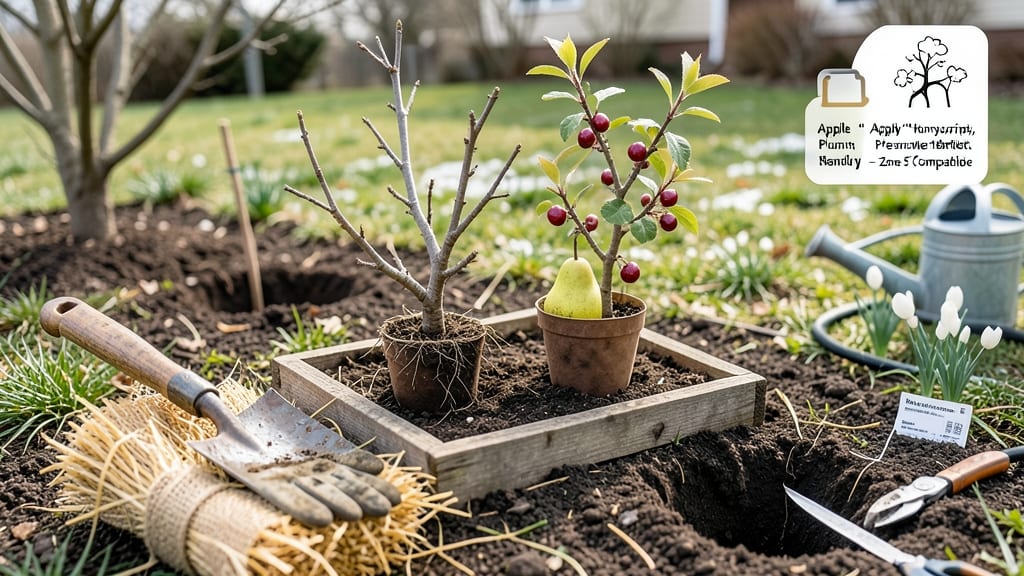
Timing your fruit tree planting in Zone 5 can make or break your orchard's future—plant too early, and frost zaps young roots; too late, and winter dormancy stalls growth. The sweet spot between spring's thaw and fall's chill is where your 🍎 thrives, but getting it wrong means years of struggling saplings.
Here's the deal: Zone 5's 5a/5b climate gives you two prime windows—early spring (April) when soil warms to 40°F+, or fall (September-October) when trees enter dormancy. Both have advantages, but the wrong choice could leave your tree fighting for survival during critical growth phases.
I've planted dozens of fruit trees in this zone, and I'll show you exactly how to read your microclimate's frost dates, prep soil for maximum root establishment, and choose between bare-root vs. container-grown trees.
Whether you're dreaming of homegrown apples or backyard peaches, these timing secrets are your ticket to a thriving orchard.
Let's break down the spring vs. fall battle, including variety-specific tips for apples, pears, and cherries—because not all fruit trees play by the same rules. Your perfect planting window is closer than you think.
Optimal planting windows for fruit trees in Zone 5
In Zone 5, where last frost typically arrives around mid-May and first frost hits by mid-October, timing your fruit tree planting is everything. The two best windows are early spring (April) and fall (September-October), each offering unique advantages for root establishment and survival.
Let’s break down the science behind these windows and how they apply to 10+ common fruit tree varieties, from apples to peaches.
Spring planting gives young trees a head start on root growth before summer heat arrives, while fall planting leverages cooler temperatures and reduced transplant shock. Both methods work, but your choice depends on your tree type, soil conditions, and local microclimate.
For example, bare-root trees thrive in both seasons, but container-grown trees can be planted almost year-round (except winter).
🌱
| Planting Window | Best For | Temperature Range | Soil Temp | Key Considerations |
|---|---|---|---|---|
| Early Spring (April) | Bare-root trees, fast root growth | 40-50°F | 45-55°F | Plant before buds swell; water deeply to prevent drought stress. |
| Fall (September-October) | All trees, reduced transplant shock | 50-60°F | 50-60°F | Plant 4-6 weeks before first frost; mulch heavily for winter protection. |
| Apple Trees | Spring or fall | 40-60°F | 45-55°F | Choose dwarf varieties for easier care; avoid late spring planting (risk of frost damage). |
| Peach Trees | Early spring only | 45-55°F | 50-60°F | Fall planting risks crown rot; plant in well-draining soil. |
| Cherry Trees | Fall preferred | 50-60°F | 50-60°F | Sweet cherries need cross-pollination; plant 2 varieties. |
| Pear Trees | Spring or fall | 40-55°F | 45-55°F | Thin fruit in summer to improve size/quality. |
Spring planting in Zone 5 should happen as soon as the soil is workable—typically by late March to April. Aim for a window when daytime temperatures consistently stay above 40°F and nighttime lows don’t dip below freezing.
This timing ensures your tree’s roots can establish before the summer heat arrives, which can stress young transplants. For bare-root trees, this is especially critical, as their roots need moisture to grow quickly.
Fall planting, on the other hand, offers a quieter season with cooler air and soil temperatures, reducing the risk of transplant shock. The ideal window is September to mid-October, giving roots time to knit before winter dormancy.
In Zone 5, this means planting at least 6 weeks before the first frost, usually by October 1st. If you miss this window, delay planting until the following spring.
🌿
Not all fruit trees thrive equally in both seasons. For example, peach trees are best planted in early spring to avoid crown rot, a fungal disease that flourishes in wet fall soils.
Meanwhile, cherry trees often perform better when planted in fall, as their roots establish more slowly in spring’s fluctuating temperatures. Always check the specific variety’s recommendations—some apple trees, like Honeycrisp, tolerate both seasons, while others, like Granny Smith, prefer spring.
Soil temperature is another critical factor. Use a soil thermometer to confirm it’s above 45°F for spring planting or 50°F for fall. Cold soil can stunt root growth, leaving your tree vulnerable to drought stress or winter damage.
If your soil is still too cold, wait a few weeks—patience now means a stronger tree later.
🪴
Pro tip: If you’re planting in fall, apply a 2-3 inch layer of mulch around the base of your tree to insulate roots and retain moisture. For spring planting, focus on deep
Optimal planting windows for fruit trees in Zone 5
In Zone 5, where last frost typically arrives in mid-May and first frost hits around mid-October, timing is everything for fruit tree success. The two best windows are early spring (April) and fall (September-October), each offering unique advantages for root establishment and transplant shock recovery.
Spring planting lets trees establish roots before summer heat, while fall planting takes advantage of cooler temperatures and moist soil—ideal conditions for root growth before dormancy. Both methods work, but the best choice depends on your fruit tree variety and local microclimate.
| Planting Window | Best For | Soil Temp | Root Growth |
|---|---|---|---|
| Early Spring (April) | Bare-root trees, peaches, cherries | 40-50°F | Moderate (pre-summer) |
| Fall (September-October) | Apples, pears, container-grown trees | 50-60°F | Strong (pre-dormancy) |
Peach and cherry trees thrive when planted in early spring because they bloom early and need time to establish roots before summer heat. Meanwhile, apple and pear trees often do better in fall planting, as their roots grow vigorously in cool soil before winter dormancy.
For bare-root trees, spring planting is ideal because the soil is workable and roots can establish before summer stress. However, container-grown trees can be planted in fall or early spring, offering more flexibility for gardeners with limited space.
Always check your local frost dates—planting too early in spring risks frost damage to new growth, while fall planting should wrap up at least 6 weeks before first frost to allow roots to harden off for winter.
No matter when you plant, prioritize well-draining soil and full sun exposure (6+ hours daily) to set your fruit trees up for long-term success. With the right timing, your trees will reward you with bountiful harvests for decades! 🌳🍏