
Plants
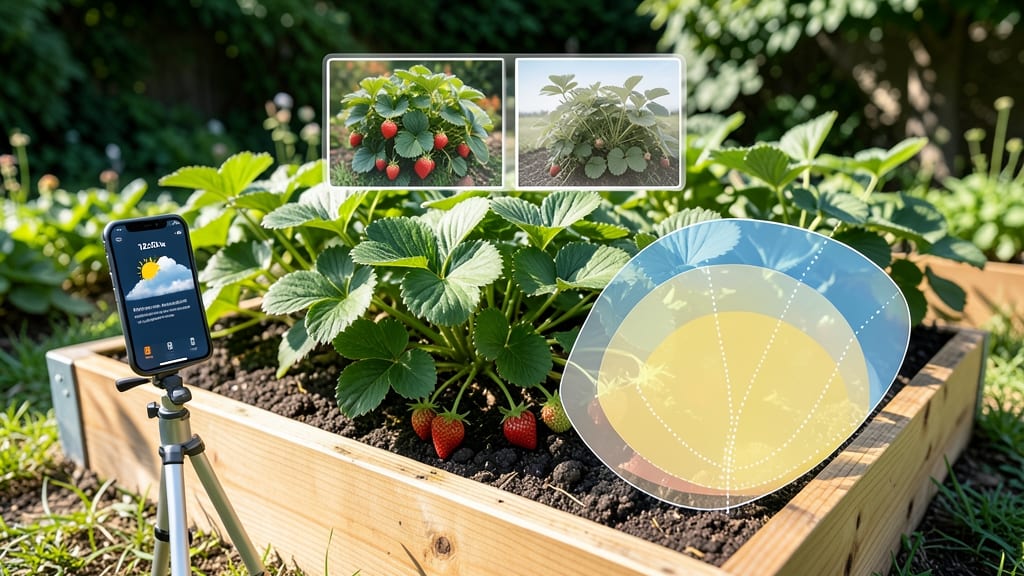
If you’ve ever planted strawberries only to end up with tiny, tart berries—or worse, no fruit at all—you might be missing the one critical factor: how much light does a strawberry plant need?
Strawberries are sun-hungry plants, and getting their light needs right is the difference between a bountiful harvest and a disappointing one.
Most gardeners assume strawberries thrive in any sunny spot, but the truth is more nuanced. While these 🍓-loving plants crave 6 to 8 hours of direct sunlight daily, they can also adapt to partial shade—if you know the tricks.
Whether you’re growing in containers or garden beds, understanding how light affects fruit size, sweetness, and even disease resistance is key to success.
In this guide, I’ll break down exactly how much sunlight strawberries need, how to spot signs of too little (or too much) light, and creative ways to maximize their exposure—even in shady spots. Ready to turn your strawberry patch into a juicy, flavorful dream? Let’s dive in.
From choosing the right variety for your climate to adjusting care based on seasonal changes, you’ll learn how to give your plants the perfect light conditions for plump, sweet berries all season long. No more guesswork—just a guaranteed harvest!
 Best Window Placement
Optimal sunlight requirements for strawberry plants by variety
Strawberries are sun worshippers—6 to 8 hours of direct sunlight is their sweet spot for producing those juicy, flavorful berries we all crave. Without enough light, your plants will struggle to set fruit, leaving you with small, pale berries or even no harvest at all.
But not all strawberry varieties are created equal when it comes to sunlight tolerance!
As a gardener who’s experimented with June-bearing, everbearing, and day-neutral varieties, I’ve learned that seasonal adjustments and variety selection can make all the difference. Let’s break down what each type truly needs to thrive—and how to tweak your approach for partial shade situations.
| Variety | Ideal Sunlight | Partial Shade Tolerance | Best For |
|---|---|---|---|
| June-Bearing | 6-8 hours (full sun) | Poor (reduced fruit) | Cool climates, early harvest |
| Everbearing | 6-8 hours (full sun) | Moderate (smaller berries) | Extended harvest seasons |
| Day-Neutral | 4-6 hours (tolerates partial shade) | Good (still productive) | Containers, urban gardens |
June-bearing strawberries, like Jewel or Chandler, demand the most sunlight—6 to 8 hours daily—to produce their large, flavorful berries in a single harvest window. These varieties are not forgiving if you skimp on light, often resulting in small, underdeveloped fruit or even no flowering at all.
Everbearing varieties, such as Seascape or Ostara, are slightly more adaptable but still prefer full sun. They’ll produce two harvests per year—spring and fall—but in partial shade, you’ll notice smaller berries and less vigorous growth.
If your garden only gets 4 to 5 hours of sun, these varieties might still fruit, but expect a reduced yield.
Day-neutral strawberries, like Albion or Tristar, are the most shade-tolerant of the bunch. They can thrive with just 4 to 6 hours of sunlight, making them ideal for containers on patios or shady garden corners.
However, even these varieties will produce bigger, sweeter berries when given more light, so don’t be afraid to move them to a sunnier spot if possible.
Seasonal adjustments are key, especially in northern climates or during winter months. Strawberries enter dormancy in late fall, but they still need some light to prepare for the next growing season.
If your plants are buried under snow for weeks, consider lightweight row covers to protect them while allowing indirect light to penetrate.
In summer, when days are long, strawberries can handle up to 10 hours of light, but afternoon shade (especially in hot climates) can prevent sunburn on leaves and berry scorch. A dappled shade situation—like under light tree canopies—can actually improve berry quality in extreme heat.
Pro tip: If you’re growing strawberries in containers, place them in the sunniest spot you have, even if it’s just a south-facing balcony. Containers dry out faster and can’t store excess nutrients like in-ground beds, so maximizing light helps compensate for limited root space.
Remember, strawberries are photoperiod-sensitive, meaning their flowering and fruiting cycles are triggered by light duration. If you’re in a high-altitude area or far northern latitude, your plants might need supplemental grow lights in early spring to kickstart growth.
A simple LED grow bulb for 12-14 hours a day can make a world of difference in fruit set.
For the best results, rotate your plants every few years to prevent soil depletion and disease buildup. And always mulch heavily to retain moisture and regulate soil temperature, especially in hot, sunny conditions. 🌱
Signs your strawberries aren’t getting enough (or too much) light
Even with the best intentions, it’s easy to misjudge how much light your strawberries are really getting. Too little sunlight leads to weak plants and poor fruit, while too much can scorch leaves and reduce sweetness.
The key is learning to read your plants’ visual cues and adjusting care before problems become permanent.
Start by checking your strawberries’ leaf color. Healthy strawberry leaves should be a deep, vibrant green. If they’re pale or yellowing, your plants aren’t getting enough light. This light deficiency often shows up first on older leaves and can spread quickly if ignored.
On the flip side, leaves that turn bronze or crispy along the edges are a sign of too much direct sunlight, especially during hot afternoons.
Another red flag? Your berries. Strawberries grown in low-light conditions often stay small, tart, and underdeveloped. They may also fail to ripen properly, staying pale or red only on the sun-exposed side.
Conversely, berries exposed to intense afternoon sun can develop a tough, leathery skin and lose their signature sweetness. If your harvest tastes bland or mealy, light exposure might be the culprit.
⚠️ Watch for These Warning Signs
- Pale/yellow leaves = Not enough light
- Bronze/crispy edges = Too much sun
- Small, tart berries = Light deficiency
- Tough, bland berries = Excessive heat/sun
- Leggy growth = Stretching for light
Act fast! Adjust shading or positioning within 1-2 weeks to prevent permanent damage.
Don’t overlook the growth pattern of your plants. Strawberries that aren’t getting enough light often grow tall and leggy, with long stems and sparse foliage. This is their way of reaching for more sunlight.
If you notice your plants stretching upward dramatically, it’s time to move them to a sunnier spot or supplement with artificial grow lights.
For container growers, check the direction of your pots. If they’re placed against a north-facing wall or under a tree, they’re likely receiving only partial shade. Even 4-6 hours of direct sun can be enough for some varieties, but berry quality will suffer compared to full-sun conditions.
Try rotating containers throughout the day to give all sides equal exposure.
Finally, pay attention to the soil temperature around your plants. In shady spots, soil stays cooler, which can delay fruiting. If your strawberries are slow to produce flowers or berries, even with proper watering, they might need more warmth from sunlight.
Use a soil thermometer to check—ideal temperatures for fruiting are between 60-85°F.
By tuning into these signs early, you can save your strawberry patch from light-related stress. The good news? Most issues are reversible with simple adjustments—whether it’s moving plants, pruning nearby shade sources, or choosing shade-tolerant varieties for next season. 🌱