
Trees
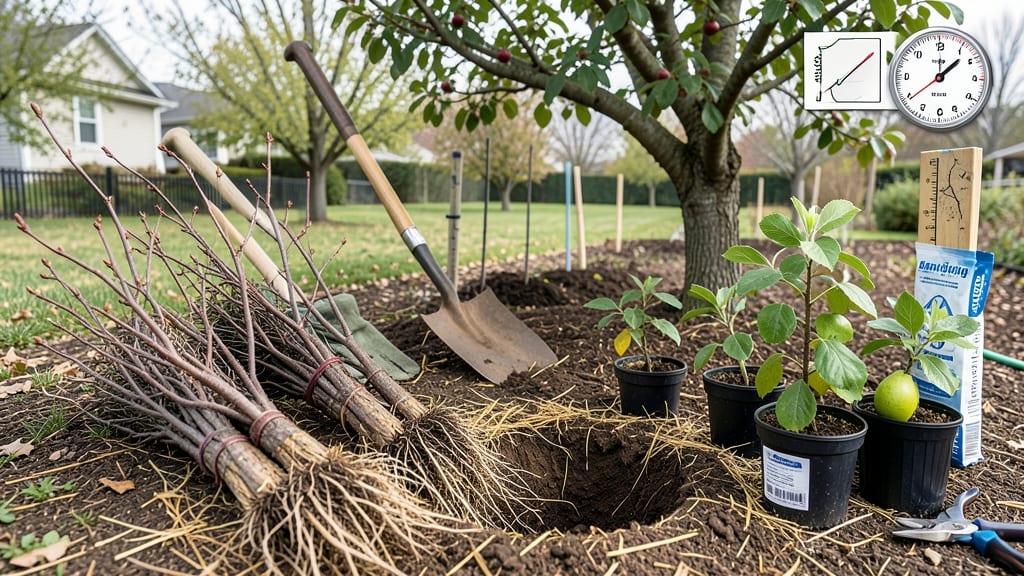
Timing your fruit tree planting in Wisconsin isn’t just about the calendar—it’s about matching your 🍎 variety to the chill hours your zone delivers. Plant too early, and frost heave could uproot your sapling; too late, and weak roots struggle to establish before winter.
The right window ensures your tree thrives in zones 4b-5b, where last frosts linger until mid-May.
This guide cuts through the guesswork by pairing exact planting months with chill-hour requirements for apples, cherries, peaches, and plums.
Whether you’re dropping a bare-root sapling in April or a containerized tree in September, we’ll show you how to align your schedule with Wisconsin’s frost-free windows and soil warmth thresholds.
You’ll also discover the top 5 varieties that outperform in your zone—plus a checklist to avoid costly mistakes like planting in soggy soil or ignoring rootstock needs. Let’s get your orchard off to the right start.
Ready to plant with confidence? We’ll walk you through soil prep, frost dates, and even where to find local resources like UW Extension’s chill-hour data. Your future harvest depends on this first step.
Wisconsin fruit tree planting timeline by chill-hours and hardiness zones
Wisconsin’s hardiness zones 5a–5b demand precision when planting fruit trees. The key? Matching chill-hour requirements with your local frost dates. For example, ‘Honeycrisp’ apples need 800–1,000 chill hours, while peaches thrive with 300–500 hours.
Planting too early risks frost heave, but delaying past soil thaw (typically late March–April) stalls root growth.
Most Wisconsin nurseries sell bare-root trees in early spring (March–April), ideal for planting before bud break. Containerized trees offer a 2–3 week longer window (April–early May), giving flexibility for late springs.
Always check your last frost date—southern Wisconsin (zone 5b) averages April 15–May 1, while northern areas (zone 5a) can wait until May 1–15.
Soil temperature is non-negotiable: roots won’t establish below 40°F. Use a soil thermometer to confirm—Wisconsin’s clay soils warm slowly. Pro tip: Amend heavy soils with compost or sand to improve drainage, a common issue in Milwaukee and Madison.
Fall planting (September–early October) is a second viable window for Wisconsin, but only for containerized trees. The goal? Let roots establish before first frost (October 15–November 1). Avoid bare-root trees in fall—they’re vulnerable to winter desiccation.
| Fruit Variety | Chill-Hours Required | Best Planting Month (Wisconsin) | Soil Temperature Threshold (°F) | Key Consideration |
|---|---|---|---|---|
| Apple (e.g., Honeycrisp) | 800–1,000 hours | April 1–May 15 | 45°F+ | Needs well-drained soil; prone to fire blight |
| Cherry (e.g., Montmorency) | 500–600 hours | April 15–May 1 | 40°F+ | Susceptible to bacterial canker; plant on slopes |
| Peach (e.g., Reliance) | 300–500 hours | April 1–May 10 | 40°F+ | Dwarf varieties ideal for small yards; watch for peach leaf curl |
| Plum (e.g., Stanley) | 400–600 hours | April 10–May 1 | 42°F+ | Self-pollinating; great for urban areas |
For northern Wisconsin (zone 5a), prioritize late-bearing varieties like ‘Zestar!’ apples (600 chill hours) or ‘Methley’ cherries (400 hours). These tolerate shorter growing seasons.
In southern Wisconsin (zone 5b), you can push the envelope with ‘Redhaven’ peaches (500 hours) or ‘Lapins’ plums (400 hours), but monitor late-spring frosts—they can devastate blossoms.
Pro move: Use UW Extension’s frost calendar (link in resources) to pinpoint your county’s average last frost. For example, Green Bay (zone 5a) often sees frost until May 10, while Madison (zone 5b) is typically frost-free by April 25.
Plant accordingly—containerized trees give you that extra buffer.
Watering post-planting is critical: deep soak weekly for the first month, even if it rains. Wisconsin’s clay-heavy soils retain moisture, but roots need oxygen too. Mulch with straw (not wood chips) to insulate roots and suppress weeds. Avoid wet mulch—it invites rot.
One last tip: Label your trees immediately with variety and planting date. Wisconsin’s short growing season means you’ll want to track maturity timelines. For instance, ‘Honeycrisp’ apples take
Critical mistakes to avoid when planting fruit trees in Wisconsin’s climate
Wisconsin’s freeze-thaw cycles and heavy clay soils create unique challenges for fruit tree planting. Skipping these common mistakes can mean the difference between a thriving orchard and a failed investment. Let’s focus on what not to do—and why it matters.
First, planting too early is a rookie error. Cold soil below 40°F can stunt root growth or cause frost heave, where roots lift out of the ground.
Many gardeners rush to get trees in before spring, but patience pays off. Wait until soil temperatures stabilize—usually late April to early May in most of Wisconsin.
Ignoring rootstock compatibility is another silent killer. Not all fruit trees thrive on the same rootstock in Wisconsin’s zones 4b–5b. For example, ‘Honeycrisp’ apples need Malling 9 or Budagovsky 9 rootstock for cold hardiness, while peaches require Lovell or Halford to survive winters. Always check your variety’s rootstock requirements before buying.
⚠️ Avoid These Pitfalls
- Planting before soil reaches 40°F → Root damage risk from cold stress.
- Skipping rootstock checks → Poor cold hardiness or stunted growth.
- Ignoring late-spring frosts → New growth damage after buds swell.
- Using untreated wood chips → Moisture retention leads to root rot.
Many gardeners also underestimate late-spring frosts, which can hit as late as May 10–15 in northern Wisconsin. If you plant early-blooming varieties like ‘Starking Delicious’ apples, their blossoms can be wiped out by a surprise frost.
Use frost cloth or choose late-blooming varieties like ‘Cortland’ apples for safer planting.
Lastly, poor soil drainage is a hidden enemy in Wisconsin’s clay-heavy soils. If water pools around the roots, your tree will suffocate. Before planting, amend soil with compost or plant on a mound to improve drainage.
A simple percolation test—digging a hole, filling it with water, and checking how fast it drains—can save your tree.
Pro tip: Mulch correctly—use straw or shredded leaves (not wood chips) to retain moisture while allowing airflow. A 3-inch layer around the base (but not touching the trunk) keeps roots cool in summer and insulated in winter. Now you’re ready to plant with confidence!