
Trees
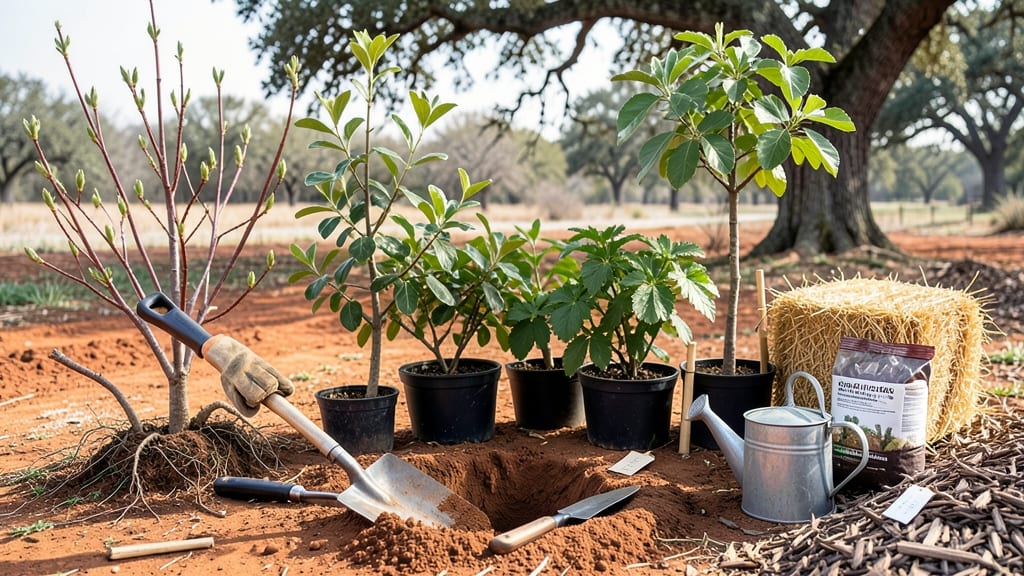
Timing your fruit tree planting in North Texas can make the difference between a thriving orchard and a sad investment—late winter or early fall are your golden windows, but why? The secret lies in avoiding frost damage while giving roots time to establish before summer’s brutal heat.
Picture this: a 🍎 tree struggling through North Texas summers with shallow roots because you planted it too late. Or worse, young buds freezing in an unexpected March chill.
These mistakes happen when gardeners ignore the 7b-8a zone’s quirks, but with the right strategy, you’ll set your trees up for decades of harvests.
Whether you’re eyeing peaches, plums, or citrus, I’ll break down exactly when to plant—plus soil prep tips and local microclimate hacks—to ensure your fruit trees grow strong and productive. Let’s get those roots in the ground the right way.
From bare-root saplings to container-grown varieties, we’ll cover everything you need to know to time your planting perfectly. Ready to turn your North Texas yard into a fruit-bearing paradise?
Best planting months for fruit trees in North Texas by variety
North Texas’ USDA Zone 8a-8b climate creates a tight window for planting fruit trees—too early risks frost damage, while late planting leaves roots vulnerable before winter. The ideal months are late fall (October-November) or late winter (February-March), when soil temperatures hover between 50°F–60°F and frost threats have passed.
For bare-root trees, late winter planting (before buds swell) gives roots time to establish before spring growth. Container-grown trees, however, can handle fall planting since their roots aren’t exposed. Citrus and figs, sensitive to cold, should only be planted in spring (March-April) to avoid winter dieback.
Here’s a breakdown of the best months for popular North Texas fruit trees, aligned with dormancy periods and frost risks:
| Fruit Tree | Best Planting Months | Soil Temp Threshold | Key Notes |
|---|---|---|---|
| Peaches & Plums (Stone Fruits) | Late February–Early March | 50°F–60°F | Plant bare-root before buds break; avoid fall planting to prevent fungal diseases. |
| Apples & Pears | October–November | 55°F–65°F | Fall planting allows roots to establish before winter dormancy; choose cold-hardy varieties like 'Dorsett Golden' or 'Moonglow'. |
| Figs | March–April | 60°F+ | Avoid fall planting—figs are frost-sensitive and may not survive North Texas winters. |
| Citrus (Oranges, Lemons, Limes) | March–April | 65°F+ | Must be planted in spring; protect from winter temps below 20°F with frost cloth or indoor overwintering. |
| Pecans | February–March | 50°F–60°F | Slow-growing; plant bare-root in late winter for best root development before summer heat. |
In North Texas, microclimates matter. Urban areas like Dallas may experience earlier last frosts (March 10–15), while rural areas like Wichita Falls can see frost until March 20. Use these dates to adjust your planting timeline—wait until 3 weeks after your average last frost for container-grown trees.
For grafted trees, plant in late winter to avoid stressing the graft union. If you’re planting in fall, focus on apples, pears, and pecans, which handle cooler soil better than stone fruits or citrus.
Always check the root flare (where roots meet trunk) to ensure it’s 2–3 inches above soil level.
Pro tip: Mulch heavily (3–4 inches of organic mulch) after planting to retain moisture and regulate soil temperature. In North Texas’ clay-heavy soil, mix in compost or sand to improve drainage—this is critical for preventing root rot in heavy rains.
Local nurseries like Texas A&M AgriLife Extension recommend drip irrigation for newly planted trees, delivering 1–2 gallons per day for the first month. Avoid overhead watering to prevent fungal diseases like peach leaf curl, common in North Texas’ humid springs.
Remember: Patience is key. Fruit trees planted in fall may take 2–3 years to bear fruit, while spring-planted trees might fruit in 1–2 years. Choose disease-resistant varieties like 'Redhaven' peaches or 'Laredo' peaches for North Texas’ heat and humidity.
🌱
Best planting months for fruit trees in North Texas by variety
North Texas’ USDA Zone 8a-8b climate means fruit trees need precise timing to thrive. Plant too early, and a late frost can kill tender roots; too late, and roots won’t establish before winter dormancy.
The ideal window is late winter (February–early March) for bare-root trees or early fall (October–November) for container-grown varieties.
For stone fruits like peaches and plums, aim for February–March when soil temperatures reach 50°F. These trees need 6–8 weeks of warm soil to establish roots before summer heat arrives. Citrus trees, however, prefer fall planting (October–November) to avoid heat stress in their first summer.
| Variety | Best Planting Month | Soil Temp Threshold | Notes |
|---|---|---|---|
| Peaches | February–March | 50°F+ | Bare-root only; avoid late spring |
| Plums | February–March | 50°F+ | Dwarf varieties adapt better to heat |
| Figs | October–November | 60°F+ | Container-grown preferred; drought-tolerant |
| Citrus (Oranges, Lemons) | October–November | 65°F+ | Avoid winter chill; protect from frost |
| Pecans | February–March | 55°F+ | Slow growers; plant early for long lifespan |
If you miss the primary window, September or December are backup months—but avoid planting in summer (June–August). High temperatures cause transplant shock, and young roots can’t absorb water efficiently. For container-grown trees, fall planting gives roots time to establish before winter.
North Texas’ microclimates also matter. Urban areas like Dallas experience heat islands, while rural Collin County has cooler nights. Adjust planting dates by 1–2 weeks if your yard is particularly hot or windy.
Always check local frost dates—the average last frost in North Texas is March 15, but late frosts can occur until April.
Pro tip: Buy bare-root trees in late winter for the best selection and lowest cost. If buying container-grown, ensure roots aren’t circling—they’ll strangle the tree as it grows. Grafted varieties (like Elberta peaches) need extra care to protect the graft union from sun scorch.
Once planted, focus on deep watering every 7–10 days and mulching to retain moisture. Young trees need 1–2 years to establish roots before they can handle North Texas’ summer heat and winter freezes.