
Plants
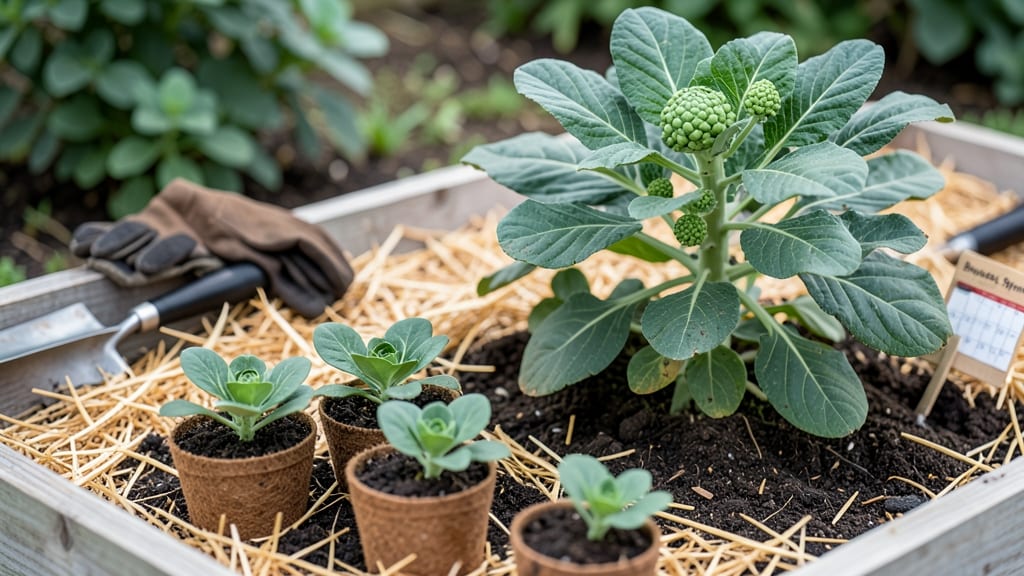
Timing is everything when it comes to growing 🥦 Brussels sprouts in Zone 8—plant them too early, and you’ll battle summer heat; too late, and your harvest might never materialize.
The key lies in two narrow windows: early spring or late summer, both designed to sync with your region’s cool-season needs.
Zone 8’s mild winters and warm summers make Brussels sprouts a rewarding but tricky crop. Unlike northern gardeners, you can’t just plant in spring and forget it—you’ll need to plan around heat avoidance and frost timing.
I’ve grown these cold-hardy greens for years in 8a-8b, and I’ll show you exactly when to start seeds (or transplant) for the best flavor and yield.
Here’s the game-changer: most gardeners in Zone 8 miss the late-summer window (August-September), which sets up perfect fall harvests. But with the right soil prep and shade tricks, you can even extend your growing season.
Let’s break down the exact dates, soil tips, and companion plants that’ll turn your Brussels sprouts from ho-hum to head-turning.
Whether you’re a first-time gardener or a seasoned green thumb, these insights will help you avoid common pitfalls—like bolting or stunted growth—and get sprouts so sweet they’ll make your neighbors jealous. Ready to grow like a pro?
Optimal planting windows for Brussel sprouts in Zone 8: fall vs spring timing
Zone 8 gardeners have two prime opportunities to grow Brussel sprouts—early spring and late summer—but timing is everything. Unlike cooler climates, Zone 8's longer growing season means you can avoid summer heat stress by focusing on these two windows.
Spring plantings give you an early fall harvest, while summer plantings yield winter-ready sprouts before hard frosts arrive.
For spring plantings, aim to transplant seedlings 4-6 weeks before your last frost date (typically late February to early March in most of Zone 8).
This gives plants 90-120 days to mature before summer heat sets in. Fall plantings, however, are often more successful in Zone 8 because they avoid the bolting risk from summer heat.
Here’s how to calculate your exact planting windows: Check your local frost dates (Zone 8 ranges from March 15 to April 15 for last frost and November 1 to December 1 for first frost).
Subtract 90 days from your first frost date for fall planting—this usually lands in late August to early September.
Inland Zone 8 areas (like Phoenix or Las Vegas) need earlier fall plantings (August) to beat summer heat, while coastal regions (like San Diego or Santa Barbara) can plant as late as early October.
The key is avoiding temperatures above 80°F, which causes bitter sprouts or bolting.
🥦 Pro Tip: Start seeds indoors 8-10 weeks before transplanting to give seedlings a head start. Use seedling heat mats if your spring is slow to warm up.
🌱 Comparison Table: Spring vs Fall Planting for Zone 8
| Factor | Spring Planting (March-April) | Fall Planting (August-September) |
|---|---|---|
| Planting Window | 4-6 weeks before last frost | 90 days before first frost |
| Ideal Transplant Date | Late Feb - Early March | Late Aug - Early Sept |
| Harvest Window | Early Fall (Sept-Oct) | Late Fall-Winter (Nov-Dec) |
| Temperature Risk | Summer heat stress | Bolting from heat |
| Best Varieties | 'Long Island Improved' | 'Ruby Ball' |
| Soil Prep Tip | Add compost for spring growth | Cool soil with mulch |
If you’re in Zone 8a (cooler microclimates like Sacramento or Denver), you can even try two plantings: one in early spring and another in mid-summer (July) for a staggered harvest. Just monitor soil temperatures—keep them below 75°F to prevent bolting.
For Zone 8b areas (like Phoenix or Tucson), focus solely on fall plantings and use shade cloth in summer to protect seedlings. The 100°F+ heat in these regions makes spring plantings nearly impossible without extensive cooling methods.
💡 Zone 8 Hack: Use a soil thermometer to check temperatures before planting. Ideal soil temps for germination are 70-80°F, but established plants thrive in 60-70°F ranges. If your soil runs hotter, plant in raised beds with straw mulch to regulate temperature.
Remember, Brussel sprouts need time—they take 90-120 days to mature. Plant too late, and you’ll miss your harvest window. But with these Zone 8-specific timelines, you’ll enjoy homegrown sprouts from fall through winter, beating grocery store options every time.
Optimal planting windows for Brussel sprouts in Zone 8: fall vs spring timing
Zone 8 gardeners have two prime opportunities to grow Brussel sprouts: early spring and late summer. The fall planting window (August-September) is my top recommendation because cooler temperatures prevent bolting and produce sweeter sprouts. Spring plantings (March-April) work but require careful timing to avoid summer heat stress.
For fall harvests, aim to plant 4-6 weeks before your first frost—typically late August to early September in most of Zone 8. This gives your plants 90-120 days to mature before winter.
In coastal areas (like Zone 8b), you might extend planting until mid-September, while inland regions should finish by early September.
Spring plantings should occur 8-10 weeks before your last frost (usually March). The key is getting seeds in the ground before soil temperatures exceed 70°F, which triggers bolting. Use shade cloth if spring warms up quickly to buy time for transplanting.
| Planting Window | Ideal Months | Days to Maturity | Key Consideration |
|---|---|---|---|
| Early Spring | March-April | 90-120 days | Avoid summer heat |
| Late Summer | August-September | 90-120 days | Cooler temps prevent bolting |
Pro tip: Check your local USDA frost dates—they vary even within Zone 8. For example, Los Angeles (8b) has later frosts than Phoenix (8a). Use the National Weather Service or Almanac tools to calculate your exact planting dates. I always add 2 weeks buffer for safety.
For direct sowing, plant seeds ½ inch deep and 1 inch apart, then thin to 18-24 inches apart when seedlings are 4 inches tall. If starting indoors, transplant 4-6 week old seedlings to avoid disturbing roots.
My go-to variety for Zone 8 is 'Long Island Improved'—it handles heat better than most.
Remember: Brussel sprouts need consistent moisture but hate soggy soil. Mulch with straw or wood chips to maintain even soil temps and reduce watering frequency. With perfect timing, you'll harvest sweet, flavorful sprouts from October through December—just in time for holiday meals! 🥦