
Companion Plants
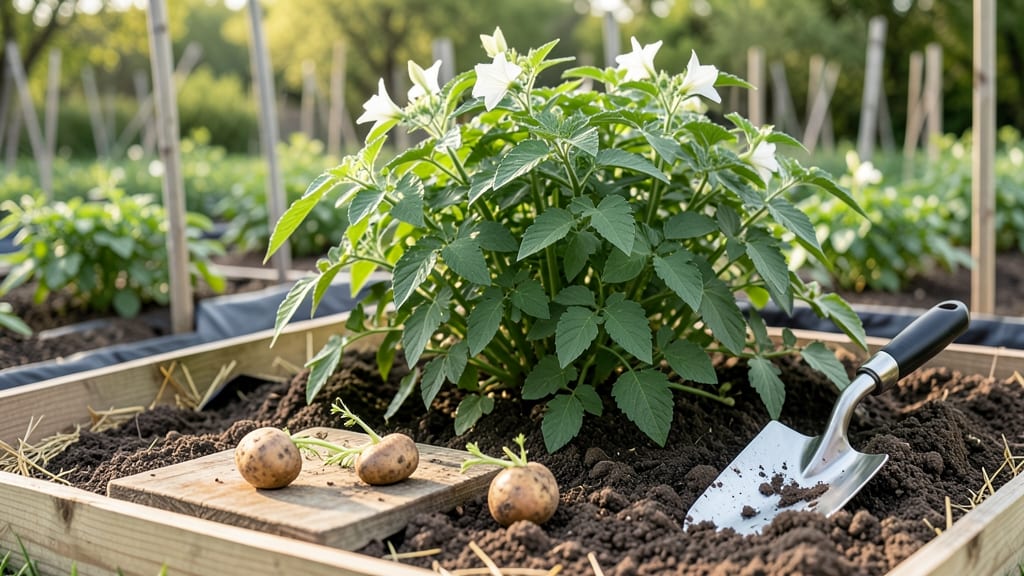
Timing your potato planting in Ohio isn’t just about throwing seed potatoes into the ground—it’s about beating frost, avoiding soggy soil, and setting up your harvest for success. With Ohio’s 6a climate, getting the window wrong means either watching your crop freeze or missing peak harvest season entirely.
Most gardeners in Ohio plant between late March and early April, but early varieties can go in as soon as soil warms to 45°F—usually by mid-March. The key is knowing your last frost date, which varies by region, and choosing varieties that match your growing season.
Get this right, and you’ll enjoy fresh 🥔 from June through September.
Here’s what you need to know: soil temperature, frost dates, and how to adjust for Ohio’s unpredictable spring. I’ll break down the best planting windows for early, mid-, and late-season potatoes, plus tips to extend your growing season if you’re eager for an earlier harvest.
Whether you’re a first-time gardener or a seasoned grower, these insights will help you avoid common mistakes—like planting too early in cold soil or ignoring microclimates—and maximize your potato yield.
Ohio potato planting timeline by variety type (early vs late season)
Ohio’s USDA Zone 6a climate means your potato planting window hinges on soil temperature and last frost dates. Northern Ohio (e.g., Cleveland) typically sees April 15 as the average last frost, while southern Ohio (e.g., Cincinnati) may be frost-free by March 25.
Always plant 4-6 weeks before your local last frost date to avoid cold damage.
Potatoes thrive when soil reaches 45°F (7°C), but wait until 50°F (10°C) for faster sprouting. Use a soil thermometer to check—cold, wet soil slows growth and invites rot.
Early varieties like Yukon Gold or Red Pontiac can handle cooler soils, while late-season Russet Burbank needs warmer conditions for full yield.
Here’s your Ohio-specific planting timeline, adjusted for early, mid, and late varieties:
| Variety Type | Planting Window (Ohio) | Days to Maturity | Harvest Month | Soil Temp Needed |
|---|---|---|---|---|
| Early (e.g., Red Norland) | Feb 15 – Mar 15 (Northern OH) / Feb 1 – Mar 10 (Southern OH) | 60–90 days | June – July | 45–50°F (7–10°C) |
| Mid (e.g., Kennebec) | Mar 15 – Apr 15 | 90–110 days | July – August | 50–55°F (10–13°C) |
| Late (e.g., Russet Burbank) | Apr 1 – May 1 (Northern OH) / Mar 20 – Apr 10 (Southern OH) | 110–120 days | August – September | 55–60°F (13–16°C) |
🌱 Pro Tip: Southern Ohio can plant 2–3 weeks earlier than northern regions.
For northern Ohio, aim for late March to mid-April for mid-season varieties like Kennebec, which is Ohio’s state potato.
If you’re in southern Ohio, you can start as early as February 15 for early varieties, but avoid planting too soon—cold soils delay sprouting and attract pests like wireworms.
Use row covers or black plastic mulch to warm soil faster if you’re planting early. These methods can shave off 1–2 weeks from your growing season. Just remove covers once sprouts emerge to prevent overheating.
Ohio’s short growing season (about 165 frost-free days) means late varieties like Russet Burbank are risky unless you’re in southern Ohio. For northern growers, focus on mid-season varieties or use cold frames to extend the season.
Always check your local frost dates via the Old Farmer’s Almanac or NOAA for your specific county. Microclimates—like south-facing slopes or urban heat islands—can shift your planting window by 1–2 weeks. For example, Columbus typically warms up 5–7 days earlier than Toledo.
Plant seed potatoes 3–4 inches deep and 12 inches apart in rows 30 inches apart to allow airflow and reduce disease risk. Use well-draining soil with a pH of 5.0–6.5, and amend with compost for optimal growth.
Missed the ideal window? Don’t panic—late plantings can still work if you choose fast-maturing varieties (e.g., Early Rose
Ohio potato planting timeline by variety type (early vs late season)
Ohio’s last frost dates vary dramatically—from mid-April in southern Ohio to early May in northern regions. This means your potato planting window should adjust based on your USDA zone (typically 5b-6a) and the variety type you’re growing.
Early-season potatoes need a head start, while late-season varieties can wait until soil warms.
For early varieties like Yukon Gold or Red Pontiac, aim to plant 4-6 weeks before your last frost date. In most of Ohio, this means late February to early March for southern areas and early to mid-April for northern zones.
These fast-maturing potatoes (60-90 days) thrive when planted early to avoid summer diseases.
Mid-season varieties like Kennebec or Russet can wait until mid-April to early May, giving you a buffer if late frosts occur. Late-season potatoes (90-120 days), such as German Butterball, should go in late April to early May to maximize their growing season before Ohio’s first frost in October.
| Variety Type | Planting Window (Ohio) | Days to Maturity | Soil Temp Threshold | Notes |
|---|---|---|---|---|
| Early (e.g., Yukon Gold) | Late Feb–Early Mar (South) Early–Mid Apr (North) |
60–90 days | 45–50°F | Plant in cold frames for earlier starts |
| Mid-Season (e.g., Kennebec) | Mid–Late Apr | 90–110 days | 50–55°F | Best for main harvest season |
| Late (e.g., German Butterball) | Late Apr–Early May | 110–120 days | 55–60°F | Store well for winter |
Don’t rely solely on calendar dates—soil temperature is your true guide. Use a soil thermometer to confirm 45°F for early varieties and 55°F+ for late-season types.
Cold, wet soils slow sprouting and invite rot. If your soil is still chilly by mid-April, opt for row covers or wait until May for mid-to-late varieties.
Ohio’s microclimates also play a role. Gardens near lakes or rivers may experience 2-3 weeks earlier planting than inland areas. Check your local Cooperative Extension Service for hyper-local frost data. For example, Toledo’s last frost often arrives 10 days earlier than Columbus, so adjust accordingly.
Pro tip: Plant a successive crop every 2-3 weeks for continuous harvests. Start with early varieties in March, then follow with mid-season in April and late-season in May. This ensures you’re never without homegrown potatoes from June through September.