
Plants
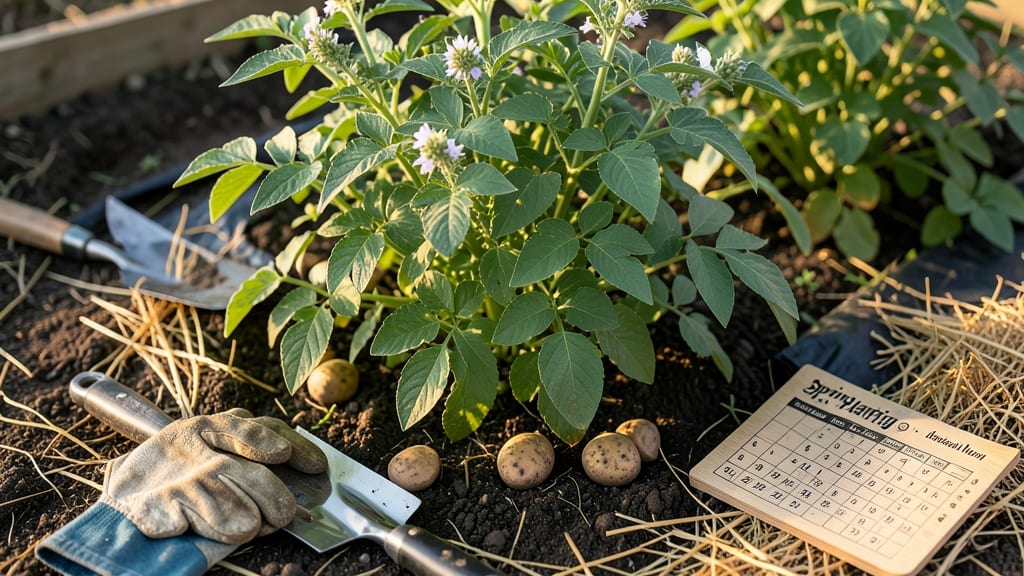
Knowing when to plant potatoes in Michigan can make or break your harvest—one wrong move, and frost will turn your 🥔 dreams into a sad, mushy mess.
Michigan gardeners face a tight window between late winter’s lingering chill and spring’s unpredictable swings, but getting it right means the difference between a bushel basket of spuds and empty garden rows.
The key is planting 2-4 weeks before your last frost date, typically between early March and mid-April for Zone 5b-6b. But here’s the catch: not all potatoes are created equal. Early varieties like fingerlings can handle cooler soil, while russets and reds need that 45°F+ warmth to thrive.
I’ll break down the exact dates for Detroit, Grand Rapids, and Traverse City—plus how to adjust for your local microclimate.
You might think you can just toss seed potatoes into the dirt and hope for the best, but Michigan’s humid summers and sudden frost risks demand a smarter approach.
From chitting your potatoes indoors to using row covers for late plantings, I’ll share the game-changer tips that’ll help you avoid blight and maximize your yield—no matter if you’re a first-time gardener or a seasoned pro.
Ready to dig in? Let’s turn your potato patch from a gamble into a guaranteed harvest. You’ll learn the ideal planting windows, how to prep your soil, and even when to start harvesting for that perfect July-October timeline. No more guessing—just a foolproof plan for Michigan’s unpredictable growing season.
Michigan potato planting calendar: exact dates by Zone 5b/6a
Michigan's Zone 5b/6a climate means potatoes thrive when planted just as the soil warms—but not before the last frost. The ideal planting window spans March 15 to April 15, with regional variations.
In southern Michigan (Detroit, Ann Arbor), you can start as early as late March, while northern areas (Traverse City, Petoskey) should wait until mid-April to avoid frost damage.
Potatoes need soil temperatures of at least 45°F to sprout consistently. Use a soil thermometer to confirm readiness—cold soil delays germination and invites rot. If your soil is still chilly, opt for early-maturing varieties like 'Yukon Gold' or 'Red Norland' to maximize your harvest before Michigan's short growing season ends.
Historical frost data shows Michigan's average last frost date ranges from April 15 (southern regions) to May 1 (northern regions). Planting 2-4 weeks before this date gives tubers enough time to establish roots before summer heat arrives.
For example, in Grand Rapids (Zone 5b), aim for April 1-15 to balance frost risk and growing season length.
🌱
| Region | Last Frost Date | Ideal Planting Window | Soil Temp Threshold | Early Variety Example |
|---|---|---|---|---|
| Southern MI (Detroit, Ann Arbor) | April 15 | March 15–April 1 | 45°F+ | Yukon Gold (90 days) |
| Central MI (Lansing, Kalamazoo) | April 22 | March 25–April 10 | 45°F+ | Red Pontiac (80 days) |
| Northern MI (Traverse City, Petoskey) | May 1 | April 10–25 | 48°F+ (warmer needed) | Kennebec (110 days) |
For gardeners in Zone 6a (southern Michigan), you can push the envelope by planting fingerling potatoes as early as late February under row covers or cold frames.
These varieties (like 'French Fingerling') mature in just 60-70 days, giving you an early harvest before blight season peaks in July. Just be prepared to protect young plants from late frosts with floating row covers or black plastic mulch.
Michigan's first frost typically arrives in mid-October, but some years it comes as early as September 15 in northern regions. To maximize your yield, prioritize early and mid-season varieties—they’ll finish before fungal diseases like late blight take hold.
Save late-maturing russets (e.g., 'Russet Burbank') for areas with longer growing seasons or use them in container gardens for earlier harvests.
Pro tip: Use a planting schedule app like Gardenate or Farmer's Almanac to input your ZIP code for hyper-local frost dates. These tools adjust for microclimates, ensuring you don’t miss the 3-week window when soil is workable but frost risk is low.
In my own garden in Zone 5b Grand Rapids, I’ve found that planting on April 1 consistently yields the best results—early enough to avoid frost, but not so late that I risk blight.
If you’re unsure about your local frost dates, check with your county extension office—they often host free soil temperature workshops in early spring. For example, MSU Extension provides updated frost maps annually, which I reference every year to fine-tune my planting timeline.
Don’t guess: plan based on data to avoid wasted seed potatoes.
🌡️
How to adjust planting for early vs. late varieties in Michigan
Michigan’s short growing season demands strategic planting—especially when choosing between early, mid-season, and late potato varieties. Fingerling potatoes like 'Yukon Gold' can handle cooler soil and should go in as early as late February or early March under frost protection.
Meanwhile, russets like 'Russet Burbank' need that 45°F+ soil and thrive when planted 2-3 weeks before your last frost date, typically mid-April.
Red potatoes such as 'Red Pontiac' fall in the mid-season category and should be planted late April to early May to avoid blight risks from Michigan’s humid summers.
The key is matching your variety to your local frost dates—Detroit’s last frost is usually April 25, while Traverse City’s can be May 10 or later.
🌱 Pro Tip: Use a 3-step risk assessment to decide when to plant:
- Check soil temps (use a soil thermometer—potatoes need 45°F+).
- Verify your last frost date (local extension offices provide exact dates).
- Adjust for humidity risks—late plantings increase blight exposure.
- 🌡️ Soil Temp Check: Wait until soil reaches 45°F+ (use a thermometer).
- ❄️ Frost Date: Plant 2-4 weeks before your last frost date.
- 🌧️ Blight Risk: Avoid planting late varieties after June 1 in humid zones.
For extended harvests, try a staggered planting strategy: plant early varieties in March, mid-season in April, and late varieties in early May. This ensures a steady supply from July through October. Just be sure to space rows 3 feet apart to prevent disease spread.
If you’re in a cooler microclimate (like northern Michigan), use row covers or cold frames to push back frost dates. I’ve had success with black plastic mulch to warm soil faster—just remove it after planting to avoid overheating.
💡 Remember: Late plantings (after May 15) risk late blight, a fungal disease common in Michigan’s wet summers. If you must plant late, choose resistant varieties like 'Kennebec' and monitor for wilting leaves.