
Flowers
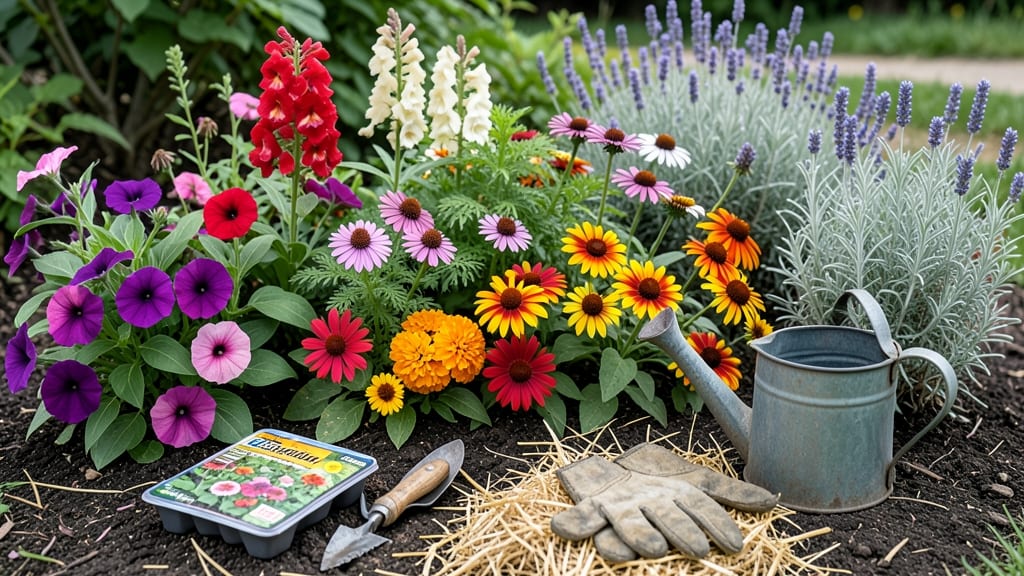
Timing your flowers planting in Idaho isn’t just about the calendar—it’s about understanding your microclimate. Whether you’re in Boise’s urban heat sink or a high-desert valley, getting those 🌸 bulbs in the ground too early or late can mean the difference between a showstopping garden and a sad, wilted mess.
Most gardeners in Idaho’s USDA Zones 4-7 know spring planting runs from March to May, but the exact dates shift dramatically depending on where you live. In southern Idaho, you might be digging in March, while northern gardeners wait until May.
The key? Knowing your last frost date—and how your local microclimate might push it earlier or later.
This isn’t just theory—it’s how you’ll extend your bloom season from early spring to late fall. I’ll break down the best planting windows for annuals, perennials, and bulbs, plus how to adjust for Idaho’s wild variations, like windy mountain slopes or sun-baked desert gardens.
Let’s get those flowers thriving on schedule.
Ready to turn your garden into a year-round paradise? Grab your gloves and let’s dive into the perfect planting plan for your corner of Idaho—because timing really does matter when it comes to 🌸 success.
Idaho flower planting calendar by USDA zones 5B-7A
Idaho spans USDA zones 5B to 7A, meaning your last frost dates can shift by 6 weeks between Boise and Coeur d'Alene. I’ll break down the exact planting windows for annuals, perennials, and bulbs to maximize your bloom season—because timing is everything in Idaho’s unpredictable springs.
Southern Idaho (zones 6B-7A, like Twin Falls or Lewiston) enjoys earlier last frosts (around April 15), while northern areas (zones 5B-6A, like Sandpoint or Moscow) often wait until May 15.
I’ll show you how to adjust for these microclimate differences so your petunias, delphiniums, and lavender thrive.
Pro Tip: Use Idaho State University Extension’s frost date maps to pinpoint your exact zone. For most gardeners, March through May is prime time for spring planting, but fall planting (August-September) works for hardy perennials and bulbs.
| USDA Zone | Last Frost Date | Spring Planting Window | Fall Planting Window | Best Flowers |
|---|---|---|---|---|
| 5B (North Idaho) | May 15 | May 1–June 15 | August 15–September 15 | Sweet peas, lupines, columbines |
| 6A (Boise, Coeur d'Alene) | April 30 | April 15–May 30 | August 1–September 10 | Delphiniums, lavender, peonies |
| 7A (Twin Falls, Lewiston) | April 15 | March 20–April 30 | July 30–August 30 | Zinnias, marigolds, cosmos |
For annuals like zinnias or petunias, wait until 2–4 weeks after your last frost to avoid chilly soil damage. I’ve planted marigolds in late April in Boise only to watch them wilt when a late frost hit—so always check the 10-day forecast before committing.
Perennials like lavender and peonies are more forgiving. You can plant them in early spring (March–April) or fall (September–October), giving roots time to establish before extreme temperatures. Bulbs like tulips should go in the ground by mid-October for southern Idaho or November in colder zones.
Don’t forget succession planting! In zone 7A, I’ll sow cosmos seeds every 2 weeks from May to July to keep my garden blooming until first frost. This trick extends your cutting garden season by 30–40%.
If you’re in a high-elevation microclimate (like Sun Valley at 6,000+ feet), add 2–3 weeks to these timelines. Cold air pools in valleys, so low-lying areas may need even later plantings. Always test your soil temperature—it should be at least 50°F (10°C) for most seeds to germinate.
For container gardening in Idaho, you can push boundaries. I’ve grown geraniums in pots on my Boise patio starting April 1, moving them indoors when nights dip below 40°F (4°C). This lets you start earlier and extend the season.
Use these dates as your garden’s GPS. Adjust based on your yard’s microclimate, and soon you’ll have cutting gardens bursting with color from June through October. Happy planting!
How to adjust planting dates for Idaho’s unique microclimates
Idaho’s microclimates can shift your planting timeline by 2-4 weeks—even within the same city. For example, Boise’s urban areas may warm up faster than nearby rural spots due to heat islands. Always check your specific last frost date using the Idaho State University Extension frost maps.
Elevation plays a huge role: Mountain valleys like McCall (Zone 5B) often have later frost dates than lowland areas like Twin Falls (Zone 7A). Adjust your schedule by 10-14 days if you’re gardening above 5,000 feet.
Wind exposure is another critical factor. Open fields cool faster at night, delaying planting by 1-2 weeks compared to sheltered garden beds. Use windbreaks like fences or shrubs to create microclimates that mimic warmer conditions.
🌱Pro Tip: Monitor local weather stations (like NOAA’s Boise or Coeur d’Alene data) for 3-5 years to spot patterns. For example, Lewiston’s Zone 7A typically sees April 10 as its last frost, while Sandpoint’s Zone 5B may not reach that until May 5.
⚠️ Warning: Don’t Trust General Zones Alone
Idaho’s Zone 6 can feel like Zone 5 in high desert areas or Zone 7 in urban pockets. Always verify with local frost records—a 2-week delay can mean the difference between thriving delphiniums and wilted petunias.
For fall planting, use the "50°F soil rule": Wait until soil temps drop below 50°F for 10 consecutive days before sowing cool-season flowers like pansies or calendula.
In Zone 7A, this often means September 15, while Zone 5B may not hit this until October 1.
🌬️ Key Adjustments: Add 1 week for high-altitude gardens, subtract 1 week for urban heat islands, and extend by 2 weeks if your area has late spring frosts (common in northern Idaho). Always plant hardy annuals like cosmos first—they’re forgiving if frost sneaks in.