
Plants
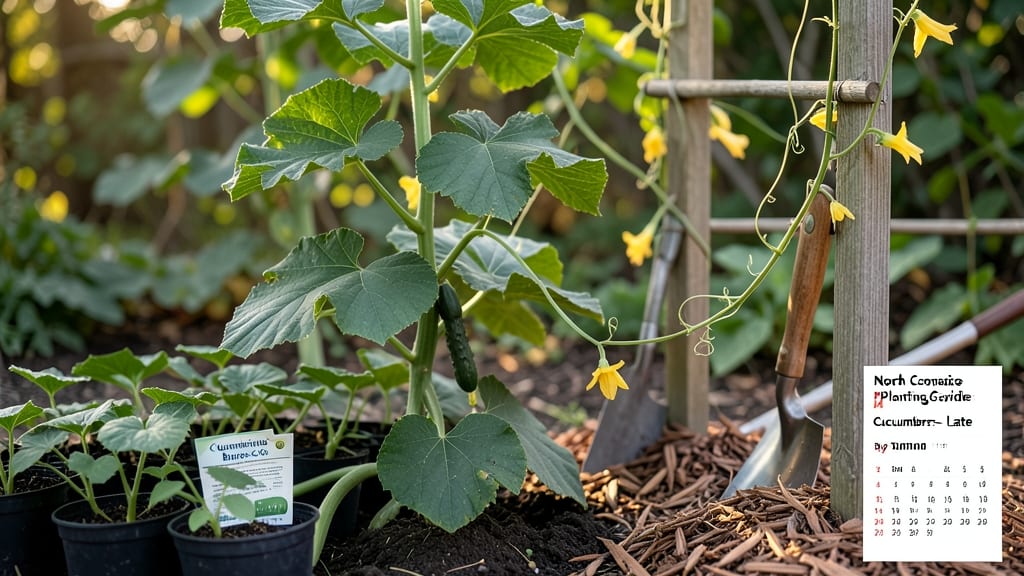
Timing your 🥒 cucumber planting in North Carolina can make or break your harvest—get it wrong, and you’ll end up with sad, wilted vines instead of crisp, homegrown gems.
The key isn’t just waiting for spring; it’s knowing your county’s frost-free deadlines and heat zone so you can start seeds or transplant at the perfect moment.
I’ve helped gardeners across NC avoid the most common mistakes, like planting too early in cooler zones or missing the window for warm-weather varieties. Whether you’re in the Piedmont’s rolling hills or the Coastal Plain’s humid heat, the right timing ensures your cucumbers thrive from summer through fall.
In this guide, I’ll break down the exact planting windows by heat zone—so you can skip the guesswork and enjoy a bountiful harvest. You’ll also learn how to adjust for microclimates, from soil temperature checks to extending the season with row covers.
Ready to grow cucumbers like a pro? Let’s dive into the frost-free deadlines and strategies that’ll turn your garden into a 🥒 powerhouse this year.
North Carolina cucumber planting deadlines by heat zone (2024 guide)
North Carolina’s diverse climate—from the cool Mountain regions to the humid Coastal Plain—means cucumber planting deadlines vary dramatically by county. To avoid frost damage and ensure vigorous growth, I’ve broken down the optimal planting windows based on USDA hardiness zones 6a through 8a, which cover most of the state.
Cucumbers thrive when soil temperatures reach at least 60°F (15°C) and nighttime temps stay above 55°F (13°C). In NC, this typically means mid-April to early June for most regions, but mountain areas like Asheville (Zone 7a) may need to wait until late May for safety.
Here’s how to use this guide: Find your county’s zone, then plant 4-6 weeks before the last frost date for direct-sown seeds or 6-8 weeks before if starting indoors. For extended harvests, consider succession planting every 2-3 weeks until mid-July.
| Region/Zone | Last Frost Date | Ideal Planting Window | Soil Temp Check |
|---|---|---|---|
| Mountains (Zone 6a-7a) | April 15-May 1 | May 15-June 1 (after soil warms) | ≥60°F (use row covers) |
| Piedmont (Zone 7a-7b) | March 15-April 15 | April 1-May 15 | ≥65°F (test with thermometer) |
| Coastal Plain (Zone 8a-8b) | February 15-March 15 | March 1-April 30 (earlier for heat-tolerant varieties) | ≥70°F (humidity-friendly varieties recommended) |
For counties like Raleigh (Zone 7b), aim for April 15-May 1 to align with soil warming. In Wilmington (Zone 8a), you can start as early as March 1, but choose heat-tolerant varieties like 'Straight Eight' or 'Marketmore' to handle summer humidity.
Pro tip: Use a soil thermometer to confirm readiness—cucumbers won’t germinate below 60°F (15°C). If your soil is cold, opt for row covers or black plastic mulch to accelerate warming by 5-10°F.
In Zone 6a areas (e.g., Boone), extend your season by planting bush varieties like 'Bush Champion' in late June for a fall harvest. These compact plants mature faster and tolerate cooler temps better than vining types.
Remember: Succession planting is key for continuous harvests. After your first planting, sow new seeds every 2-3 weeks until July 15 in most zones. This ensures you’re harvesting cucumbers through September or October, depending on your region.
For urban gardeners in Raleigh-Durham, microclimates can shift planting by 1-2 weeks. South-facing walls or rooftop gardens may warm up earlier than average, so monitor local conditions closely.
Always check the NC State Extension’s frost calendar for your specific county—it’s updated annually and accounts for unpredictable weather patterns. With the right timing, you’ll enjoy crisp, homegrown cucumbers from June through October!
How to adjust planting times for North Carolina’s microclimates
North Carolina’s diverse geography—from the cool mountain regions to the humid coastal plains—means your cucumber planting timeline should adapt to local conditions. The Piedmont zone (like Raleigh and Greensboro) has moderate frost risks, while the Coastal Plain (Wilmington, Fayetteville) enjoys longer growing seasons.
Even within 50 miles, soil warms at different rates, so always check soil temperature before planting.
For Mountain regions (Asheville, Boone), wait until May 15–June 1 to avoid late frosts. These areas often have shorter growing seasons, so opt for fast-maturing varieties like ‘Straight Eight’ (55 days) or ‘Marketmore 76’ (65 days).
Use black plastic mulch to warm soil faster and extend the season by 2–3 weeks.