
Plants
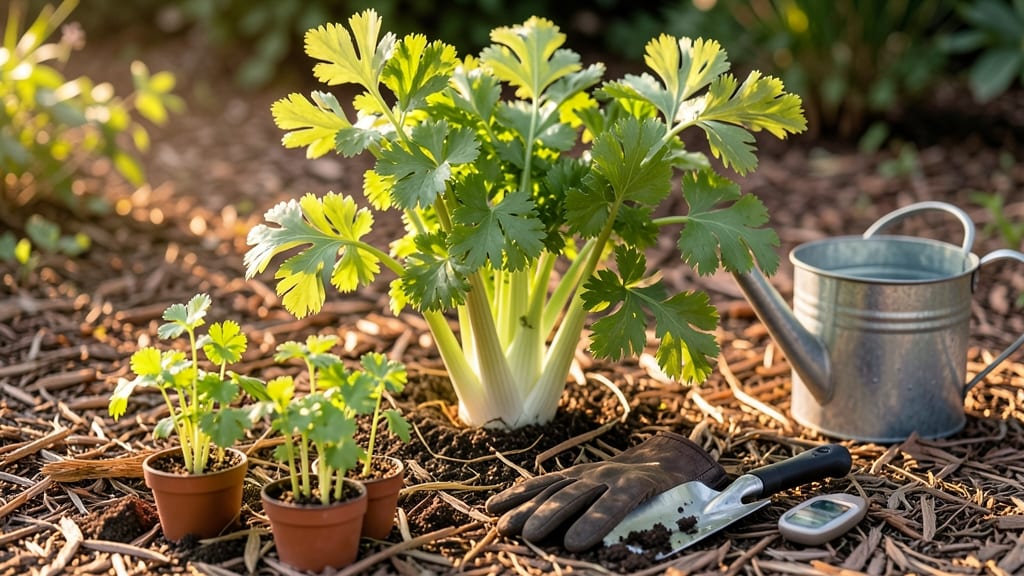
If you’ve ever struggled with when to plant celery in NC, you’re not alone—this cool-weather crop demands precision to thrive in North Carolina’s unpredictable climate.
Plant too early, and frost will turn your 🥬 into a sad, wilted mess; too late, and the heat will make your stalks tough and bitter.
The key to success? Timing your planting to match NC’s 7a-8b zones and soil temperatures.
Whether you’re in the Piedmont’s milder springs or the Coastal Plain’s humid summers, knowing the exact frost-free window and ideal soil warmth (around 50°F) can mean the difference between a bountiful harvest and a failed garden experiment.
In this guide, I’ll walk you through the optimal planting windows for both spring and fall, regional adjustments for NC’s microclimates, and soil prep tips to give your celery the best shot at success. No more guesswork—just crisp, flavorful stalks straight from your backyard.
Ready to grow celery that rivals the grocery store? Let’s dive into the exact steps to plant, nurture, and harvest your crop like a pro.
NC celery planting calendar: frost dates & ideal months by region
North Carolina’s diverse climate—from the Coastal Plain’s mild winters to the Mountains’ chilly nights—means your celery planting timeline should match your USDA zone (7a–8b). Get it wrong, and you’ll either lose seedlings to frost or watch your crop bolt in summer heat. Here’s your region-specific planting schedule to maximize success.
Celery thrives in cool seasons, so focus on two key windows: early spring (March–April) and late summer (July–August). Coastal NC gardeners have a 3-week head start over Mountain growers due to warmer microclimates.
Use these dates as your guide, but always check your local last frost date—it’s your planting deadline.
🌱Pro Tip: Start seeds indoors 10–12 weeks before your target outdoor date. Celery grows slowly (90–150 days to harvest), so don’t wait until March to begin!
For fall harvests, aim to plant by mid-August in Coastal NC and mid-September in the Mountains. This gives celery enough time to mature before first frost (typically mid-November). If you’re pushing late fall, choose fast-maturing varieties like ‘Tall Utah’ (120 days) over ‘Utah Improved’ (150 days).
🌡️Watch Out: Celery hates heat. If your summer temps climb above 85°F (29°C), growth slows, stalks thicken unevenly, and flavor turns bitter. Use shade cloth (30–50%) during peak afternoon sun to protect your crop.
Need to adjust for early varieties? Plant a second succession 2–3 weeks after your first batch. This staggered approach ensures a continuous harvest from summer through fall. Just remember: no celery after Labor Day if you want crisp, sweet stalks!
📅Quick Reference: Mark these dates on your calendar:
- Coastal NC: Plant by March 15 for spring, August 1 for fall.
- Piedmont: Plant by April 1 for spring, August 15 for fall.
- Mountains: Plant by May 1 for spring, September 1 for fall.
🥬Variety Tip: For NC’s climate, stick with slow-bolting varieties like ‘Tall Utah’ or ‘Golden Self-Blanching.’ They handle NC’s humidity better than standard celery and resist leaf spot disease, common in our summer downpours.
Soil temperature & pre-planting prep: the hidden reasons NC celery fails
Celery is fussy about soil temperatures, and NC’s climate can throw off even the most experienced gardeners. If your soil stays below 50°F or climbs above 85°F, your celery seedlings will either rot or bolt prematurely.
I’ve seen too many gardeners skip this step and end up with sad, stunted plants—don’t let that be you!
Before you even think about planting, grab a soil thermometer (they’re cheap and lifesavers). Stick it 2 inches deep in your garden bed—this is where your celery’s roots will be. For optimal growth, aim for soil temps between 50°F and 75°F.
If it’s cooler than that, wait; if it’s hotter, use shade cloth to protect your seedlings until temps drop.
Here’s the kicker: NC’s clay-heavy soils retain moisture but can suffocate roots if not amended properly. I always mix in 2-3 inches of compost or well-rotted manure to improve drainage and fertility. Spread a thin layer of sand or perlite if your soil feels compacted—celery hates soggy feet!
⚠️ Critical Warning: Soil pH Matters!
Celery thrives in slightly acidic to neutral soil (pH 6.0–7.0). Test your soil with a pH kit—if it’s off, amend with lime (to raise pH) or sulfur (to lower pH).
I once planted celery in soil with a pH of 5.5, and the plants turned yellow and wilted within weeks. Don’t make my mistake!
One more pro tip: Mulch heavily after planting to keep soil temps stable and moisture levels high. I use straw or shredded leaves—it’s cheap, effective, and keeps weeds at bay. Just avoid piling mulch right against the stems to prevent rot.
Now that your soil is prepped, let’s talk about direct sowing vs. starting indoors. In NC’s shorter growing season, I recommend starting seeds indoors 10–12 weeks before your last frost date (typically mid-March for most regions).
This gives you a head start on the 90–150-day growing season celery needs to reach harvest.
Remember, celery is a cool-season crop, so don’t rush it. Patience here means crisp, flavorful stalks later—worth every extra day of waiting! 🥬