
Plants
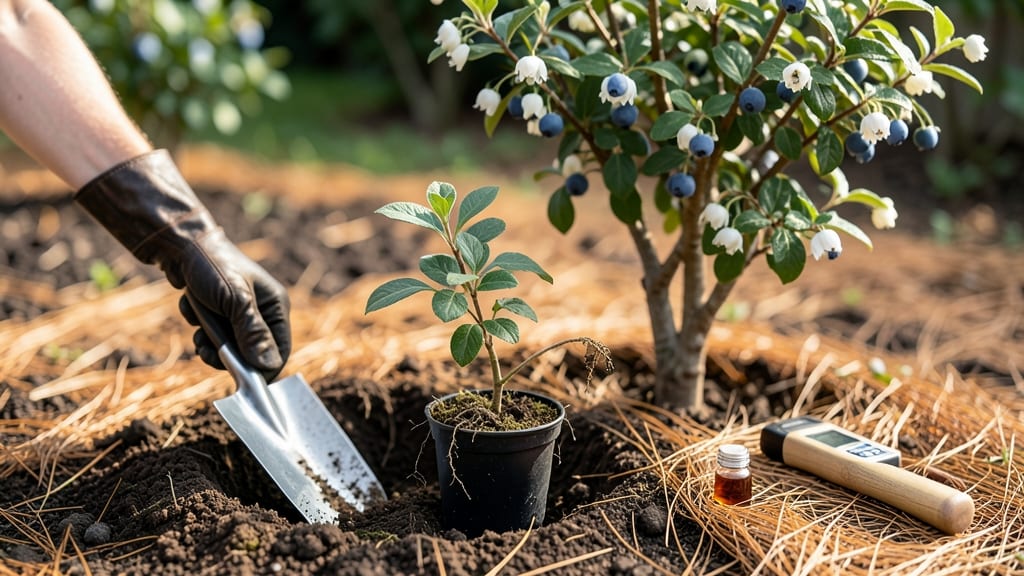
Timing your blueberry bush planting in Michigan can mean the difference between a thriving 🫐 harvest and a sad, frost-nipped failure.
The state’s USDA zones 5b-6b and unpredictable spring frosts demand precision—plant too early, and you risk losing your young shrubs to late cold snaps; too late, and they won’t establish strong roots before winter.
Most gardeners swear by the late April to early June window or a second chance in September to early October, but Michigan’s regional variations complicate things. Northern areas near the UP need to wait longer for soil warmth, while southern zones can push the envelope slightly earlier.
The key? Matching your variety’s chill-hour needs to your microclimate.
I’ve tested these methods over years in Michigan gardens, and what works isn’t just about the calendar—it’s about soil prep, frost-free deadlines, and understanding how 400–900 chill hours shape your blueberry’s growth cycle.
Whether you’re planting bare-root or container-grown bushes, I’ll walk you through the exact steps to give your 🫐 the best shot at survival and productivity.
Ready to avoid the common pitfalls? Let’s break down the science behind Michigan’s frost dates, the ideal planting windows for your specific zone, and how to prepare your soil for maximum success—so you can enjoy those first juicy berries by late June.
Best planting months in Michigan based on chill-hour requirements
Michigan’s USDA zones 5b-6b create unique challenges for blueberry bushes, which need 400–900 chill hours to thrive. In northern Michigan, where winters are colder, late-spring frosts can delay planting until late May or early June, while southern Michigan gardeners often plant as early as late April.
Fall planting is also viable in September through early October, giving roots time to establish before winter.
Blueberry bushes require well-draining, acidic soil (pH 4.5–5.5). Michigan’s clay-heavy soils often need amendments like peat moss or sulfur to achieve the right acidity.
Testing your soil’s pH before planting is critical—blueberries won’t grow well in alkaline soil. Northern Michigan’s shorter growing season means selecting early-maturing varieties like ‘Bluecrop’ or ‘Patriot’ is wise, while southern Michigan can handle later varieties like ‘Duke’ or ‘Jersey’.
Spring planting in Michigan should wait until two weeks after the last frost date, typically around mid-to-late April in southern Michigan and late May in northern regions. Fall planting, however, offers a longer window—September through early October—allowing roots to establish before winter dormancy.
This timing reduces transplant shock and improves survival rates in Michigan’s variable climate.
🌱
| Region | Best Spring Planting Window | Best Fall Planting Window | Chill-Hour Needs |
|---|---|---|---|
| Southern Michigan (USDA 6a-6b) | Late April – Early May | September – Mid-October | 600–900 hours |
| Central Michigan (USDA 5b-6a) | Early May – Early June | Mid-September – Early October | 500–700 hours |
| Northern Michigan (USDA 5a-5b) | Late May – Early June | Early September – Mid-October | 400–600 hours |
*Chill hours vary by variety; always check seed packet or nursery recommendations.
For bare-root blueberry bushes, Michigan gardeners should plant as soon as possible after purchase, ideally within 24–48 hours. These plants are dormant and can handle cooler soil temperatures, making them ideal for early spring or fall planting.
Container-grown blueberries, however, require slightly warmer soil—wait until soil temperatures reach 45°F (7°C)—which is typically late May in northern Michigan.
Michigan’s late-spring frosts (common until mid-May in many areas) can devastate young blueberry plants. To mitigate risks, choose low-chill varieties like ‘Top Hat’ or ‘Sunshine Blue’, which thrive with fewer chill hours.
These varieties are better suited for northern Michigan’s shorter winters and unpredictable springs. Always plant in well-drained, slightly elevated areas to avoid frost pockets.
Another key consideration is soil temperature. Blueberry roots need soil temps above 45°F (7°C) to establish properly. In Michigan, this often means waiting until late May in northern regions.
Use a soil thermometer to monitor conditions—planting too early in cold soil can stunt root growth and reduce survival rates.
🌿
If you’re planting in fall, focus on late September through early October to allow roots to establish before winter. Avoid planting too late—new roots won’t harden off if planted after mid-October, increasing winter dieback risks.
Mulch heavily with pine straw or wood chips (3–4 inches) to insulate roots and retain moisture during Michigan’s cold winters.
For container-grown blueberries, the window is slightly more flexible—plant anytime soil isn’t frozen, but aim for spring or early fall. Containers warm up faster in spring, so you can plant 2–3 weeks earlier than bare-root plants.
Just ensure the container has drainage holes and use a well-draining, acidic potting mix.
How Michigan’s frost dates and chill hours affect blueberry growth
Blueberry bushes in Michigan thrive when planted during windows that align with their chill-hour requirements—typically 400–900 hours below 45°F. Northern Michigan’s USDA Zone 5b needs varieties like ‘Bluecrop’ or ‘Patriot’ (800+ chill hours), while southern Michigan’s Zone 6b can handle ‘Duke’ or ‘Jersey’ (500–700 chill hours).
Timing matters because late-spring frosts (common until May 15 in northern Michigan) can damage new growth. Planting too early risks exposing roots to frost-heaving, while late planting may delay root establishment before winter.
Soil temperatures also play a role: roots need 40–50°F soil to grow. In Michigan, this usually means waiting until late April or early May for spring plantings or September–early October for fall plantings, when frost risk drops.
⚠️ Late-Spring Frost Risk
Northern Michigan’s May 15 average frost date means planting after May 1 reduces frost damage risk. Southern Michigan’s April 25 average frost date allows earlier spring plantings—but always check local almanac forecasts.
Chill hours also influence flowering and fruit set. Varieties like ‘Bluegold’ (600 chill hours) may struggle in Zone 5b if planted too late, while ‘Chandler’ (900+ chill hours) thrives in northern Michigan but may produce fewer berries in Zone 6b.
For fall plantings, aim for 6–8 weeks before first frost (typically September–early October in Michigan). This gives roots time to establish before winter dormancy. Use mulch (3–4 inches) to insulate roots and protect against temperature swings.
Always test your soil’s pH (4.5–5.5) and amend with peat moss or sulfur if needed. Acidic soil is non-negotiable for blueberries—without it, your bushes won’t produce fruit, no matter the planting timing.