
Plants
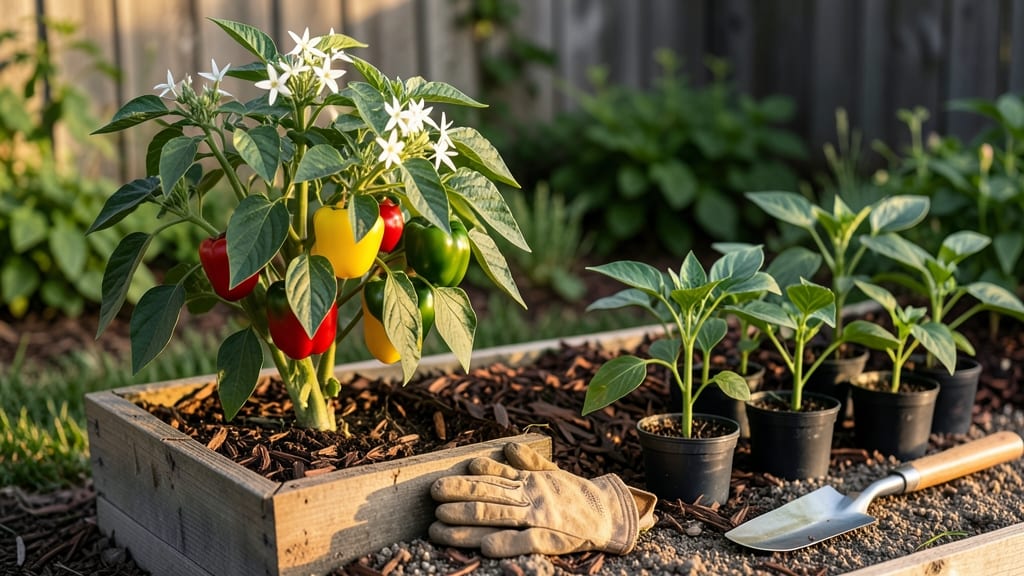
Timing your bell pepper 🌶️ planting in Ohio isn’t just about dates—it’s about catching that narrow window between frost and summer heat. Plant too early, and a late frost will turn your seedlings into sad, wilted memories.
Too late, and you’ll miss the harvest before Ohio’s first frost hits in October.
Most Ohio gardeners know the April 15 deadline for outdoor planting, but the real secret lies in soil temperature. Bell peppers need warm soil—at least 60°F—to thrive, and that usually means waiting until late May in colder zones like 6a.
If you’re eager to start earlier, seed trays indoors in March give you a head start.
This guide breaks down Ohio’s microclimates—whether you’re in the frost-prone north or the slightly warmer south—and how to adjust your planting strategy. We’ll also cover the best varieties for your region and how to stretch your growing season with simple tricks.
Ready to turn Ohio’s short season into a pepper-packed harvest? Let’s get you planting with confidence.
Ohio’s bell pepper planting timeline: last frost dates by region
Ohio’s bell pepper growing season hinges on two critical factors: last frost dates and soil temperature. Unlike warmer climates, Ohio’s USDA Zones 5-6 demand precise timing—plant too early, and a late frost will kill tender seedlings. Too late, and you’ll miss the 90-day harvest window most varieties need.
Northern Ohio (e.g., Cleveland, Toledo) typically sees its average last frost around May 15, while southern Ohio (e.g., Cincinnati, Columbus) warms up by April 20-30.
Central Ohio falls in between, with May 1 as a general guideline. But these are averages—actual frost dates can vary by 2-3 weeks each year.
Here’s the golden rule: Don’t plant outdoors until the soil temperature consistently reaches 60°F at a depth of 4 inches. A soil thermometer is your best friend—bell peppers won’t thrive in cooler soil.
In northern Ohio, this often means waiting until late May, while southern Ohio gardeners can start as early as mid-April.
🌱
| Region | Avg. Last Frost | Safe Planting Window | Soil Temp. Threshold | Heat Units Needed |
|---|---|---|---|---|
| Northern Ohio | May 15 | Late May - Early June | 60°F+ | 2,500-3,000 |
| Central Ohio | May 1 | Mid-April - Late May | 55-60°F | 2,200-2,800 |
| Southern Ohio | April 20-30 | Mid-April - Early May | 55°F+ | 2,000-2,500 |
Note: Heat units are calculated based on 50°F baseline. Use a growing degree calculator for precise tracking.
For 90-day varieties like 'California Wonder' or 'Jupiter', timing is everything. If you plant in northern Ohio after May 15, you’ll likely harvest just as first frost (around October 15) arrives.
That’s why many Ohio gardeners opt for shorter-season varieties (e.g., 'Sweet Banana' at 60 days) or use row covers to extend the season.
Pro tip: Check Ohio State University’s Frost/Freeze Forecast (updated weekly) for real-time updates. Even if your region’s average last frost has passed, a late cold snap can still threaten young plants. I’ve seen June frosts in northern Ohio—always be prepared with frost cloth or a greenhouse.
If you’re starting seeds indoors, begin them 8-10 weeks before your target outdoor planting date. For northern Ohio, that means early March; southern Ohio gardeners can start as late as mid-April.
Use grow lights to ensure seedlings get 12-16 hours of light daily—weak, leggy seedlings struggle to adapt outdoors.
🌿
One mistake I see often is relying solely on calendar dates instead of soil conditions. A 50°F soil in April might feel warm to the touch, but it’s too cold for bell peppers. Always test with a soil therm
How to extend Ohio’s short growing season for bell peppers
Ohio’s short growing season (just 165 frost-free days) can feel like a race against time for bell peppers. But with the right strategies, you can push your harvest window later into fall.
The key? Transplanting at the perfect time, using season-extending tools, and choosing varieties that thrive in cooler conditions.
Most Ohio gardeners start bell pepper seeds indoors 8-10 weeks before the last frost (typically mid-March).
This gives seedlings a head start, but timing is everything—transplant too early, and frost will kill them; too late, and you’ll miss peak production. Heat-tolerant varieties like 'Carolina Wonder' or 'Jupiter' are your best bets for stretching the season.
Here’s how to maximize your bell pepper harvest in Ohio’s unpredictable climate:
🌱 Extending the Season: Pros & Cons
✅ Transplanting Seedlings
- Pros: Earlier harvest, stronger plants, better disease resistance
- Cons: Requires indoor space, more upfront work
❌ Direct Sowing
- Pros: No transplant shock, simpler process
- Cons: Risk of frost damage, slower growth
💡 Season-Extending Tools
- Cold frames: Add 2-3 weeks to the season
- Row covers: Protect from late frosts
- Black plastic mulch: Warms soil faster
For successive planting, sow a second batch of seeds indoors in early May. Transplant these outdoors 4-6 weeks before the first frost (typically late July).
This gives you a second harvest wave just as summer transitions to fall. Succession planting is especially effective for shorter varieties like 'Sweet Banana' peppers.
Don’t overlook soil preparation—amend your garden beds with compost or aged manure before planting. Bell peppers crave warm, well-draining soil with a pH of 6.0-6.8. Test your soil in early spring; if it’s too cold, use black plastic mulch to raise temperatures by 5-10°F.
Even with these strategies, Ohio’s early fall frosts can sneak up. Keep an eye on 10-day forecasts and harvest peppers before temperatures drop below 50°F at night. With the right approach, you can enjoy fresh bell peppers from July through October—or even longer with a greenhouse! 🌶️