
Trees
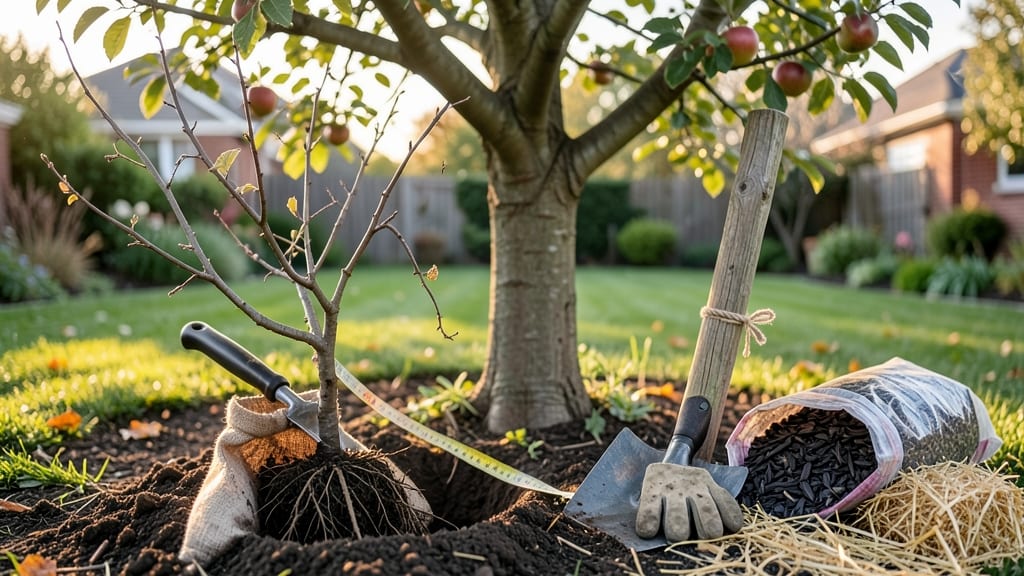
Timing your apple tree planting in England isn't just about the calendar—it's about matching the right variety to the chill-hour needs of your region, and getting it wrong could mean years without fruit.
Whether you're planting bare-root saplings or container-grown 🍎 trees, the late autumn to early spring window offers the best chance for strong root establishment before summer's heat arrives.
Most gardeners focus on the November-March planting period, but the real secret lies in understanding how cold your area gets. England's diverse zones—from milder southern counties to cooler northern regions—demand different approaches.
A Cox's Orange Pippin might thrive in the warmer 8a-9b zones, while hardier varieties like Discovery need longer winter chills to set fruit properly.
You might assume spring is ideal, but planting too early risks frost damage, while waiting too late can stunt root growth before summer. The key is balancing dormancy with soil workability—loose, well-drained earth is your best friend.
We'll break down exactly which months work best for your specific location, plus how to prep your soil for maximum success.
From container planting hacks to frost-proofing techniques, I'll show you how to avoid the three biggest mistakes that turn promising young trees into failed investments. Let's get those roots established the right way—so you can enjoy your first harvest between August and October.
Best planting months for apple trees in England by chill-hours requirements
England's diverse climate means the perfect planting window for apple trees varies by region and variety. Most gardeners focus on November to March, but timing depends on your tree's chill-hour needs—the number of hours below 7°C (45°F) required to trigger flowering.
For example, Cox's Orange Pippin needs 500-600 chill hours, while Discovery (a modern variety) thrives with just 300-400 chill hours. Planting at the wrong time can delay fruiting by years—or worse, prevent it entirely.
In southern England, where winters are milder, aim for late autumn (November-December) to avoid early spring frosts. In northern England, where winters are colder, January-February gives roots time to establish before spring growth begins.
🌱
| Variety | Chill-Hours Needed | Best Planting Month | Region Fit |
|---|---|---|---|
| Cox's Orange Pippin | 500-600 | November-December | Cooler zones (North/Midlands) |
| Bramley's Seedling | 400-500 | January-February | All regions |
| Discovery | 300-400 | February-March | Milder south |
| Egremont Russet | 450-550 | November-December | Cooler zones |
| Fuji (Modern) | 350-450 | February-March | All regions |
Bare-root trees are best planted in winter dormancy (November-February), as their roots are less prone to drying. Container-grown trees offer more flexibility—plant them anytime except summer heatwaves, which stress roots.
If you miss the winter window, early spring (March) is your second chance, but avoid planting after buds swell—this risks frost damage to new growth. Always check your local frost dates (typically mid-March in most of England).
For container planting, spring (April-May) works well if you water deeply and mulch heavily. Just remember: root development takes priority over fruit production in the first 2 years, so avoid heavy pruning or fertilizing.
🌿
Pro tip: Use a soil thermometer to confirm ground temps are below 10°C (50°F) before planting—this ensures roots won’t wake up too soon. In urban areas, where microclimates vary, monitor nearby parks or allotments for frost patterns.
🌳
Best planting months for apple trees in England by chill-hours requirements
England’s climate offers a narrow but critical window for planting apple trees—late autumn to early spring—when trees are dormant and less vulnerable to transplant shock. The key? Matching your chosen variety’s chill-hour needs with your region’s winter cold exposure.
For example, Cox’s Orange Pippin thrives with 800+ chill hours, while Discovery apples need just 300–500 hours, making them ideal for milder southern zones.
In England, the best planting months are November through March, with February and March being optimal for bare-root trees. This aligns with the soil’s natural chill and reduced frost risks after the mid-March last frost in most areas.
Container-grown trees offer more flexibility but still benefit from avoiding summer heat stress.
| Variety | Chill-Hours Needed | Best Planting Month | Regional Fit |
|---|---|---|---|
| Bramley's Seedling | 800+ hours | November–March | Cooler north |
| Cox's Orange Pippin | 800+ hours | November–February | Central/south |
| Discovery | 300–500 hours | February–April | Mild south |
| Egremont Russet | 500–700 hours | November–March | West coast |
Regional microclimates play a huge role. In northern England, where winters are colder, plant high-chill varieties like Bramley’s Seedling in November to ensure roots establish before frost.
Meanwhile, southern England’s milder winters suit low-chill varieties like Discovery, which can wait until February or even early March without risking dormancy disruption.
Soil temperature is another critical factor. Aim for soil temps below 10°C (50°F)—ideal for root growth without premature sprouting. Use a soil thermometer to check, especially in warmer microclimates like London or coastal areas where soil may warm faster.
If planting in February or March, monitor forecasts for late frosts, which can damage emerging buds.
Pro tip: Bare-root trees should be planted as soon as possible after purchase to prevent root desiccation. If you can’t plant immediately, heel them in (temporarily bury roots in moist soil) and keep them shaded.
For container-grown trees, water thoroughly before planting to reduce transplant shock, and avoid disturbing the root ball more than necessary.
Remember, apple trees planted outside their chill-hour window may fail to flower—or worse, produce poor-quality fruit with uneven ripening. By aligning your planting date with your variety’s needs, you’re setting the stage for years of reliable harvests.