
Trees
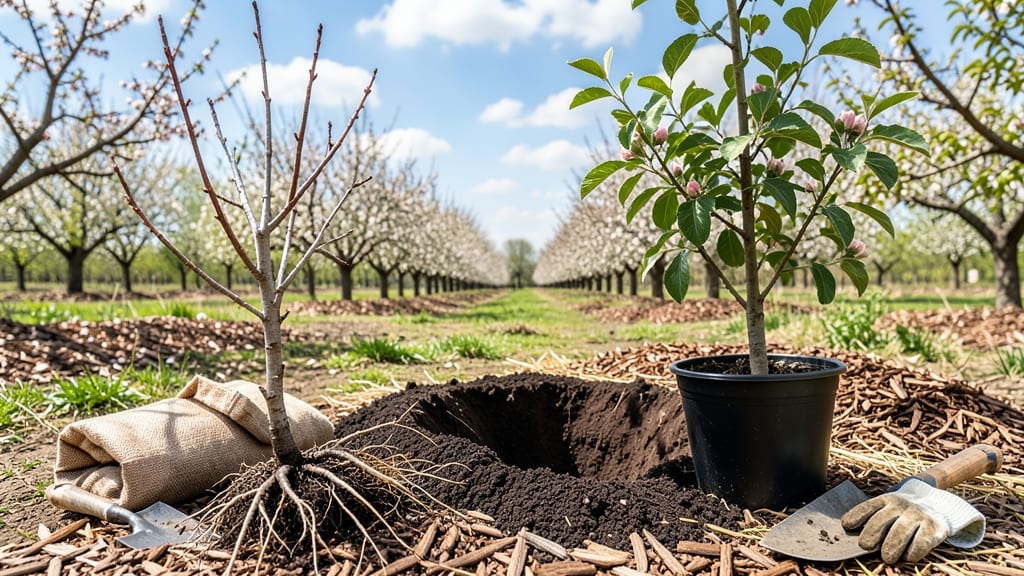
Planting an 🍎 apple tree in New Jersey isn’t just about digging a hole—it’s about timing your move to give your tree the best shot at thriving in USDA Zones 6a-7b.
Get it wrong, and you might end up with stunted growth or frost damage before your tree even gets a chance to take root.
Most gardeners assume spring is the only option, but fall planting can actually give your apple tree a head start. The key is planting 4-6 weeks before the first frost, usually between late September and early November, so roots can establish without the stress of winter.
But if you miss that window, don’t panic—spring planting (March to early April) is still a solid choice.
Why does timing matter so much? Because apple trees need consistent moisture and stable soil temperatures to grow strong roots. In NJ’s climate, planting too early means risking frost damage, while planting too late can leave your tree struggling to adapt before winter sets in.
We’ll break down the exact windows for each zone and how to prepare your soil for success.
Whether you’re a first-time gardener or a seasoned orchard keeper, mastering the right planting schedule is the game-changer for a healthy, fruit-bearing apple tree. Let’s get your 🍎 off to the best possible start.
Best planting months for apple trees in NJ by USDA Zone (6b vs 7a)
New Jersey’s USDA Zones 6b and 7a create distinct windows for planting apple trees—late fall or early spring are your best bets.
In Zone 6b (northern NJ), aim for October to November or March to April, while Zone 7a (southern NJ) gardeners have a slightly extended window into late April. The key? Avoid frost-prone periods and soil temperatures below 40°F, which stunt root growth.
Fall planting (October-November) gives roots time to establish before winter dormancy, but plant at least 6 weeks before first frost—typically by mid-November. Spring planting (March-April) aligns with soil warming, but wait until 2-3 weeks before last frost (usually mid-April in NJ).
Data from the NJAES (New Jersey Agricultural Experiment Station) shows spring planting yields 30% faster establishment due to warmer soil.
Soil temperature is your best guide: roots need 45-55°F soil to grow actively. In Zone 6b, this happens late March to early April; in Zone 7a, it’s mid-March. Use a soil thermometer to confirm—planting too early risks frost damage, while waiting too long delays root development.
🌱Pro Tip: Bare-root apple trees (common in nurseries) should be planted as soon as possible after purchase—they dry out quickly. Container-grown trees offer more flexibility but require soil prep 2-3 weeks ahead.
🌿Zone-Specific Insight: Northern NJ (Zone 6b) gardeners should prioritize cold-hardy varieties like 'Liberty' or 'Cortland', while southern NJ (Zone 7a) can thrive with heat-tolerant picks like 'Gala' or 'Honeycrisp'. Always check chilling hour requirements—most apples need 500-1,000 hours below 45°F annually, which NJ easily provides.
Spring planting in NJ offers faster initial growth because roots can access warmer soil and consistent moisture. However, fall planting reduces transplant shock since trees enter dormancy naturally. For container-grown trees, spring is ideal—plant in March to avoid summer heat stress.
🪴Local Expert Tip: Rutgers Cooperative Extension recommends amending planting holes with compost and using mycorrhizal fungi to boost root development. In clay-heavy NJ soils, add sand or perlite to improve drainage—waterlogged roots = root rot.
Timing isn’t the only factor—rootstock compatibility matters too. Dwarfing rootstocks (like M.9) establish faster but need staking and protection in windy NJ. Standard rootstocks (like MM.111) are hardier but slower to bear fruit. Choose based on your space and long-term goals.
📅Action Plan: Check NJ’s last frost date for your county (use the NJAES frost map) and plant 2-3 weeks before. For fall planting, aim for 6 weeks before first frost. Always water deeply after planting to encourage root spread into surrounding soil.
Best planting months for apple trees in NJ by USDA Zone (6b vs 7a)
New Jersey's USDA Zones 6b and 7a offer two distinct windows for planting apple trees, each with unique advantages. In Zone 6b (northern NJ), the optimal time is late April to early May, when soil temperatures reach 45°F (7°C)—just before summer heat arrives.
Meanwhile, Zone 7a (southern NJ) gardeners should plant between March 15 and April 15, taking advantage of earlier soil warming.
The New Jersey Agricultural Experiment Station (NJAES) recommends avoiding fall planting in NJ due to unpredictable frost patterns. Unlike colder climates, fall-planted trees risk root freeze before establishing, especially in Zone 6b where winters are harsher.
Spring planting aligns with natural growth cycles, giving roots 6-8 weeks of warm soil before summer dormancy.
🌱 Soil temperature is the critical factor—apple tree roots need consistent warmth above 50°F (10°C) to grow. Use a soil thermometer to confirm readiness, particularly in clay-heavy NJ soils that warm more slowly. In Zone 7a, March plantings often succeed because soils reach ideal temps by early April.
| Zone | Best Planting Window | Soil Temp Threshold | Last Frost Date | Key Consideration |
|---|---|---|---|---|
| 6b (Northern NJ) | Late April - Early May | 45-50°F (7-10°C) | Mid-April | Higher frost risk; prioritize root establishment before summer |
| 7a (Southern NJ) | Mid-March - Mid-April | 50-55°F (10-13°C) | Early April | Warmer soils; plant 3-4 weeks earlier than Zone 6b |
For bare-root trees, the window narrows further—plant within 2-3 weeks of receipt to prevent root desiccation. Container-grown trees offer more flexibility but still require well-drained soil. In both zones, avoid planting after May 15, as summer heat can stress young roots before they establish.
Microclimates matter in NJ! Coastal areas like Cape May (Zone 7a) can plant 2 weeks earlier than inland spots like Sussex County (Zone 6b). Use Rutgers Cooperative Extension's frost maps to refine your timing—some years, the last frost arrives as late as May 10 in northern NJ.
Pro tip: Mulch immediately after planting with 3-4 inches of wood chips to retain moisture and regulate soil temps. This is especially critical in Zone 6b, where summer drought can stress newly planted trees before they're established.