
Companion Plants
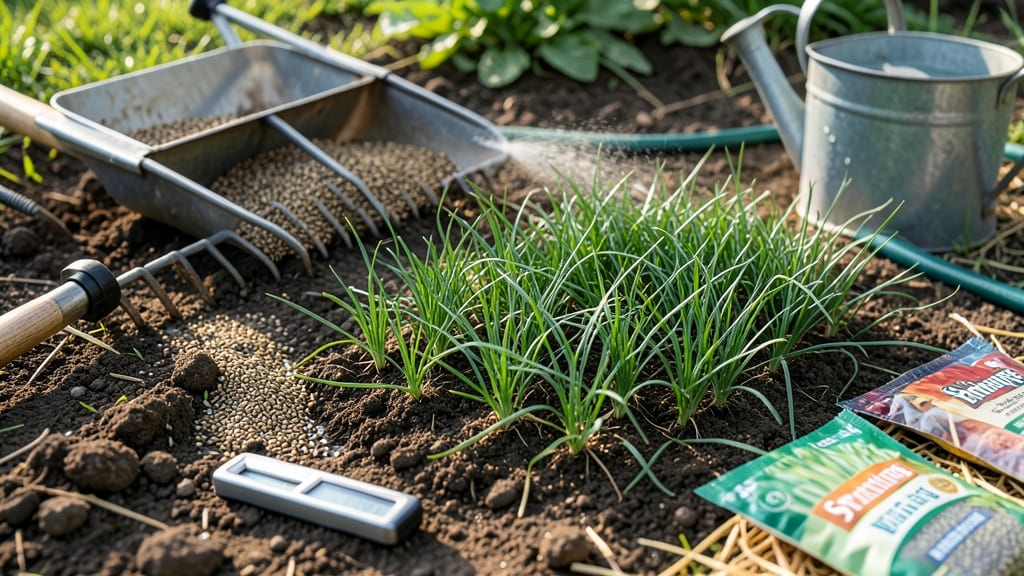
Timing your grass seed planting in spring isn’t just about checking the calendar—it’s about reading your soil’s secret signals. Plant too early, and you risk weak germination; too late, and your lawn might struggle to establish before summer heat sets in.
The key lies in soil temperature, not just dates, and getting this right can mean the difference between a lush green lawn and a patchy disappointment.
In USDA Zone 6a, like many northern regions, early to mid-spring is your sweet spot—but that still leaves room for mistakes. Cool-season grasses like Kentucky bluegrass and fescue thrive when soil hits 50°F–65°F, while warm-season types need to wait until after the last frost.
I’ll show you exactly how to test your soil, pick the right seed for your climate, and avoid common pitfalls that waste time and money.
Why does this matter? Because fast germination starts with the right prep—clearing debris, aerating compacted soil, and watering just enough to keep seeds moist without drowning them.
We’ll cover all the steps to give your 🌱 grass the best possible start, so you’re not left pulling weeds or replanting later in the season.
Ready to skip the guesswork? Let’s dive into the science-backed tricks that’ll have your lawn looking its best by summer—no more second-guessing, just confident planting. You’ll learn how to time it perfectly, no matter where you live.
The perfect spring soil temperature range for planting grass seed
Timing your grass seed planting isn’t just about checking the calendar—it’s about reading your soil’s temperature. Cool-season grasses like Kentucky bluegrass and fescue thrive when soil hovers between 50°F and 65°F.
Planting too early (below 50°F) stalls germination, while waiting too long (above 70°F) risks bolting, where grass flowers prematurely instead of growing lush. Northern climates hit this sweet spot in April or early May, while southern regions may need to plant as early as February or March.
Why does soil temperature matter so much? Grass seeds need warmth to activate enzymes that break down stored nutrients, but excessive heat (above 75°F) stresses them into flowering mode. Think of it like Goldilocks—too cold, too hot, or just right.
The 55°F mark is your magic threshold: most seeds will germinate within 7–14 days when planted at this temperature. For warm-season grasses like Bermuda or Zoysia, wait until soil reaches 65°F–75°F, typically late spring or early summer.
| Grass Type | Ideal Soil Temp (°F) | Best Planting Window | Germination Time |
|---|---|---|---|
| Cool-Season (Kentucky Bluegrass, Fescue, Ryegrass) | 50°F–65°F | Early to mid-spring (4–6 weeks before last frost) | 7–14 days |
| Warm-Season (Bermuda, Zoysia, St. Augustine) | 65°F–75°F | Late spring to early summer | 10–21 days |
🌱 Pro Tip: Use a soil thermometer ($10–$15) to check temps 2–3 inches deep, where seeds will be planted.
Testing your soil temperature is easier than you think. Bury a soil thermometer (or a regular thermometer wrapped in foil) 2–3 inches deep in a shady spot for 30 minutes. Repeat on a few different days to account for daily fluctuations.
If your soil is still chilly, cover bare patches with black plastic mulch for 1–2 weeks to warm it up naturally. This trick is especially useful in northern climates where spring arrives slowly.
Conversely, if your soil is already too warm (above 70°F), delay planting until temperatures drop—even a 10°F difference can mean the difference between lush growth and bolted grass.
Regional differences play a huge role in timing.
In USDA zones 3–5 (think Midwest, Northeast), aim for late April to early May when frost risk has passed and soil is consistently above 50°F. In zones 6–8 (Southeast, Southwest), you can plant as early as February or March, but monitor for sudden heatwaves.
For zones 9–10 (California, Florida), focus on late winter or early spring to avoid summer’s scorching temperatures. The key is to plant when your local average daily low is above 40°F but before the average daily high exceeds 75°F.
One of the biggest mistakes gardeners make is planting too early, hoping for a head start. While March planting might seem like a good idea, cold soil can leave seeds dormant for weeks—or worse, rot if rain follows. Another pitfall is ignoring microclimates in your yard.
South-facing slopes warm up faster than shady spots, so test multiple areas. If your lawn has patchy sun exposure, prioritize seeding shadier areas first, as they’ll stay cooler longer.
For overseeding existing lawns, focus on cool-season grasses in early spring to fill in thin spots before summer stress sets in.
Once you’ve nailed the timing, the next critical step is preparing your soil. Loosen the top 2–3 inches with a rake or aerator to create a seed-friendly bed.
Remove debris and level the surface—uneven areas can lead to water pooling or seed burial too deep, both of which kill germination. After planting, keep the soil consistently moist (not soggy) until seeds sprout.
A light layer of starter fertilizer or compost can give your grass a nutrient boost, but avoid heavy feeds until the lawn is established. With the right temperature and care, your grass will germinate in 7–21 days, depending on the variety.
Remember, the goal isn’t just to plant grass—it’s to grow a resilient lawn that thrives all season. By mastering soil temperature and regional timing, you’ll skip the guesswork and enjoy a lush, weed-free yard by summer.
Start testing your soil now, and you’ll be ready to plant just as spring hits its stride. 🌱
How to prepare your lawn for spring grass seed planting in 5 critical steps
Spring is the perfect time to transform your lawn, but rushing into planting grass seed without proper prep can lead to patchy growth or wasted seed. The key lies in 5 critical steps that create ideal conditions for germination—starting with soil health and ending with consistent moisture.
Skipping any of these can leave your lawn struggling from day one.
First, test your soil’s pH using a simple kit (available at garden centers). Grass thrives in a pH range of 6.0–7.5, so if your soil is too acidic or alkaline, amend it with lime or sulfur 4–6 weeks before planting.
This gives soil microbes time to adjust and create a welcoming environment for your new seeds.
🌱 5 Critical Steps for Spring Grass Seed Prep
- Test soil pH (aim for 6.0–7.5) and amend if needed.
- Remove debris (leaves, rocks, weeds) to prevent competition.
- Aerate compacted soil (rent a core aerator for best results).
- Spread seed evenly using a broadcast spreader (follow package rates).
- Water lightly daily (keep soil moist but not soggy for 2–3 weeks).
Next, clear all debris and weeds from your lawn. Use a rake to pull out dead leaves, twigs, and weeds—even small patches can smother your new grass. For stubborn weeds, apply a pre-emergent herbicide 2 weeks before planting to prevent regrowth.
This step ensures your grass seed gets the sunlight and nutrients it needs without competition.
Don’t overlook aeration, especially if your lawn has compacted soil from foot traffic or heavy rainfall. Rent a core aerator to pull small plugs of soil, creating holes for seeds to settle into loose, oxygen-rich earth.
For small areas, a manual aerator or even a garden fork works. Aerate when the soil is slightly damp (not muddy) for the best results.
When planting, use a broadcast spreader for even coverage—walk in opposite directions to avoid streaks. Lightly rake the seed into the soil (no deeper than ¼ inch) to ensure good seed-to-soil contact.
Cover with a thin layer of starter fertilizer (like 10-10-10) to give seedlings a nutrient boost. Avoid heavy mulch, as it can block sunlight and trap moisture.
Finally, watering is non-negotiable for the first 2–3 weeks. Keep the soil consistently moist (like a damp sponge) by watering lightly daily in the morning. Use a sprinkler with a fine mist setting to avoid washing away seeds.
Once seedlings reach 2–3 inches tall, gradually reduce watering to 2–3 times per week to encourage deep root growth.