
Plants
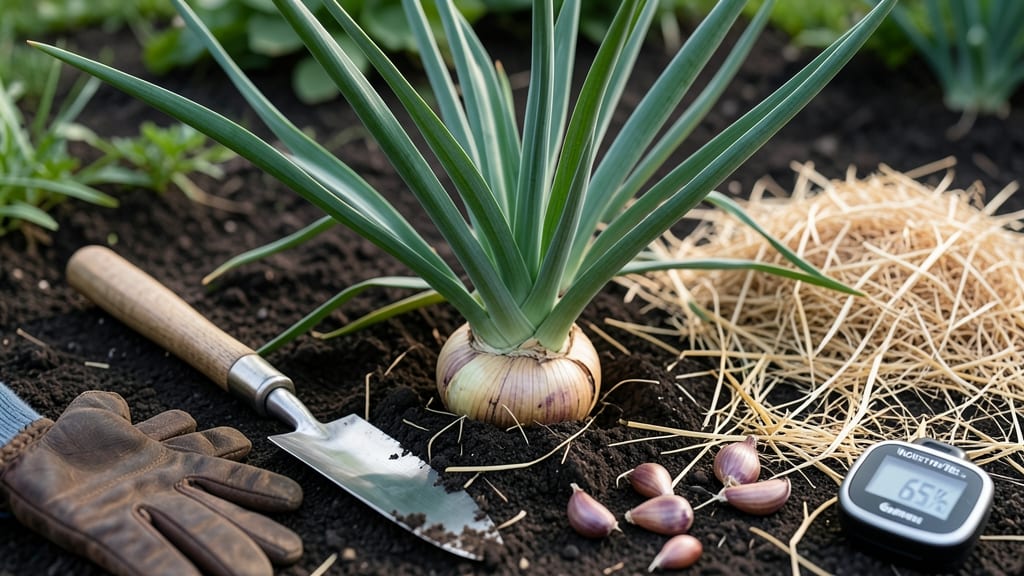
Timing your garlic 🧄 planting in North Dakota isn’t just about following a calendar—it’s about working with the land’s unique rhythm. Plant too early, and your cloves might rot before winter; too late, and they won’t establish roots before the ground freezes.
The 4-week window between mid-September and early October exists for a reason, and mastering it could mean the difference between a bountiful harvest and wasted effort.
Here’s the truth: North Dakota’s USDA Zone 4a climate demands precision. Hardneck varieties—like the cold-hardy ‘German White’ or ‘Music’—thrive when planted in soil that’s cooled to 40-50°F, giving them time to root before winter dormancy.
Skipping this step? Your garlic might not survive the subzero temperatures or heaving frost that can push bulbs to the surface. Let’s break down exactly how to get it right.
You’ll learn why fall planting is non-negotiable in this region, how to prep your soil for winter survival, and the mulching tricks that protect your crop through -20°F nights.
Whether you’re a first-time gardener in Fargo or a veteran grower in the western badlands, these insights will help you avoid common pitfalls and maximize your yield.
Ready to grow garlic that’s hardier than the North Dakota winter? Let’s dive into the exact steps—from soil prep to frost timing—that will set you up for success next harvest season.
North Dakota’s optimal garlic planting timeline by USDA Zone
Timing your garlic planting in North Dakota hinges on two critical factors: USDA hardiness zones and soil temperature thresholds. Most of the state falls within zones 3-5, where hardneck varieties excel.
The ideal window is 4-6 weeks before the first hard frost, typically mid-September to early October. This timing allows bulbs to establish roots before winter dormancy begins.
For USDA Zone 3 (western ND), aim for planting by September 15 to ensure roots develop before subzero temperatures set in. In Zone 4a (e.g., Fargo), you have slightly more flexibility until early October.
Zone 5 areas (southeastern ND) can extend planting to mid-October, but avoid planting after October 15—roots won’t have enough time to anchor before winter.
Soil temperature is your best indicator for planting readiness. Garlic cloves thrive when soil temps drop to 40-50°F. Use a soil thermometer to confirm—planting too early (when soil is still warm) can trigger premature sprouting, while waiting too long risks shallow roots vulnerable to winter heaving.
Here’s how regional variations impact your planting schedule:
| USDA Zone | Planting Window | Soil Temp Threshold | Key Consideration |
|---|---|---|---|
| Zone 3 | Mid-Sept to Sept 15 | 40-45°F | Shortest growing season; prioritize early root establishment |
| Zone 4a (Fargo) | Mid-Sept to Oct 1 | 45-50°F | Balanced window; monitor frost dates closely |
| Zone 5 (SE ND) | Late Sept to Oct 15 | 50°F | Longer season; avoid late planting risks |
Miss the fall window? Spring planting is possible but yields are 50% smaller. If you must plant in spring, use smaller cloves (like those from grocery stores) and plant as early as March—but expect harvests only from green garlic (shoots), not mature bulbs.
Hardneck varieties need 120+ frost-free days to form full bulbs, which spring planting rarely provides.
Pro tip: Check your local NDAWN weather station (North Dakota Agricultural Weather Network) for soil temperature updates and frost predictions. For example, Dickinson (Zone 4b) often sees first frosts by September 20, while Grand Forks (Zone 3) can freeze as early as September 10.
Adjust your schedule accordingly to avoid planting too late.
Remember, garlic planted in fall benefits from cold stratification, a natural process where winter chilling triggers bulb development. Without this, your harvest will be smaller and less flavorful. In North Dakota’s climate, this cold exposure is essential—don’t skip it!
For maximum bulb size, aim to plant when daytime highs average 60°F and nights drop to 40°F. This sweet spot balances root growth with frost hardening. Use a minimum-maximum thermometer buried in your garden bed to track these temps accurately.
Finally, account for snow cover. Areas with consistent snowfall (like Bismarck) can plant slightly later, as snow acts as insulation. In western ND, where winters are drier, plant 2 weeks earlier to prevent soil freezing before roots establish.
With these zone-specific guidelines, you’ll set your garlic up for a hardy winter and a bountiful summer harvest—no matter where in North Dakota you garden. 🌱
North Dakota’s optimal garlic planting timeline by USDA Zone
North Dakota’s USDA Zones 3-5 create a tight window for planting hardneck garlic—one that balances root establishment with winter survival. The magic happens when soil temperatures drop to 40-50°F, signaling your garlic to focus on bulb development before dormancy.
In Zone 4a (most of the state), this typically means mid-September to early October, but regional variations demand attention.
For western North Dakota (Zone 3), where winters are harsher, aim for late August to mid-September—soil freezes faster, leaving less time for roots to anchor. Meanwhile, eastern areas (Zone 4b-5) like Fargo can stretch planting until early November, provided ground temps stay above freezing.
Missing this window? Your garlic may not survive heaving or subzero temps.
🌱
| USDA Zone | Ideal Planting Window | Soil Temp Threshold | Key Consideration |
|---|---|---|---|
| Zone 3 (Western ND) | Late August–Mid-September | 45–50°F | Faster freeze-up; prioritize early planting |
| Zone 4a (Central ND) | Mid-September–Early October | 40–45°F | Balanced window for root growth |
| Zone 4b-5 (Eastern ND) | Early September–Early November | 38–42°F | Longer growing season; monitor frost dates |
Use your local frost date as a guideline: plant 4-6 weeks before the first hard freeze (typically mid-September in most areas). For example, if your area’s first frost hits October 15, plant by September 1 to ensure roots establish before dormancy.
Pro tip: Check the NDAWN weather network for real-time soil temps—this is your best tool for precision planting.
Timing isn’t the only factor—soil prep and mulching become equally critical once you’ve planted. Without proper insulation, even perfectly timed garlic can heave out of frozen ground.
We’ll cover those steps in the next section, but for now, mark your calendar: September 15 is your deadline in most of North Dakota to avoid winter risks.
🌡️