
Flowers
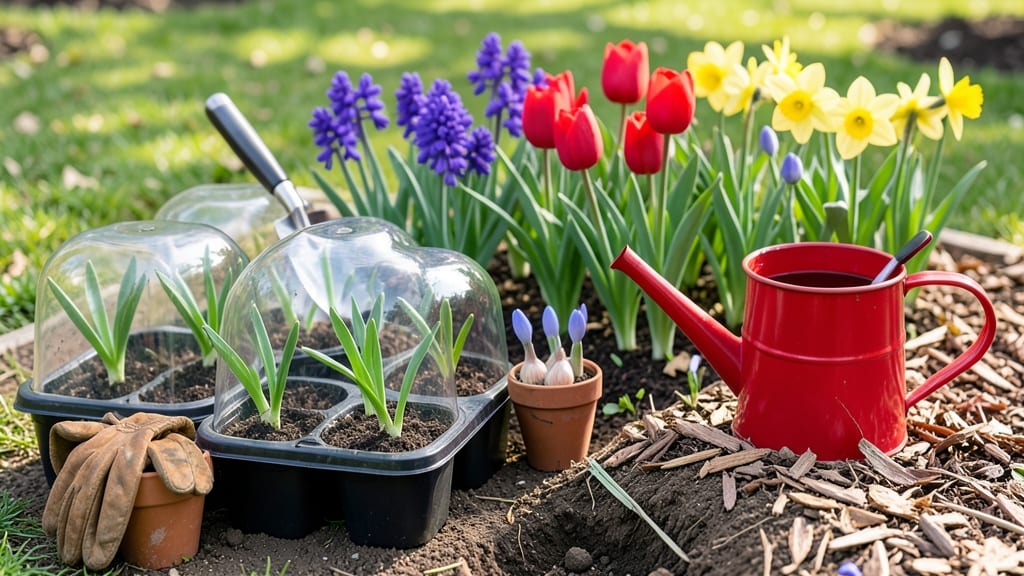
Timing your spring flower planting wrong can mean lost blooms—or worse, dead plants—before they even show their first leaves. The difference between a vibrant garden and a sad, struggling patch of dirt often comes down to knowing exactly when to plant those delicate 🌸 seeds and seedlings.
If you're in Zone 6a like me, you already know the stakes are high—get it wrong, and you might be waiting all summer for flowers that never come. But here's the good news: with the right timing cues, you can avoid frost stress and give your flowers the perfect start.
I'll show you how to read your local frost dates, adjust for microclimates, and pick the best flowers for each month. Whether you're planting annuals that need warmth or perennials that can handle a little chill, we'll cover it all.
Let's dive into the microclimate-safe timeline that'll have your garden bursting with color from day one—no guesswork required.
Spring planting zones: when to plant flowers by last frost date
Spring planting success starts with knowing your last frost date, which varies dramatically across the U.S. The USDA Plant Hardiness Zone Map is your first tool—each zone has a typical frost-free window that dictates when to plant annuals, perennials, and bulbs.
For example, Zone 3 gardens (like Minnesota) may wait until mid-May, while Zone 10 (Southern California) can plant year-round in mild winters.
But don’t rely solely on zones—urban heat islands can push frost dates back by 2-3 weeks in cities like Chicago or Phoenix. Meanwhile, high-altitude gardens (e.g., Denver) often experience later frosts due to cooler temperatures at elevation.
Always check your local National Weather Service or agricultural extension service for precise frost predictions each year.
Annual flowers like marigolds and petunias are the most frost-sensitive and should wait until 2 weeks after your last frost date. Perennials, such as coneflowers or black-eyed Susans, can often tolerate light frosts and may be planted 1-2 weeks earlier. Bulbs, like tulips or daffodils, are exceptions—they thrive when planted in fall but can be tucked into the ground in early spring if soil isn’t frozen.
| USDA Zone | Last Frost Date (Avg.) | Ideal Planting Window | Frost-Sensitive Flowers | Hardy Perennials |
|---|---|---|---|---|
| Zone 3-4 (e.g., Northern Plains) | Mid-May | Late May - Early June | Petunias, Impatiens | Coneflowers, Lavender |
| Zone 5-6 (e.g., Midwest) | Early April | Mid-April - Early May | Marigolds, Snapdragons | Peonies, Daylilies |
| Zone 7-8 (e.g., Southeast) | Mid-March | Late March - April | Zinnias, Geraniums | Black-Eyed Susans, Salvia |
| Zone 9-10 (e.g., Southwest) | None (or Dec-Jan) | Year-round (avoid summer heat) | Vinca, Portulaca | Agastache, Gaillardia |
🌡️ Pro Tip: Use a soil thermometer—most flowers need 60°F+ soil to thrive.
Soil temperature matters just as much as air temperature. Cool-season flowers, like pansies or snap peas, can handle 50°F soil and may even be planted in early spring or fall.
But tender annuals like begonias or coleus won’t survive until soil hits 70°F. Test your soil with a digital thermometer at a 4-inch depth—this is the real indicator of planting readiness.
Don’t forget to prep your soil 4-6 weeks before planting.
Amend with compost or aged manure to improve drainage, and consider a slow-release fertilizer (like 10-10-10) to give flowers a nutrient boost. Mulch after planting to retain moisture and regulate soil temperature—critical for newly transplanted flowers adjusting to their environment.
If you’re in a transition zone (like Zone 7b), split your planting into two batches: hardy perennials in early spring and heat-loving annuals in late spring.
This staggered approach ensures continuous blooms from May through fall. For example, plant coreopsis in March and sunflowers in May for a seamless color transition.
For container gardens, timing shifts slightly. Potted flowers can be set out 1-2 weeks earlier than in-ground plants because containers warm up faster. However, avoid placing them on cold concrete or uninsulated surfaces
Microclimate adjustments: how to plant flowers earlier or later safely
Your yard isn't one uniform climate zone—it's a patchwork of microclimates where frost lingers in shady spots but bakes early in sunny patches. I've learned this the hard way after planting pansies too soon in a frost pocket and watching them wilt overnight.
Even if your USDA zone says it's safe to plant in early April, your north-facing slope might still get frost until May. The key is identifying these hotspots and cold traps before you dig your trowel into the soil.
Here's how I adjust planting times based on microclimate: start with your official last frost date, then add 2-4 weeks for cold spots and subtract 1-2 weeks for warm microclimates like south-facing walls or paved areas that absorb heat.
🌱 Pro Tip: Use a frost watch app or set up mini thermometers in suspect areas for 2-3 weeks to track temperature variations. I place mine at soil level where I plan to plant tender annuals like impatiens.
5 Microclimate Adjustments for Safer Planting
- 🌡️ Cold Spots: Delay planting by 2-4 weeks in frost pockets, low areas, or near water features. Pansies and snapdragons can handle light frost but may rot if planted too early.
- ☀️ Sun Traps: Plant heat-loving annuals like marigolds or zinnias 1-2 weeks earlier in south-facing beds where soil warms faster.
- 🏙️ Urban Heat Islands: Cities can be 5-10°F warmer than rural areas. Check soil temps with a soil thermometer—plant when it hits 60°F for most flowers.
- 🌳 Shady Gardens: Extend planting by 3-5 weeks for shade-tolerant flowers like coleus or impatiens. These thrive in cooler, moister conditions.
- 🏔️ High Altitude: Add 1-2 weeks to planting times for every 1,000 feet above sea level. At 5,000 feet, I plant petunias 2 weeks later than my lowland neighbors.
For early spring planting, I rely on protective barriers like frost blankets or row covers to shield seedlings. These can push planting back by 3-4 weeks in cold climates—just remove them during the day when temps rise above 50°F.
On the flip side, late-season extensions work for heat-tolerant varieties. I've had great success with cosmos and sunflowers planted as late as June in Zone 6a, thanks to their drought resistance and quick growth.
🌿 Remember: Always monitor your plants' progress. If leaves look yellowed or crispy, it's a sign they're struggling with temperature stress—adjust your timing or move them to a more suitable spot.