
Plants
Timing your dahlias 🌼 planting in Texas isn't just about avoiding frost—it's about outsmarting the heat. Plant too early, and your tubers will rot before they even sprout; too late, and you’ll miss the bold blooms that make summer gardens pop.
Texas gardeners know the drill: North Texas has its own rules, while South Texas plays by a completely different heat clock. But here’s the good news—with the right strategy, you can get dahlias thriving in USDA zones 8a-10b despite the brutal summers.
I’ll break down the exact month-by-month planting windows for your region, plus how to prep your soil and tubers for Texas’ extreme conditions. Whether you’re in Dallas or Houston, these tips will help you beat the heat and grow dahlias that turn heads all season long.
Ready to skip the guesswork? Let’s dive into the heat-proof planting schedule that’ll have your dahlias blooming like crazy—without the stress.
Texas heat-zone planting timeline: exact months for dahlias by region
Texas stretches across three distinct heat zones, each with unique frost risks and soil warming patterns. North Texas (like Dallas) has earlier frost dates, while South Texas (Houston, San Antonio) stays warm year-round. Central Texas (Austin) falls in between, requiring careful timing to avoid heat stress on young tubers.
The key? Plant when soil hits 60°F—not air temperature.
Dahlias need 120-150 frost-free days to bloom.
In North Texas, aim for late March to early April after the last frost (usually March 1-15). Central Texas can start as early as mid-February in sheltered microclimates, but most gardeners wait until late March. South Texas has no frost risk—plant February to early March before summer heat peaks.
Here’s the critical rule: Never plant when daytime temps exceed 85°F. Young dahlia tubers will rot in scorching soil. Use shade cloth or delay planting if forecasts show consistent 90°F+ days.
In East Texas (humid), plant earlier to avoid fungal pressure; in West Texas (dry), wait until soil moisture stabilizes.
| Region | Last Frost Date | Optimal Planting Window | Soil Temp Threshold | Key Risk |
|---|---|---|---|---|
| North Texas (Dallas, Fort Worth) | March 1-15 | Late March–Early April | 60°F+ | Late frost damage |
| Central Texas (Austin, San Marcos) | February 28–March 10 | Mid-March–Early April | 60°F+ | Heat stress if planted too late |
| South Texas (Houston, Corpus Christi) | No frost | February–Early March | 60°F+ | Humidity + fungal diseases |
| West Texas (El Paso, Lubbock) | February 15–March 1 | Early April–Mid-April | 65°F+ (drier soil) | Drought stress |
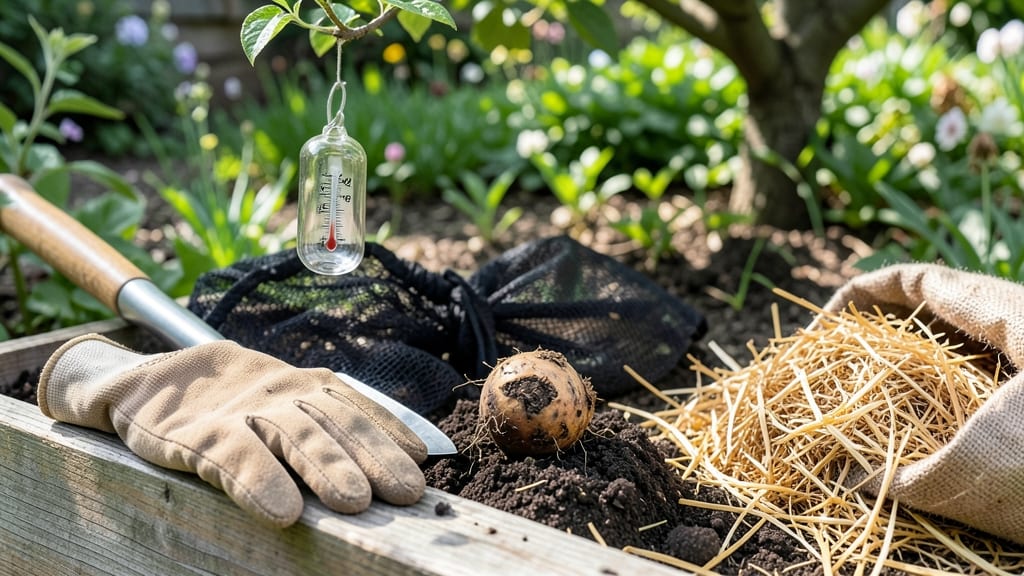
🌡️ Pro Tip: Use a soil thermometer—air temp ≠ soil temp!
Microclimates matter in Texas. A north-facing slope in Austin warms 2 weeks earlier than a low-lying area. Urban heat islands (like Dallas) can push planting back by 1-2 weeks due to scorching pavement.
Test soil in your garden—if it’s cooler than 60°F in April, wait. For container growing, plant 2 weeks later than in-ground, as pots heat up faster.
Late planting cuts bloom time. Dahlias need 90-120 days to flower. Planting in May in North Texas means fewer blooms before frost. South Texas gardeners can stretch planting to mid-April for fall blooms, but expect smaller tubers if planted after April 15.
Use heat-tolerant varieties like 'Café au Lait' or 'Bishop' for later starts.
Extend your season with seasonal adjustments. In North Texas, start tubers indoors in January under grow lights. South Texas gardeners can plant year-round with shade cloth in peak summer. Central Texas?
Try partial shade for early spring plantings to slow heat stress. Always mulch with 2-3 inches of straw to regulate soil temp.
Watch for false springs. A warm February in Dallas doesn’t mean frost is gone—late frosts can hit until March 15. Use frost cloth or plant in containers you can move indoors if temps drop below 32°F. South Texas rarely sees frost, but East Texas
Signs your Texas soil is ready for dahlias (and how to fix it)
Texas soil can be a double-edged sword—rich in nutrients in some areas but heavy clay or sandy in others. Before planting your dahlia tubers, check for these 3 critical signs of readiness: soil temperature above 60°F, proper moisture retention, and a pH between 6.0 and 7.0.
If your soil fails any of these tests, don’t panic—Texas gardeners know how to fix it with organic amendments that thrive in our heat.
First, test your soil temperature using a soil thermometer. Dahlias won’t sprout until the ground reaches 60°F, and waiting for this threshold prevents rot-prone conditions. In North Texas, this usually happens by mid-April, while South Texas may be ready as early as late February.
If your soil is still cold, cover it with black plastic mulch for 2–3 weeks to warm it faster.
Next, assess moisture retention. Stick your finger 2 inches deep—if the soil feels dry, your dahlias will struggle. Texas clay holds moisture but can become waterlogged, while sandy soils drain too quickly.
Amend clay with compost and perlite (1:1 ratio) to improve drainage, and mix peat moss into sandy soil to boost water retention. Aim for soil that feels like a damp sponge—not soggy or bone-dry.
Finally, check your soil pH using a test kit (available at garden centers). Dahlias prefer slightly acidic to neutral soil (6.0–7.0). If your test shows pH below 6.0, add pulverized lime; for pH above 7.0, mix in sulfur or pine needles.
Texas soils often lean alkaline, so a light sulfur application (½ cup per 10 sq ft) can work wonders. Re-test after 4–6 weeks to confirm adjustments.
For heavy clay soils common in East Texas, create raised beds with a 50/50 mix of native soil and compost. This improves aeration while retaining moisture. In sandy West Texas, dig in 2–3 inches of compost and top with mulch to slow evaporation.
Both methods create the ideal Texas-friendly growing medium for dahlias.
Once your soil passes all three tests—warmth, moisture, and pH—it’s time to plant. But don’t stop there: maintain 1–2 inches of mulch around your dahlias to regulate soil temperature and reduce watering needs.
With these prep steps, your Texas-grown dahlias will reward you with bold blooms all summer long.