
Plants
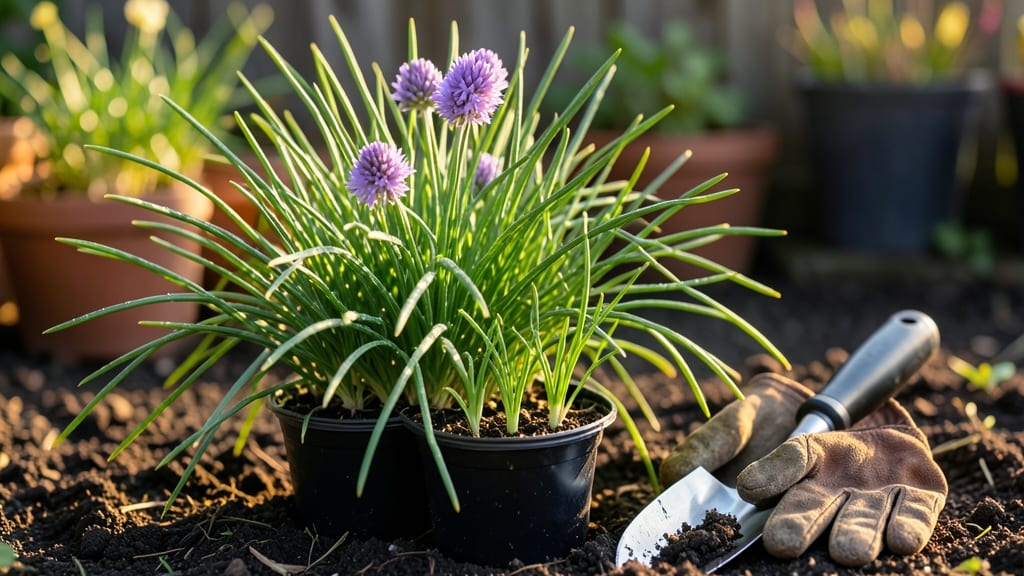
Knowing when to plant chives in Texas is the key to avoiding heat stress or frost damage—two of the biggest threats to your herb garden. These hardy 🌱 chives love Texas’ mild winters but can bolt faster than a jackrabbit if planted at the wrong time.
Texas gardeners in zones 8a-10b have two prime windows: fall planting (September-November) for early spring harvests or spring planting (February-March) to beat the summer heat. But timing isn’t one-size-fits-all—North Texas’ later frosts mean you’ll need to adjust your schedule compared to South Texas’ earlier last-frost dates.
I’ll break down the exact months to plant based on your heat zone, plus pro tips for extending harvests year-round. Whether you’re a first-time gardener or a seasoned green thumb, these strategies will help you grow chives that thrive in Texas’ extreme climate.
Ready to enjoy fresh chives from your garden all year? Let’s dive into the best planting schedule for your region—no guesswork, just results.
Texas chive planting calendar: best months by heat zone
Texas’ 9 distinct heat zones (A through F) create wildly different growing conditions for chives. In Zone A (South Texas), you can plant chives year-round with minimal frost risk, while Zone F (North Texas) demands precise timing to avoid winter die-off or summer bolting.
The key? Plant in early fall or late winter to sync with Texas’ 240 frost-free days.
Chives thrive in cool-season windows—think of them as Texas’ secret weapon for year-round harvests. In North Texas (Zones 7-8), your last frost typically hits around February 15, so aim to plant by September 15 for a fall harvest or February 1 for spring.
South Texas gardeners (Zones 9-10) have more flexibility, but September-October remains ideal to beat summer heat.
Here’s the Texas chive planting calendar broken down by zone, including optimal months, avoid periods, and harvest windows to maximize your yield:
| Heat Zone | Best Planting Months | Avoid Planting | Harvest Window | Notes | ||||||||||||||||
|---|---|---|---|---|---|---|---|---|---|---|---|---|---|---|---|---|---|---|---|---|
| Zone A (South Texas) | Sep-Oct, Feb-Mar | May-Jul, Dec | Mar-Apr, Sep-Oct | Year-round possible with shade | ||||||||||||||||
| Zone B (Deep South) | Aug-Sep, Jan-Feb | Jun-Aug, Nov | Feb-Mar, Aug-Sep | Use mulch in summer | ||||||||||||||||
| Zone C (Central) | Sep-Oct, Feb-Mar | May-Jul, Dec | Mar-Apr, Sep-Oct | Protect from late frosts | ||||||||||||||||
| Zone D (North Central) | Sep-Oct, Feb-Mar | Jun-Aug, Nov | Mar-Apr, Sep-Oct | Cold-hardy varieties preferred | ||||||||||||||||
| Zone E (North) | Sep-Oct, Feb-Mar | May-Jul, Dec | Mar-Apr, Sep-Oct | Use row covers in winter | ||||||||||||||||
| Zone F (Panhandle) | Aug-Sep, Feb-Mar | Jun-Aug, Nov | Mar-Apr, Sep-Oct |
Texas chive planting calendar: best months by heat zoneTexas’ 9 heat zones (A-F) create wildly different conditions for chives—what works in Zone A (South Texas) will fail in Zone B (North Texas). The key is planting when daytime temps stay below 85°F and nights dip below 60°F to prevent bolting. For most Texans, that means fall or early spring windows, but let’s break it down by zone. In Zone A (Deep South), chives thrive year-round with fall planting (Sept-Oct) for winter harvests and spring planting (Feb-Mar) for summer growth. Meanwhile, Zone B (North/Central) gardeners should wait until after last frost (late Feb-Mar) or plant in late summer (Aug-Sept) to avoid winter dieback.
Pro tip: Use Texas A&M’s Frost Date Map to pinpoint your exact last frost date. For example, San Antonio (Zone A) rarely sees frost, while Lubbock (Zone B) averages 20°F nights in winter. Plant chives 4-6 weeks before first frost for a head start, or 6 weeks after last frost for spring growth. For container gardening, you can push boundaries—move pots indoors during 100°F+ heat waves or under shade cloth. Just ensure they get 6+ hours of sun daily to prevent leggy growth. My South Texas garden yields chives year-round by using raised beds with drip irrigation to maintain even moisture. Remember: Chives are perennial in Texas, meaning they’ll regrow each year if protected. The first year sets the foundation—focus on soil prep with compost and organic matter to improve drought tolerance. Mulch heavily in summer to keep roots cool, and trim back 1/3 of growth in late summer to encourage bushier regrowth. 🌱 |