
Trees
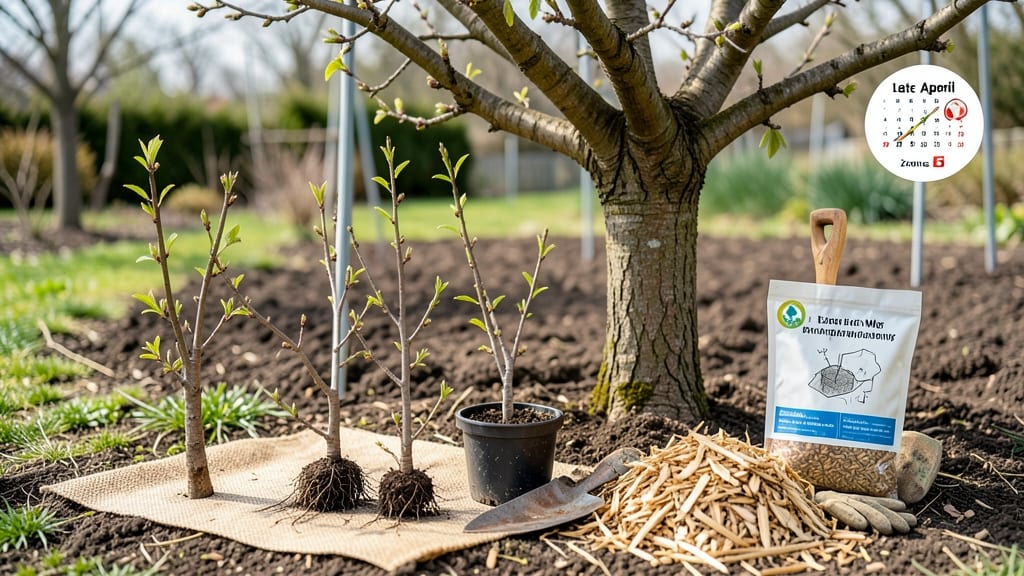
Timing your 🍒 cherry tree planting in Zone 5 wrong could mean the difference between a flourishing tree and one that never recovers from winter's harsh freeze. Most gardeners assume spring is the only option, but fall actually offers a secret advantage for root establishment before dormancy kicks in.
Zone 5's 5a-5b climate demands precision—planting too early risks frost heave, while waiting too long can leave young trees vulnerable before winter. The ideal window opens in early spring (March-April) or stretches into fall (September-October), when soil temperatures hover between 40-50°F and the ground isn't frozen.
What makes this timing critical? Cherry trees need 600-1,000 chill hours to set fruit properly, and Zone 5's cold winters deliver—but only if the tree's roots are already settled. I'll show you exactly how to match varieties to your microclimate and avoid the 5 biggest planting mistakes that sabotage success.
Whether you're dreaming of June-August harvests or just want a stunning ornamental tree, getting the timing right is the foundation. Let's break down the science and practical steps to plant your 🍒 cherry tree for maximum long-term growth in your Zone 5 garden.
Zone 5 cherry tree planting timeline: frost-free deadlines by variety
In Zone 5, timing your cherry tree planting is everything—miss the window, and you risk frost heave or stunted growth. The best times are early spring (March-April) or fall (September-October), when soil temps hover between 40-50°F. This gives roots time to establish before winter dormancy or summer heat.
Spring planting is ideal for bare-root trees, while fall suits container-grown varieties. Both require 600-1,000 chill hours—a non-negotiable for Zone 5’s cold winters. Let’s break down the exact deadlines by variety and microclimate.
🌱
🍒 Zone 5 Cherry Tree Planting Deadlines
| Variety Type | Spring Planting Window | Fall Planting Window | Soil Temp Threshold | Last Frost Risk |
|---|---|---|---|---|
| Sweet Cherries (e.g., 'Stella', 'Lapins') | Mid-March to early April | Late September to mid-October | 45-50°F | Low (after April 15) |
| Tart Cherries (e.g., 'Montmorency', 'Balaton') | Late March to early May | Early October to early November | 40-45°F | Moderate (after May 1) |
| Ornamental (e.g., 'Black Tartarian', 'Royal Ann') | Early April to mid-May | Mid-October to late October | 45-50°F | Low (after April 15) |
Note: Adjust dates 1-2 weeks earlier for Zone 5a (colder) or later for Zone 5b (warmer microclimates).
Spring planting offers the longest frost-free growing season, but fall planting lets roots establish before winter. For Zone 5a (colder), push spring planting to late April to avoid late frosts. In Zone 5b, you can plant as late as early May for tart cherries.
🌡️
Soil temperature is your true deadline. Use a soil thermometer to confirm it’s above 40°F—cold soil slows root growth. For bare-root trees, soak roots for 2-4 hours before planting to prevent shock. Container-grown trees adapt better to fall planting but need consistent moisture until dormancy.
🌳
Microclimates matter! Urban areas with heat islands may have 2-3 weeks later frost dates than rural zones. Check your local USDA frost map and adjust planting by 10-14 days if needed. For example, Chicago’s last frost averages May 10, while Detroit’s is May 5.
💧
After planting, deep watering is critical. Newly planted cherry trees need 1-2 inches of water weekly during the first 2 growing seasons. Use a soaker hose to keep soil moist but avoid waterlogging—root rot is a silent killer.
Mulch with wood chips (3-4 inches deep) to retain moisture and regulate soil temperature.
✂️
Prune dead or crossing branches at planting, but avoid heavy pruning—it stresses the tree. Focus on shaping the central leader (main trunk) for structural support. For dwarf varieties, prune more aggressively to encourage bushier growth, but never cut more than 25% of the canopy in one season.
🌿
Chill-hour requirements for cherry trees in Zone 5: matching varieties to your microclimate
Zone 5 gardeners often overlook chill hours—the number of hours below 45°F a tree needs to set fruit. Most sweet cherries require 600-1,000 chill hours, while tart cherries like 'Montmorency' thrive with 800-1,000 chill hours.
If your area gets fewer than 500 chill hours, you’ll need low-chill varieties like 'Stella' (400-500 chill hours).
Urban heat islands or cold pockets in your yard can alter chill hours by 100+ hours. For example, a south-facing yard might get fewer chill hours than a north-facing one.
Use a chill-hour calculator (like the one from the USDA Plant Hardiness Zone Map) to adjust your variety selection.
Here’s how to match cherry varieties to your Zone 5 microclimate:
| Variety | Chill Hours Needed | Best Planting Time | Zone 5 Notes |
|---|---|---|---|
| 'Stella' (Sweet) | 400-500 | Early spring or fall | Low-chill; great for urban areas |
| 'Montmorency' (Tart) | 800-1,000 | Fall (best for cold climates) | Classic tart cherry; needs winter chill |
| 'Black Tartarian' (Tart) | 900-1,000 | Early spring | Cold-hardy; thrives in Zone 5a |
| 'Lapins' (Sweet) | 600-700 | Fall (avoid frost risk) | Self-pollinating; great for small yards |
If you’re unsure about your local chill hours, check your last frost date (typically mid-to-late May in Zone 5) and count backward from 45°F nights. For example, if you have 700 chill hours, avoid high-chill varieties like 'Bing' (900+ chill hours)—they’ll struggle to fruit.
Pro tip: Plant two compatible varieties (e.g., 'Stella' + 'Lapins') to ensure cross-pollination and better fruit set. Group them 20-30 feet apart for optimal pollination.
For ornamental cherries (like Weeping Higan), chill hours matter less, but they still need 500-700 hours for vibrant spring blooms. These are perfect if your yard has limited chill hours or you prioritize flowering over fruit.
🌱