
Plants
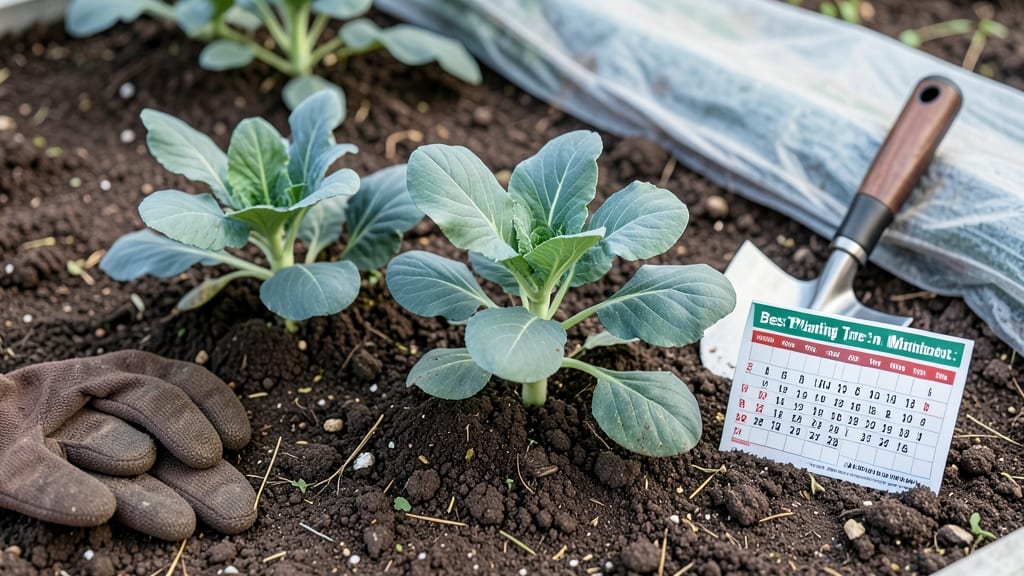
Timing your 🥦 broccoli planting in Minnesota isn’t just about following a calendar—it’s about outsmarting frost dates and short growing seasons to guarantee a bountiful harvest.
With USDA zones 4a-5b and unpredictable weather, getting those seeds in the ground too early or late can mean the difference between a thriving garden and a sad, wilted disappointment.
Most gardeners in Minnesota know the struggle: plant too soon, and frost zaps your tender seedlings. Plant too late, and your broccoli bolts before you even get a chance to harvest.
The key is understanding your local frost dates—typically mid-May for the last spring frost and mid-October for the first fall frost—and working backward to time your plantings just right.
In this guide, I’ll break down the exact windows for planting broccoli in Minnesota, whether you’re sowing seeds in spring or fall.
You’ll learn which cold-hardy varieties hold up best, how to extend your growing season with simple tricks, and even how to adjust for microclimates that can make a big difference in your backyard.
Ready to grow broccoli that thrives despite Minnesota’s challenges? Let’s dive into the strategies that’ll have you harvesting lush, frost-resistant heads from July through November—no guesswork required.
Minnesota broccoli planting calendar: frost dates & hardiness zones
Minnesota’s USDA hardiness zones 3-5 demand precise broccoli planting timing to avoid frost damage. The key is planting 4-6 weeks before your last frost date—typically mid-April to early June for spring and late July to early August for fall.
Northern Minnesota (Zone 3) has shorter frost-free seasons (90-110 days), while southern areas (Zone 5) enjoy 120-140 days.
Use the Minnesota State Climatology Office’s frost date maps to pinpoint your exact window. For example, Minneapolis (Zone 4b) averages last frosts around May 15, while Duluth (Zone 3b) sees them 2 weeks later.
Microclimates near lakes or urban areas can shift dates by 7-10 days, so adjust accordingly.
Broccoli seeds need soil temperatures above 40°F to germinate, but seedlings can tolerate light frosts (28-32°F) once established. Start seeds indoors 6-8 weeks before transplanting if your spring is chilly, or use cold frames to extend early planting.
Fall planting requires maturity timing too—choose varieties that harvest before first frost (mid-October). For example, 'De Cicco' (58 days) works for late summer starts, while 'Waltham 29' (70 days) needs earlier fall planting.
| Zone | Last Frost Date | Spring Planting Window | Fall Planting Window | Frost-Free Days |
|---|---|---|---|---|
| Zone 3 (North) | May 22 | April 15–May 1 | July 20–Aug 5 | 90–110 days |
| Zone 4 (Central) | May 15 | April 1–May 15 | July 15–Aug 10 | 110–130 days |
| Zone 5 (South) | May 5 | March 20–June 1 | July 1–Aug 15 | 130–150 days |
For Zone 3 gardeners, focus on fast-maturing varieties (50-60 days) like 'Blue Wind' or 'Green Goliath'. In Zone 5, you can experiment with succession planting every 2 weeks from April to June for continuous harvests. Always test your soil—broccoli thrives in pH 6.0-7.0 and well-draining soil with compost.
Pro tip: Use black plastic mulch in early spring to warm soil faster, or straw mulch in fall to insulate roots. Both tricks can extend your planting window by 2-3 weeks in marginal zones.
Watch for late spring frosts (common in May) by checking the National Weather Service’s frost advisory alerts. If frost threatens young seedlings, cover them with row fabric or old bedsheets—broccoli recovers well if leaves freeze but the crown stays protected.
Fall planting is riskier—aim to harvest before hard frosts (below 25°F). If your area gets early snow, prioritize cold-hardy varieties like 'Belstar' or 'Packman', which tolerate brief chills better than standard types.
Remember: Broccoli bolting (premature flowering) is a major risk in Minnesota’s hot July-August stretches. Use shade cloth (30-50%) during heatwaves or plant heat-tolerant varieties like 'Calabrese' for fall crops.
🌱
Broccoli varieties that thrive in Minnesota’s climate
Not all 🥦 broccoli varieties handle Minnesota’s chilly springs and early frosts equally. Choosing the right type can mean the difference between a bountiful harvest and a disappointing yield.
Cold-hardy varieties like 'Waltham 29' and 'De Cicco' are top picks for Minnesota gardeners because they tolerate light frosts and still produce tender heads.
For spring planting, focus on early-maturing varieties like 'Green Goliath' or 'Calabrese', which can go from seed to harvest in 50-60 days. These varieties give you a head start before summer heat sets in.
Meanwhile, fall plantings benefit from slightly slower-maturing types like 'Packman' or 'Belstar', which can handle cooler temperatures and still deliver compact, flavorful heads.
Here’s how these varieties stack up in Minnesota’s climate, including their cold tolerance, maturity time, and harvest window:
| Variety | Cold Tolerance | Days to Maturity | Best for |
|---|---|---|---|
| Waltham 29 | Excellent (tolerates light frost) | 55-65 days | Spring & Fall |
| De Cicco | Very Good (heat-tolerant too) | 60-70 days | Summer & Fall |
| Green Goliath | Good (early maturity) | 50-60 days | Spring |
| Packman | Good (compact heads) | 55-65 days | Fall |
| Calabrese | Fair (needs protection) | 65-75 days | Summer |
If you’re planting in northern Minnesota (Zone 3-4), prioritize 'Waltham 29' or 'De Cicco' for their frost resilience. In southern Minnesota (Zone 5), you can experiment with slightly slower-maturing varieties like 'Calabrese' for a longer harvest window.
Just remember: earlier varieties are your best bet for avoiding late spring frosts.
For fall plantings, aim for varieties with 60-70 days to maturity so they mature before the first frost. 'Packman' is a favorite because its compact heads resist bolting in cooler weather.
Pro tip: Start seeds indoors 6-8 weeks before your last frost date to give them a head start in Minnesota’s short growing season.
No matter which variety you choose, always harden off seedlings before transplanting and use row covers for extra protection if late frosts threaten. With the right variety and timing, you’ll enjoy homegrown broccoli from July through November—even in Minnesota’s unpredictable climate! 🌱