
Plants
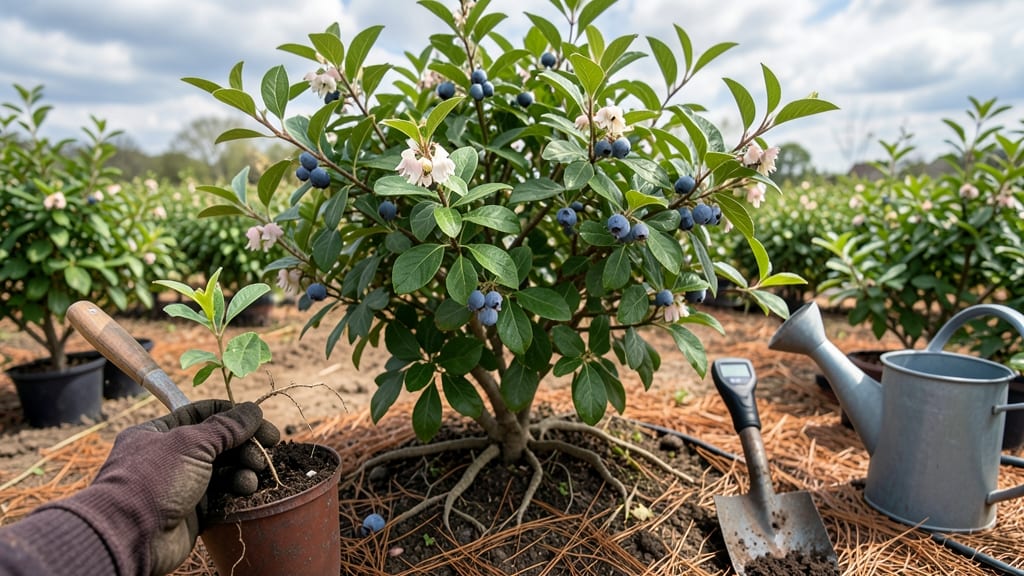
Timing your blueberry planting in Utah isn’t just about waiting for spring—it’s about beating the clock on frost, heat, and Utah’s unique microclimates.
Whether you’re in the high desert or mountain regions, planting too early risks frost damage, while waiting too long can stress young bushes before summer’s heat sets in.
Most Utah gardeners know late April to early June is the sweet spot after the last frost, but did you know some varieties thrive with a fall planting?
I’ll break down the exact chill-hour needs for Utah’s USDA zones 5-7 and how to match them to your location—because a Bluecrop in Logan needs more winter chill than a Duke in St. George.
Beyond dates, Utah’s arid conditions demand extra prep: acidic soil, windbreaks, and smart watering. I’ll share the critical tips to give your bushes the best shot at survival—and a harvest of juicy 🫐 in July and August.
Ready to grow blueberries that thrive? Let’s dive into the heat-zone timeline, soil secrets, and microclimate hacks that’ll make your bushes the envy of the neighborhood.
Utah’s blueberry planting timeline: month-by-month heat-zone guide
Utah’s diverse climate—from the high desert’s USDA Zone 5 to the mountain regions’ Zone 7—demands precise timing for blueberry planting. The key is planting after the last frost date, which typically falls between mid-April and early May, depending on elevation.
In northern Utah (e.g., Logan), you might wait until late May due to colder microclimates, while southern areas like St. George (Zone 8) can plant as early as March.
For most of Utah, late April to early June is the sweet spot. This window ensures your blueberries establish roots before summer’s intense heat and low humidity stress young plants. Fall planting is risky but possible in September–October for southern Utah, where winters are milder.
Always check your local USDA zone and frost dates to avoid early frosts damaging tender shoots.
Here’s how Utah’s heat zones break down for planting:
| Month | USDA Zones | Planting Window | Key Considerations |
|---|---|---|---|
| March | 7-8 (Southern Utah) | Early March | Mild winters; low frost risk. Ideal for southern Utah. |
| April | 5-7 (Northern Utah) | Late April | Wait for last frost (typically mid-April). Use row covers if late frosts linger. |
| May | All Utah Zones | Early–Mid May | Best window for northern Utah. Soil should be 60°F+. |
| June | All Utah Zones | Early June (last chance) | Risky but possible. Ensure daily watering and shade cloth for young plants. |
| September | 7-8 (Southern Utah) | Late September | Fall planting for milder climates. Water deeply before first frost. |
| October | 7 (Southern Utah) | Early October | Only for Zone 7+. Plants need 6 weeks to root before frost. |
Utah’s high desert climate means soil can warm quickly in spring, but don’t rush planting. Test soil temperatures with a soil thermometer—aim for 60°F+ at 4 inches deep. In mountain regions (e.g., Park City), wait until late May to avoid late frosts, which can kill young shoots.
For containers, you can plant 2–4 weeks earlier since pots warm faster.
Prepare your soil 4–6 weeks before planting by amending it with peat moss or sulfur to lower the pH to 4.5–5.5. Utah’s alkaline soils often need this adjustment for blueberries to thrive.
Add compost or well-rotted manure for nutrients, and mulch with pine needles or wood chips to retain moisture and acid
Chill-hour requirements for Utah-grown blueberries: southern vs. northern varieties
Utah’s diverse climate—from the high chill hours of northern regions like Logan to the milder winters of southern areas like St. George—means not all blueberry varieties thrive equally. Chill hours (the number of hours below 45°F) are critical for blueberries, and choosing the wrong variety can lead to poor fruiting or no berries at all.
Most Utah gardeners fall into USDA zones 5-7, but even within these zones, chill-hour needs vary dramatically.
Northern Utah (e.g., Logan, Cache Valley) typically accumulates 800-1,000 chill hours, while southern Utah (e.g., St. George, Cedar City) often sees just 200-600 hours.
This means northern varieties like ‘Bluecrop’ or ‘Jersey’ may struggle in St. George, while southern varieties like ‘Duke’ or ‘Southern Highbush’ might fail to fruit in Logan without intervention.
⚠️ CRITICAL INSIGHT: Even if a variety lists a chill-hour range, Utah’s dry, cold winters can make chill hours harder to accumulate. Wind and rapid temperature swings can disrupt the dormancy process, so microclimates matter. For example, a sheltered valley might gain 100 extra chill hours compared to an exposed hillside.
| Variety | Chill Hours Needed | Best Utah Regions | Notes |
|---|---|---|---|
| Bluecrop | 800-1,000 | Northern Utah (Logan, Ogden) | Classic northern highbush; needs winter protection in windy areas. |
| Duke | 300-500 | Southern Utah (St. George, Cedar City) | Southern highbush; thrives in low-chill zones but needs heat tolerance. |
| Jersey | 900-1,100 | High-elevation Utah (Park City, Heber) | Cold-hardy; may need winter mulch in exposed sites. |
| Top Hat | 200-400 | Southern & Mid Utah (Provo, Salt Lake City) | Dwarf variety; ideal for containers or small gardens. |
| Legacy | 600-800 | Central Utah (Salt Lake Valley) | Low-chill hybrid; reliable in variable climates. |
If you’re in a low-chill zone (e.g., St. George) but want to grow a northern variety like ‘Bluecrop,’ you can try extending chill hours by planting in a north-facing, sheltered spot or using a chill-hour accumulator (a device that forces dormancy with cold air).
Alternatively, consider fall planting—bushes planted in September or October may accumulate more chill hours before winter.
For high-elevation areas (e.g., Park City, Heber), where winters are cold but short, focus on varieties like ‘Jersey’ or ‘Patriot,’ which handle 1,000+ chill hours without issue.
Just be mindful of late spring frosts, which can damage flowers. Use row covers or windbreaks to protect blossoms during Utah’s unpredictable May frosts. 🌱
Pro tip: Test your local chill hours using a chill-hour calculator (like the one from the USDA) or a weather station app. Utah’s microclimates can vary by just a few miles, so don’t assume your neighbor’s variety will work for you! Adjust