
Plants
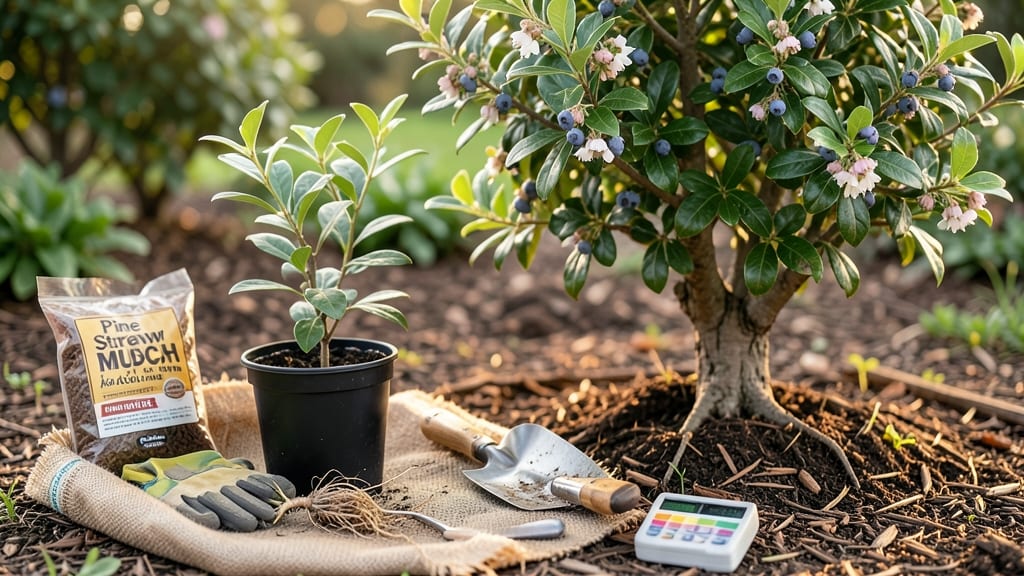
Timing your blueberry planting in Arkansas can mean the difference between a thriving 🫐 bush and a sad, frost-nipped failure. If you plant too early, those delicate roots might not survive the winter chill, while waiting too late risks stunted growth before summer’s heat sets in.
Here’s the secret: Arkansas’s 7a-8b zones actually give you two prime windows—late fall (October–November) or early spring (February–March)—but the best choice depends on your county’s frost dates and the type of blueberry you’re growing. Get this wrong, and you’ll be staring at bare branches come harvest season.
I’ve dug into the data (and a few gardeners’ lessons learned the hard way) to break it down by variety—whether you’re planting Southern Highbush, Rabbiteye, or Half-High.
You’ll also discover how to adjust for Arkansas’s humidity and soil acidity, because even the perfect timing won’t save you from the wrong pH.
Ready to plant with confidence? Let’s walk through the exact months, soil prep, and pro tips to ensure your blueberries take root strong—and set you up for a May–July harvest that’ll make your neighbors jealous.
Arkansas blueberry planting zones: chill-hour requirements by variety
Arkansas spans USDA zones 6b through 8a, creating a unique challenge for blueberry growers. These zones demand careful variety selection based on chill-hour requirements—the number of hours below 45°F needed to trigger flowering.
Southern Highbush varieties thrive in 250-400 chill hours, while Rabbiteye types need 600-1,000+ chill hours.
In North Arkansas (zones 6b-7a), like Benton or Washington counties, cooler winters make Rabbiteye varieties like 'Climax' or 'Powderblue' ideal choices. Meanwhile, South Arkansas (zones 7b-8a), such as Arkansas or Ouachita counties, benefits from Southern Highbush types like 'Southern Blue' or 'Premier', which handle milder winters better.
Half-High varieties like 'Top Hat' offer a middle ground with 400-600 chill hours, perfect for transitional zones like Central Arkansas (zone 7a).
Always check your specific county's average last frost date—North Arkansas typically sees frost until mid-April, while South Arkansas may only experience light frosts by mid-March.
Chill-hour mismatches lead to poor flowering or no fruit. For example, planting a Rabbiteye in zone 8a might result in sparse blooms because it won’t get enough winter chill. Use your county’s 30-year average chill hours as your guide—most Arkansas counties fall between 500-900 chill hours, making Half-High varieties the safest bet for many gardeners.
| Variety Type | Chill Hours Needed | Best Arkansas Zones | Mature Height | Notes |
|---|---|---|---|---|
| Southern Highbush | 250-400 | 7b-8a (South AR) | 3-5 ft | Early ripening, heat-tolerant |
| Half-High | 400-600 | 6b-8a (All AR) | 5-7 ft | Versatile for most climates |
| Rabbiteye | 600-1,000+ | 6b-7a (North AR) | 8-12 ft | Large berries, needs space |
If you're unsure about your county's chill hours, check the Arkansas Climate Office or use a home weather station to track winter lows. For example, Fayetteville (zone 7a) averages 700 chill hours, while Little Rock (zone 7b) sees around 600 chill hours.
This difference can mean the difference between a bountiful harvest and a disappointing yield.
Another critical factor is soil acidity. Blueberries require pH 4.5-5.5—most Arkansas soils are too alkaline.
Before planting, test your soil and amend it with peat moss or sulfur to create the ideal acidic environment. Southern Highbush varieties are slightly more forgiving with pH, but all types will struggle in alkaline soil.
For gardeners in transition zones (zone 7a), consider planting two varieties with staggered ripening times. For example, pair 'Top Hat' (Half-High) with 'Southern Blue' (Southern Highbush) to extend your harvest window from late May to early July.
This strategy also reduces the risk of frost damage to all your crops at once.
Remember, microclimates matter. A spot near a lake or river may experience 100+ extra chill hours compared to a hilltop location. Observe your yard’s unique conditions for at least one full year before committing to a variety.
If you’re in zone 8a, avoid Rabbiteye types unless you live in a cooler microclimate.
Finally, container growing offers flexibility for Arkansas gardeners. Potted blueberries can be moved
Frost-free deadlines & planting windows: exact months for Arkansas counties
Arkansas’s diverse climate means your last frost date could vary by 3+ weeks from north to south. In Zone 7a (north Arkansas), like Benton County, aim for March 15–April 15, while Zone 8a (south Arkansas), such as Ouachita County, can plant as late as April 1–May 1.
These windows ensure roots establish before summer heat hits.
For bare-root plants, dig holes in late winter (February–early March)—they need 6–8 weeks to root before heat stress arrives. Potted blueberries are more flexible; plant them 2–4 weeks later (March–early April) since their roots are already established. Check your county’s USDA Plant Hardiness Zone for precision.
Here’s your county-specific planting timeline for Arkansas:
Pro tip: Use mulch (3–4 inches) after planting to lock in moisture and regulate soil temperature. In Zone 7a, late frosts can linger into mid-April, so protect young plants with frost cloth if nights dip below 28°F.
Southern Arkansas gardeners have more wiggle room—just avoid planting after May 1, or summer heat will stress roots.
Timing isn’t just about frost—it’s about chill hours. Southern Highbush varieties (e.g., ‘Southern Blue’) need 250–400 chill hours, while Rabbiteye types (e.g., ‘Powderblue’) thrive with 400–600 chill hours. Match your variety to your zone to guarantee flowering and fruiting the following spring.
Miss the window? Don’t panic. Fall planting (October–November) works in Zone 8a, giving roots time to establish before winter. Just water deeply every 7–10 days until the first frost. For Zone 7a, stick to spring planting—fall risks freeze damage to tender roots.
🌱