
Plants
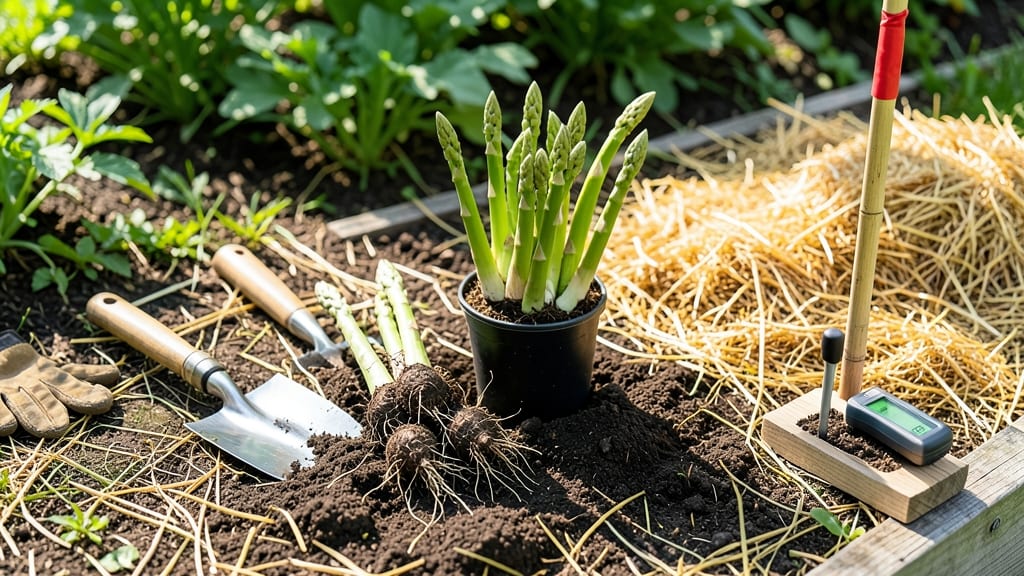
Planting asparagus in Massachusetts isn’t just about throwing crowns into the dirt—it’s about timing your move to beat the 6a zone’s unpredictable frosts and give this perennial a fighting chance to thrive.
With spears ready to harvest by May, you’ll want to get those roots established 6-8 weeks before the last frost hits around mid-April.
The key is planting in early spring—think March to April—when soil temperatures hover just above freezing. This gives asparagus crowns time to root deeply before summer heat arrives, setting the stage for years of harvests.
Cold-hardy varieties like Jersey Knight and Mary Washington are your best bet, but even they need a head start in well-drained soil.
Here’s the game-changer: Skipping soil prep can mean stunted growth or worse. We’ll break down the 6-week timeline to amend your soil, test pH, and mulch strategically—so your asparagus doesn’t just survive, but thrives through Massachusetts’ wild swings from frost to summer.
Ready to turn your garden into a spear-producing powerhouse? Let’s dive into the exact steps—from crown selection to frost-proofing your plot—so you’re harvesting like a pro by next June.
Best planting months for asparagus in Massachusetts (Zone 5-6 guide)
Massachusetts gardeners have a 6-8 week window to plant asparagus crowns before the last spring frost, typically around March to early April. This perennial crop thrives in our Zone 5-6 climate but needs to establish roots before summer heat arrives.
Planting too late risks stunted growth, while early planting allows roots to develop before winter dormancy.
For cold-hardy varieties like Jersey Knight and Mary Washington, aim for soil temperatures between 40°F and 50°F. These conditions signal the roots to grow aggressively before the ground warms.
Use a soil thermometer to check—if it’s consistently above 50°F, wait a week or two to avoid stressing the plants.
Fall planting is not recommended in Massachusetts due to our early frost dates (mid-October). However, if you must plant in fall, do so 8-10 weeks before the first frost to give roots time to establish. This is risky and only works for experienced gardeners with protected microclimates.
Here’s a quick planting timeline for Massachusetts:
- Early March: Prepare soil (6 weeks before planting)
- Late March to early April: Plant crowns 6-8 inches deep, 12-18 inches apart
- May: Mulch heavily to retain moisture and suppress weeds
| Planting Window | Soil Temp Requirement | Key Consideration | MA-Specific Tip |
|---|---|---|---|
| Late March - Early April | 40°F - 50°F | Root establishment before summer heat | Use row covers if frost threatens after planting |
| Early September (fall backup) | 50°F - 60°F | Limited root growth before frost | Only attempt in southern MA (Zone 6b+) |
| Never (avoid) | N/A | Spring planting only | Fall planting = poor survival in MA winters |
If you’re planting asparagus seeds instead of crowns, start them indoors 8-10 weeks before the last frost date. Seeds germinate best at 70°F-80°F, so use a heat mat if your home is chilly. Transplant seedlings outdoors after all danger of frost has passed, typically by mid-May.
For container gardening, plant crowns in 5-gallon pots with well-draining soil and full sun exposure. Containers warm up faster than garden beds, so monitor soil moisture closely—asparagus hates soggy roots. Move pots to a sheltered spot if late frosts are forecasted.
Pro tip: Mark your planting date on a calendar. Asparagus takes 2-3 years to establish before full harvest, so patience is key. The first year, resist the urge to harvest—let the plant build energy for future yields. By year three, you’ll reap 100+ spears per plant if timed correctly!
🌱
Best planting months for asparagus in Massachusetts (Zone 5-6 guide)
Massachusetts gardeners should plant asparagus crowns between late March and early April for optimal growth. This window aligns with soil temperatures rising above 40°F, ensuring roots establish before summer heat arrives.
The last frost date (around April 15) is your key deadline—planting too early risks frost damage, while late planting delays harvests.
For fall planting, aim for late August to early September—roots need 6-8 weeks to establish before winter dormancy. This method works best for crowns (not seeds), which are more cold-hardy. Always check your local USDA Zone 5-6 frost dates to adjust timing.
In western MA (Zone 5), plant 2-3 weeks earlier than eastern regions (Zone 6), where soils warm slower. Varieties like Jersey Knight thrive in these cooler zones, while Mary Washington prefers slightly warmer microclimates.
| Planting Window | Soil Temp | Frost Risk | Best For |
|---|---|---|---|
| Late March - Early April | 40°F+ | Low (post-last frost) | Spring harvest |
| Late August - Early Sept | 50°F+ | High (winter dormancy) | Fall establishment |
If you miss the spring window, fall planting is your best backup—but avoid planting after September 15, as roots won’t harden enough for winter. Always space crowns 12-18 inches apart in trenches to prevent overcrowding and improve airflow.
Pro tip: Use black plastic mulch in early spring to warm soil faster and extend your planting window by 1-2 weeks. This trick is especially useful in cooler MA regions like the North Shore or Berkshires.
Remember, first-year harvests are minimal—focus on root establishment. By year 3, your asparagus patch will reward you with bountiful spears if planted correctly! 🌱