
Plants
If you’ve ever stared at your patchy Georgia lawn wondering when the best time to plant grass in Georgia really is, you’re not alone.
The answer isn’t just about picking a month—it’s about matching your grass type to Georgia’s humid heat and unpredictable rains, so your lawn thrives instead of struggles.
Cool-season grasses like fescue love Georgia’s mild spring and fall, while warm-season varieties like Bermuda take off when the soil warms up. But timing isn’t just about the calendar—soil temperature and rainfall play just as big a role.
Get it right, and you’ll see lush, weed-resistant grass in 6-8 weeks; get it wrong, and you’re fighting brown patches for months.
I’ve tested the best planting windows across Georgia’s 7a-8b zones, from the cooler North to the sunnier South.
Whether you’re seeding in March or September, I’ll show you how to prep your soil, track the perfect conditions, and keep your new grass hydrated—so you can finally stop guessing and start growing.
Ready to transform your lawn? Let’s dive into the exact steps that’ll give you the greenest, healthiest grass Georgia’s climate can handle—without the trial and error. Your future lawn is waiting.
Optimal Georgia grass planting timeline by soil temperature and season
Timing your grass planting in Georgia isn’t just about picking a month—it’s about understanding soil temperatures and seasonal shifts. The Peach State’s USDA Zones 7a-8b mean you’ll need to adjust based on whether you’re planting cool-season or warm-season grasses.
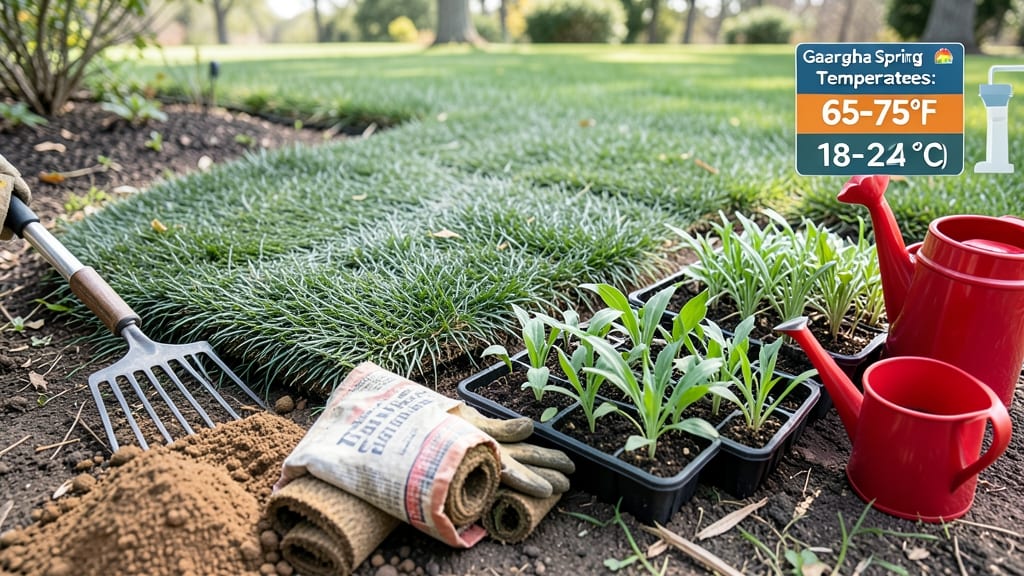
Cool-season types like tall fescue thrive when soil temps hover between 50-65°F, while warm-season varieties like bermuda grass need 65-75°F to germinate properly.
For most of Georgia, the ideal planting windows are early spring (March-April) and early fall (September-October).
Spring planting lets seeds germinate before summer heat arrives, while fall planting gives grass a head start before winter dormancy. North Georgia’s cooler microclimates may allow for slightly earlier spring planting, while South Georgia’s warmer zones might extend the fall window into November.
Here’s how to match your grass type to Georgia’s seasonal rhythms:
| Grass Type | Season | Soil Temp (°F) | Best Months | Notes |
|---|---|---|---|---|
| Tall Fescue | Cool-Season | 50-65°F | March-April, Sept-Oct | Shade-tolerant; best for North GA |
| Bermuda | Warm-Season | 65-75°F | April-May, Aug-Sept | Drought-resistant; thrives in South GA |
| Zoysia | Warm-Season | 65-75°F | April-May, Aug-Sept | Slow to establish; low-maintenance |
| St. Augustine | Warm-Season | 65-75°F | April-May, Aug-Sept | Shade-loving; needs frequent watering |
| Ryegrass | Cool-Season | 50-65°F | Sept-Oct (temporary cover) | Fast-growing; used for overseeding |
If you’re in North Georgia, aim for late March to early April for cool-season grasses, as soil temps warm more slowly. In South Georgia, you can often push spring planting into mid-April without risking summer heat stress.
For fall planting, September is ideal—it gives grass time to establish roots before winter dormancy begins in November.
One common mistake is planting warm-season grasses in spring too early. Bermuda and Zoysia seeds may rot in cool, wet soils. Always check soil temps with a soil thermometer—if it’s below 65°F, wait a few weeks.
For cool-season grasses, don’t plant after mid-April in most of Georgia, as summer heat will stress young seedlings.
Pro tip: Use a seed germination calculator for your specific grass type to estimate how long seeds will take to sprout at current soil temps. This helps you plan watering schedules and adjust for Georgia’s unpredictable spring rains.
For example, tall fescue may take 14-21 days to germinate at 60°F, while bermuda grass can sprout in just 7-14 days at 75°F.
Remember, overseeding in fall is your best bet for a thick, green lawn year-round. Cool-season grasses like ryegrass or fescue can fill gaps left by dormant warm-season types, giving you a lush lawn from spring through fall.
Just time it right—late August to early September is perfect for overseeding before the first frost.
Finally, don’t overlook microclimates in your area. A south-facing slope may warm up faster than a north-facing yard, allowing for earlier planting. Use a weather app with soil temp alerts to get real-time data for your specific location.
With the right timing, you’ll have a vibrant lawn that outshines your neighbors’—without the guesswork.
🌱
Rainfall and weather factors that determine grass planting success in Georgia
Georgia’s rainfall patterns and weather fluctuations can make or break your grass planting success. Unlike northern states, Georgia’s humid subtropical climate means you’ll deal with both spring showers and summer droughts.
Timing your planting to align with natural rainfall—or supplementing it wisely—is key to avoiding fungal growth, seed desiccation, or wasted water.
For example, planting in late spring (May) might seem ideal because of the warm soil, but Georgia’s summer heat can dry out seeds before they germinate. Conversely, early fall (September) offers cooler temps and consistent moisture from lingering summer rains, giving seeds the perfect environment to establish without stress.
Here’s how to use Georgia’s weather patterns to your advantage:
Use the National Weather Service or local agricultural extensions to track forecasts. Aim for September-October when Georgia typically sees steady but not excessive rain.
Pro tip: Use a rain gauge to monitor weekly totals. If rainfall drops below 0.75 inches, supplement immediately to prevent seed failure. Remember, Georgia’s clay-heavy soils dry out faster than you think—don’t wait for wilting to water!
By syncing your planting with Georgia’s natural rainfall rhythms and adjusting for heat or humidity, you’ll give your grass the best shot at thriving without wasted effort or resources. 🌧️💧