
Plants
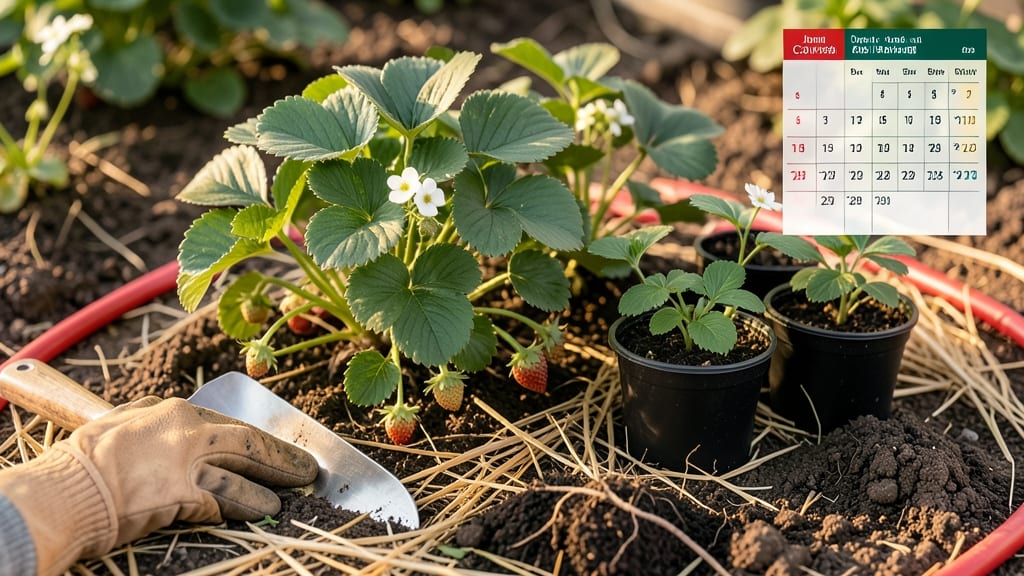
Planting strawberries in California isn’t one-size-fits-all—your best timing depends entirely on whether you’re in frost-free coastal areas or inland valleys where winter chill matters. While coastal gardeners can tuck in 🍓 plants year-round, inland growers need to match varieties to chill-hour zones (like USDA 9 or 10) to trigger fruiting.
The key? Planting in fall or winter for most regions ensures roots establish before spring’s harvest rush.
You might assume spring is ideal, but that’s a common misstep for California’s diverse microclimates. Coastal areas thrive with fall plantings (September–November) to avoid summer heat stress, while inland valleys benefit from winter plantings (December–February) to accumulate necessary chill hours.
Even a 100-hour difference can mean the difference between blooms and bare stems.
Let’s break down the exact windows for your region—whether you’re growing June-bearing, everbearing, or day-neutral varieties. You’ll learn how to calculate chill hours using local data, pick the right varieties for your zone, and even adjust for early/late frosts.
No more guesswork, just a harvest-ready plan tailored to your backyard’s unique climate.
Ready to avoid the #1 mistake California strawberry growers make? Stick around—I’ll walk you through the full timeline, from soil prep to your first ripe berry, so you can enjoy that sweet, sun-kissed flavor all season long.
California strawberry planting dates by chill-hour requirements
California’s microclimates create a puzzle for strawberry growers—what works in San Diego’s USDA Zone 10 fails in Sacramento’s Zone 9. The secret? Matching your chill-hour needs (cold accumulation) to the right planting window.
June-bearing varieties need 500-1,000+ chill hours, while day-neutral types thrive with just 200-300 hours.
Coastal areas like Santa Barbara (Zone 10) can plant year-round, but inland valleys like Fresno (Zone 8) must wait until October-November to avoid frost damage. Everbearing varieties offer flexibility, producing fruit in both spring and fall when planted at the right time.
Here’s how to align your planting with California’s diverse frost patterns and chill-hour zones:
| Region | USDA Zone | Chill-Hours Needed | Best Planting Window | Harvest Time |
|---|---|---|---|---|
| San Francisco Bay Area | 9-10 | 300-500 | September-December | March-June |
| Central Coast (Santa Barbara) | 10 | 200-300 | Year-round (best Oct-Apr) | February-July |
| Central Valley (Fresno) | 8-9 | 500-1,000+ | October-November | April-July |
| Desert (Palm Springs) | 11 | 0-200 | September-March | December-May |
For coastal gardeners, everbearing varieties like ‘Seascape’ (day-neutral) are ideal—they produce fruit without strict chill-hour requirements. In contrast, June-bearing ‘Chandler’ needs 700+ chill hours, making it perfect for Central Valley growers who can plant in late fall.
Pro tip: If you’re in a transition zone (like Los Angeles County), mix varieties—plant ‘Albion’ (500 hours) in October for spring harvests and ‘Seascape’ in February for summer fruit. This extends your harvest window by 3-4 months!
Soil prep is critical: Amend your beds with compost and sand (for coastal areas) to improve drainage. Strawberries hate waterlogged roots, so raised beds or containers work well in heavy-clay soils like those in Sacramento.
Mulch with straw to retain moisture and suppress weeds—especially important in dry inland regions.
Container growers in urban areas (like San Diego) can plant anytime, but choose day-neutral varieties for continuous harvests. Just ensure pots have drainage holes and use a well-draining potting mix. Move containers to shaded spots during summer to prevent heat stress.
Watch for false springs—warm spells in February can trick strawberries into blooming
How to calculate your local chill-hours for perfect strawberry timing
California’s microclimates create huge variations in chill-hour accumulation, which directly impacts strawberry flowering. Unlike other crops, strawberries need a specific range of cold exposure—measured in chill-hours—to trigger fruiting.
If you plant too early or late, your strawberry plants may produce little to no fruit, leaving you with lush foliage but no harvest.
Chill-hours are calculated by tracking temperatures between 32°F and 45°F. Every hour within this range counts as one chill-hour. For example, if your garden experiences 3 hours at 40°F, that’s 3 chill-hours. Most California strawberry varieties need between 200 and 1,000 chill-hours, depending on the region and variety.
Coastal areas like San Francisco may only see 200-300 chill-hours, while inland valleys like Fresno can accumulate 800-1,000+.
To find your local chill-hour total, I recommend using the NOAA Climate Data website or a chill-hour calculator like the one from the University of California Cooperative Extension. Simply input your ZIP code, and the tool will generate a historical average for your area.
For instance, Los Angeles typically averages around 400 chill-hours, while Sacramento can exceed 900.
| Region | Avg. Chill-Hours | Best Planting Window | Notes |
|---|---|---|---|
| San Francisco Bay Area | 200-300 | October - November | Use day-neutral varieties like 'Seascape'. |
| Central Coast (Santa Barbara) | 300-500 | September - October | Everbearing types like 'Tristar' thrive here. |
| Central Valley (Fresno) | 800-1,000+ | November - December | June-bearing 'Albion' performs best. |
| Los Angeles Basin | 400-600 | October - November | Mix of everbearing and day-neutral varieties. |
Once you’ve determined your local chill-hour total, adjust your planting date to ensure your strawberries receive their required chill-hours before flowering.
For example, if your area averages 500 chill-hours and you’re growing a June-bearing variety that needs 800 chill-hours, you’ll need to plant earlier in the fall to allow for cold accumulation.
Conversely, if you’re in a low-chill zone like San Diego, opt for day-neutral varieties that don’t require as much cold exposure.
Pro tip: Use frost cloth or row covers in late winter to extend the growing season and protect your strawberries from unexpected late frosts. This is especially useful in transitional zones like the San Joaquin Valley, where temperatures can fluctuate wildly between day and night.
By monitoring your local chill-hours and adjusting your planting schedule accordingly, you’ll maximize your strawberry yield and enjoy a harvest that’s both abundant and timely.
Remember, strawberries are perennial plants, so once established, they’ll continue producing fruit for years. Getting the timing right from the start sets the stage for a thriving strawberry patch that rewards you with fresh, homegrown berries season after season. 🌱