
Plants
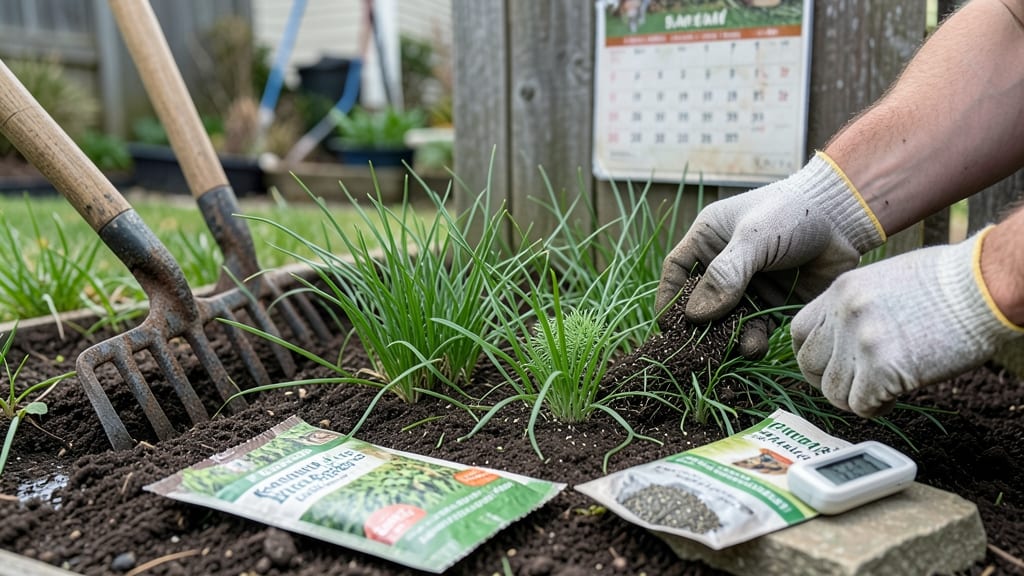
Timing your Grass (Turfgrass) planting in Michigan isn’t just about picking a month—it’s about beating frost, dodging summer heat, and giving your seed the perfect 50-65°F soil window to thrive.
Plant too early, and a late frost will wipe out your hard work; too late, and your seedlings will struggle under Michigan’s brutal summer sun. The right window means the difference between a lush, green lawn and a patchy, struggling one.
Most Michigan gardeners know spring is ideal, but did you know fall planting—when soil cools but stays warm enough—often yields even better results? Whether you’re in Zone 5b or 6b, understanding your local frost dates and soil temperature trends is the key to success.
Let’s break down exactly when to plant, how to prep your soil, and which grass types hold up best in Michigan’s unpredictable climate.
You’ve probably heard the rule of thumb: plant in early spring or early fall. But what does that really mean for your specific corner of Michigan? We’ll cover soil prep, seed selection, and post-planting care to ensure your 🌱 Grass (Turfgrass) takes root strong and stays that way.
No more guessing—just a step-by-step guide tailored to Michigan’s unique growing conditions.
Ready to transform your lawn? By the end of this guide, you’ll know exactly when to plant, how to tell if your soil is ready, and which grass types will give you the best results.
Let’s get your Michigan lawn off to the right start—no frost, no stress, just perfect growth.
Michigan grass seed planting deadlines by USDA hardiness Zone (soil temp & frost dates)
Michigan spans USDA Zones 4-6, where soil temperature and frost dates dictate the best time to plant grass seed.
In northern Michigan (Zone 4), your window is shorter than in southern Michigan (Zone 6), but both regions benefit from early spring or late fall planting when soil warms to 50-65°F.
Spring planting typically starts 4-6 weeks after the last frost, while fall planting should occur 6-8 weeks before the first frost. For Michigan, this usually means late April to early June for spring and mid-August to early October for fall.
However, these dates shift slightly depending on your exact location.
Southern Michigan (Zone 6) often sees earlier last frosts (around mid-April) and later first frosts (mid-October), giving you a longer planting window. Northern Michigan (Zone 4) has later last frosts (early May) and earlier first frosts (late September), requiring more precision in timing.
Here’s how to align your planting with Michigan’s climate for the best results:
| USDA Zone | Last Frost Date | First Frost Date | Ideal Soil Temp | Spring Planting Window | Fall Planting Window |
|---|---|---|---|---|---|
| Zone 4 (Northern MI) | Early May | Late September | 50-55°F | Late May - Early June | Mid-August - Early September |
| Zone 5 (Central MI) | Mid-April | Mid-October | 55-60°F | Late April - Early June | Late August - Mid-October |
| Zone 6 (Southern MI) | Mid-April | Mid-October | 60-65°F | Early April - Late May | Early September - Early October |
*Soil temperature thresholds are critical—use a soil thermometer to confirm readiness.
Spring planting offers longer daylight hours for seedling growth, but late spring (after June) can stress seedlings with summer heat. Fall planting, on the other hand, allows seedlings to establish roots before winter, resulting in a thicker, more resilient lawn the following spring.
If you’re in Zone 4 or 5, prioritize fall planting—it’s the safest bet for avoiding summer drought stress.
For Zone 6, both spring and fall work well, but early spring (April) can be ideal if you prepare the soil early and protect seedlings with light frost cloth if needed.
Pro tip: Check Michigan State University’s Michigan Garden Hotline or local Almanac frost dates for your specific county. These resources provide hyper-localized advice that beats general guidelines. For example, Traverse City (Zone 5) may have a 2-week earlier frost date than Detroit (Zone 6).
Once you’ve nailed down the timing, focus on soil preparation. Michigan’s clay-heavy soils can compact easily, so tilling to a depth of 4-6 inches and amending with compost or peat moss will improve drainage and seed-to-soil contact. This step is non-negotiable for germination success.
After planting, maintain consistent moisture—Michigan’s variable rainfall means you’ll likely need to water daily for the first 2 weeks to keep the soil evenly moist. Avoid overwatering, though, as waterlogged soil can suffocate seedlings and invite fungal diseases like brown patch.
🌱
5 Critical signs your Michigan soil is ready for grass seed (beyond calendar dates)
Michigan’s clay-heavy soils and unpredictable weather mean calendar dates alone won’t guarantee success. Instead, focus on these 5 soil readiness signs to plant grass seed at the perfect moment—regardless of the forecast.
First, check soil temperature with a soil thermometer. Grass seeds need soil that’s at least 50°F for 5-7 consecutive days. Cold soil slows germination, while soil above 65°F can cause stress or even seed death.
Moisture retention is another key indicator. Press your hand into the soil—it should feel damp but not soggy. If it crumbles when you squeeze it, it’s too dry. If it sticks to your hand, it’s too wet. Aim for consistent moisture like a wrung-out sponge.
Next, observe weed activity. If weeds are actively growing, your soil is warm enough for grass seeds. Weeds like dandelions or crabgrass signal ideal planting conditions. However, if weeds are dormant, wait a few more weeks.
For clay-heavy Michigan soils, tilling to a depth of 3-4 inches improves aeration and drainage. Add 2-3 inches of compost to break up compacted soil and provide essential nutrients. This step is crucial for northern Michigan regions where clay dominates.
🌱 5 Signs Your Soil Is Ready
- Soil temp: 50°F+ for 5+ days
- Moisture: Damp but not soggy
- Weeds: Actively growing
- Texture: Loose after tilling
- pH level: 6.0-7.5 (test with kit)
Finally, test your soil pH using a home test kit. Michigan soils often lean acidic or alkaline, and grass thrives in a neutral range of 6.0-7.5. If your soil is off, amend it with lime (to raise pH) or sulfur (to lower pH) 2-4 weeks before planting.
Once you’ve confirmed these signs, your grass seed will germinate quickly and evenly, giving you that lush Michigan lawn you’ve been dreaming of. Don’t rush—waiting for the perfect conditions saves time and effort in the long run! 🌿