
Plants
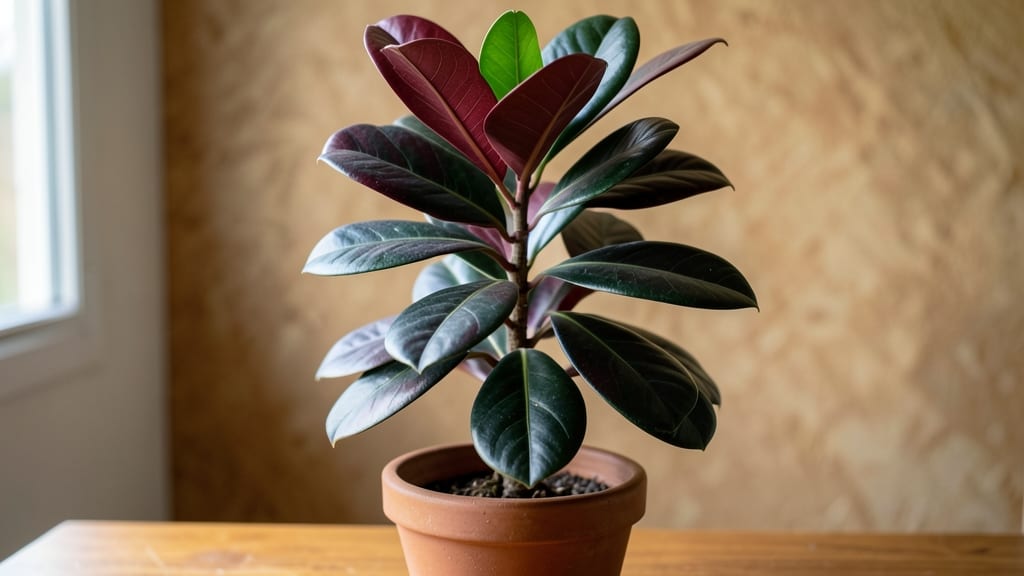
Wondering how tall does a rubber plant grow before it becomes a space hog? The answer might surprise you—this glossy-leaved beauty can stay compact on your desk or stretch toward the ceiling, depending on your care approach.
With the right conditions, a rubber plant (Ficus elastica) can reach 6 to 10 feet indoors, but don’t worry if that sounds intimidating. Many gardeners keep theirs at 3 to 5 feet with simple pruning and light management.
The key is understanding how light, pot size, and variety influence its growth rate.
Whether you’re aiming for a statement plant or a petite tabletop friend, I’ll break down exactly how to control its height—plus how fast it grows and when to expect those first dramatic height gains.
Let’s dive into the secrets of managing your rubber plant’s size so it fits perfectly in your home, no matter how ambitious (or modest) your vision.


Rubber plant height ranges: how tall they grow indoors based on variety and care
The rubber plant (Ficus elastica) is famous for its dramatic foliage and adaptability, but its height can vary wildly—from a compact 3-foot desk buddy to a towering 10-foot indoor tree. The key? Variety, care, and a little strategic pruning.
Without intervention, most rubber plants will reach their mature height of 6–10 feet indoors within 5–10 years, but with the right techniques, you can keep them smaller or encourage rapid growth for a bold statement piece.
For example, the Black Prince variety often grows taller and straighter, while Tineke’s variegated leaves may stay slightly shorter if pruned regularly. Even the same plant can shift in height based on light exposure, pot size, and pruning habits.
Let’s break down what to expect for popular varieties and how to control their growth.
🌿 Rubber Plant Height Guide
| Variety | Mature Height (Indoors) | Growth Habit | Care Tip for Height Control |
|---|---|---|---|
| Black Prince | 6–10 ft | Fast-growing, upright | Prune top growth to encourage bushiness |
| Burgundy | 5–8 ft | Moderate, slightly bushy | Rotate pot for even light exposure |
| Tineke | 4–7 ft | Slow to moderate, variegated | Use smaller pots to limit root growth |
| Robusta | 8–12 ft | Very fast, thick stems | Prune aggressively to manage height |
| White Princess | 5–8 ft | Medium, delicate variegation | Provide bright indirect light for compact growth |
Height ranges assume standard indoor care. Outdoor rubber plants can grow 20+ feet in tropical climates!
If you’re aiming for a smaller rubber plant, focus on pruning the top growth every 6–12 months. This encourages lateral branches to fill out, creating a bushier shape that stays under 3–4 feet.
For instance, my Tineke rubber plant on my office desk stays around 2.5 feet tall because I trim the main stem just above a leaf node every spring.
On the flip side, if you want a tall, tree-like rubber plant, avoid heavy pruning and place it in a large pot with bright indirect light. The Robusta variety is especially prone to rapid vertical growth—some enthusiasts report 12-inch height gains per year under ideal conditions.
Just be prepared for a plant that may need ceiling-height space within a decade!
Light exposure plays a huge role in height control. Rubber plants in low-light conditions (like north-facing windows) tend to grow taller and leggier as they stretch toward light. In contrast, those in bright indirect light (east or west windows) grow stockier and more compact.
I’ve seen rubber plants in artificial grow lights reach 8 feet in 5 years because the consistent light encouraged steady upward growth.
Pot size also matters: Smaller pots = slower height growth. When a rubber plant’s roots are root-bound, it focuses energy on filling the pot rather than shooting upward.
For example, my Burgundy rubber plant in a 10-inch pot grew only 3 feet in 3 years, while the same variety in a 16-inch pot hit 6 feet in the same time.
If you’re serious about controlling height, upgrade pots gradually—only increase size by 2 inches in diameter every 2–3 years.
Finally, don’t underestimate the power of propagation. If your rubber plant is getting too tall for its space, you can cut the top 6–12 inches, root it in water, and keep the smaller cutting as a new plant.
This way, you get a bushier mother plant and a fresh, manageable-sized rubber plant for another area of your home. I’ve used this trick to turn one 10-foot rubber plant into three 3-foot plants over two years!
🌱 Whether you’re after a desk-sized companion or a room-dividing giant, the rubber plant’s height is entirely up to you. Start with the right variety, master pruning, and tweak light and pot size to create the perfect
Rubber plant height ranges: how tall they grow indoors based on variety and care
The rubber plant (Ficus elastica) is a growth chameleon—its final height depends entirely on your care choices. Without intervention, it can shoot up to 6 to 10 feet indoors, but many gardeners cap theirs at 3 to 5 feet using simple techniques.
The key lies in understanding how variety, light exposure, and pruning shape its growth trajectory.
For example, the Black Prince variety often tops out at 8 to 10 feet when given ample light, while the Tineke (with its striking variegation) typically stays between 4 to 6 feet unless heavily fertilized.
Even the same plant can vary by 3 feet or more depending on whether it’s grown in a small pot vs. a large container.
| Variety | Mature Height Range | Growth Rate | Best For |
|---|---|---|---|
| Black Prince | 6–10 ft | Moderate (1–2 ft/year) | Statement plants, large spaces |
| Burgundy | 5–8 ft | Fast (2 ft/year with light) | Bright rooms, fast growth |
| Tineke | 4–6 ft | Slow-Moderate (1 ft/year) | Desks, variegated looks |
| Robusta | 3–5 ft | Slow (6–12 in/year) | Small spaces, low light |
| White Princess | 5–7 ft | Moderate (1.5 ft/year) | Variegated statement plants |
Light exposure is the single biggest factor in determining height. A rubber plant in bright indirect light (like an east-facing window) will grow 20–30% faster than one in dim corners.
For example, my Black Prince in a south-facing room hit 6 feet in 3 years, while an identical plant in my basement stayed under 3 feet after 5 years.
Pot size also plays a surprising role—root-bound plants grow taller because they focus energy on upward growth rather than spreading roots. If you want a compact rubber plant, repot into a smaller container every 2–3 years to encourage bushier growth.
Conversely, a large pot (12+ inches) will fuel rapid vertical growth if light and nutrients are abundant.
Pruning is your secret weapon for controlling height. A simple topping cut (snipping the stem just above a leaf node) will trigger bushier growth and cap height at your desired level.
I pruned my 8-foot Burgundy back to 4 feet last spring, and it’s already filled out beautifully with new side shoots.
Don’t let the mature height scare you—with the right approach, you can grow a rubber plant that fits your space perfectly, whether you want a desk-sized companion or a room-dividing giant. The choice is yours!