
Plants
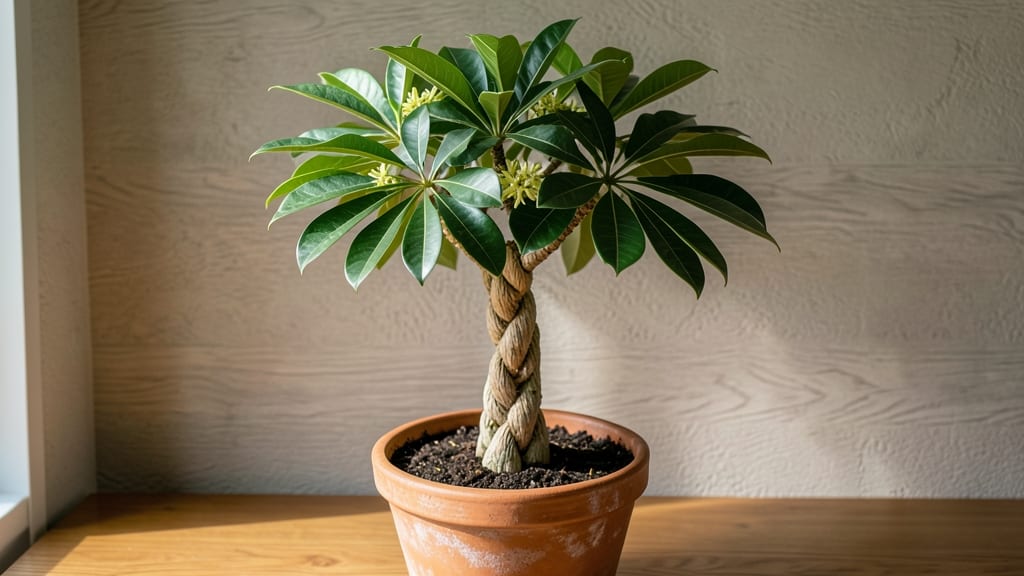
Money tree height by variety: from dwarf to towering specimens
Your money tree’s eventual height isn’t just luck—it’s determined by its variety, growing conditions, and the care you provide. While some varieties stay compact enough for a desk, others can reach ceiling height (or beyond!) with proper care.
Let’s break down the exact height ranges for the most popular money tree varieties so you can set realistic expectations for your plant’s future.
Understanding these variations helps you choose the right variety for your space. A standard money tree might need a larger room, while a miniature variety could thrive on a bookshelf.
Even the same variety can grow differently based on light exposure and pruning habits, so let’s explore the typical growth patterns for each type.
🌱
| Variety | Mature Height Range | Growth Rate (Per Year) | Ideal Growing Conditions |
|---|---|---|---|
| Standard Money Tree | 6–10 ft (1.8–3 m) | 12–24 in (30–60 cm) | Bright indirect light, well-draining soil |
| Braided Money Tree | 5–8 ft (1.5–2.4 m) | 10–18 in (25–45 cm) | Moderate light, regular pruning for shape |
| Miniature Money Tree | 3–5 ft (0.9–1.5 m) | 6–12 in (15–30 cm) | Low to moderate light, smaller pots |
| Dwarf Money Tree | 2–4 ft (0.6–1.2 m) | 4–8 in (10–20 cm) | Indirect light, frequent pruning |
| Variegated Money Tree | 4–7 ft (1.2–2.1 m) | 8–16 in (20–40 cm) | Bright indirect light, consistent moisture |
Growth rates can vary based on light, pruning, and fertilizer use
The standard money tree is the classic variety, often reaching 6–10 feet tall indoors with proper care. If you’re dreaming of a statement plant, this is your best bet—but be prepared for regular pruning to keep it manageable.
The braided money tree, with its iconic twisted trunks, typically stays slightly shorter at 5–8 feet, making it a great middle-ground option for medium-sized rooms.
For smaller spaces, miniature and dwarf varieties are ideal. These stay between 2–5 feet tall, perfect for shelves, desks, or even as tabletop plants. The trade-off? They grow more slowly, so patience is key if you want a fuller look.
Variegated varieties, with their striking leaf patterns, usually fall in the 4–7 foot range, offering a balance of height and visual interest.
🌿
One common misconception is that money trees grow faster outdoors than indoors. While it’s true they can reach 15–20 feet tall in tropical climates, indoor growth is much slower due to controlled conditions.
The key to managing height indoors is light exposure—too little light slows growth, while too much can cause leggy, weak stems. Aim for bright indirect light (like an east-facing window) to encourage balanced, sturdy growth.
If you’re concerned about your money tree outgrowing its space, don’t worry—pruning and pot size are your best tools. A well-pruned money tree can stay compact for years, even if its natural growth habit is taller.
We’ll cover these techniques in the next section, but for now, focus on choosing the right variety for your space and giving it the light it craves.
🪴
How to control money tree height: pruning, light, and pot size tips
Your money tree’s height isn’t set in stone—it’s shaped by how you care for it. With the right techniques, you can keep your Pachira aquatica at a manageable desk-height or encourage it to grow taller for a statement piece.
The key lies in three areas: pruning, light exposure, and pot size. Let’s break down how to control its growth like a pro.
First, let’s talk about pruning, the most direct way to manage height. Money trees respond well to pruning, and you can trim them at any time of year. Simply snip off the top few inches of growth to slow height increases and encourage bushier foliage.
For a braided money tree, prune just above a leaf node to maintain those iconic braids while controlling height. Remember, the more you prune, the more compact your plant will stay.
Light exposure plays a huge role in how tall your money tree grows. These plants thrive in bright indirect light, but too much direct sunlight can cause them to stretch toward the light, leading to leggy growth.
If your plant starts looking tall and sparse, it’s time to move it to a shadier spot. Conversely, if it’s growing too slowly, a brighter location (like a south-facing window with sheer curtains) can encourage healthier, faster growth.
Pot size is another often-overlooked factor. Money trees grow faster when they have plenty of room to expand their roots. If you want to keep your plant compact, choose a pot that’s only slightly larger than its root ball.
This creates root-bound conditions, which naturally slows vertical growth. However, if your plant becomes severely root-bound, it may struggle to absorb water and nutrients, so repot every 2-3 years to refresh the soil.
Finally, don’t forget that seasonal changes affect growth rates. During spring and summer, your money tree will grow most actively, so this is when you’ll see the biggest height increases. In fall and winter, growth slows down naturally.
Use this to your advantage: reduce watering and fertilizing in cooler months to keep your plant from growing too tall too quickly when it wakes up in spring.
With these tips, you’ll have full control over your money tree’s height. Whether you want a compact desk companion or a tall statement plant, the choice is yours—just adjust your care routine accordingly! 🌱